A brand storyteller is the person who finds the true story of a business and tells it well across the places customers meet you. They interview the people involved, decide what matters, shape it into a clear account and make sure it's told consistently, on film, on the page and in conversation. It can be a founder, a hire, or an outside studio.
This post is about the person rather than the practice. I'll cover what a brand storyteller does all day, the skills that matter, the three realistic ways to get one, and how to choose. If you want the practice itself, what brand storytelling is and how to tell a brand story come first.
What does a brand storyteller actually do?
The job title sounds airy. The work's practical. On a normal project, a brand storyteller does most of these:
- **Listens.** Interviews founders, staff, customers and partners, and pays more attention to what's said in passing than to the prepared answer.
- **Finds the real story.** Works out why the business exists, what it believes and what makes it different, in plain language.
- **Decides what to leave out.** Most of the job is cutting. A business has twenty good stories, and the storyteller picks the one or two that do the work.
- **Shapes it.** Turns what they've found into a clear account with a beginning, a turn and a result.
- **Chooses the medium.** Decides whether a story's best told on film, in writing, in photographs or in a sign on the door.
- **Keeps it consistent.** Makes sure the website, the sales deck, the emails and the team's own words all tell the same account.
That last one's the part people forget. Telling a story once is a project. Keeping it consistent for three years is a role.
Who counts as a brand storyteller?
Anyone doing that work, whatever their job title. Some of the best I've met were never called one. The title belongs as much to a documentary maker, a copywriter, a journalist turned marketer or a founder who's got a knack for it as it does to someone with "Brand Storyteller" on their LinkedIn.
What they share is a way of working. They're curious about people, patient enough to ask the second and third question, and honest enough to say when a story isn't there yet. They're also usually suspicious of polish. A brand storyteller's instinct is to make a business look like itself, not like a better-funded version of someone else.
What skills does a good brand storyteller have?
If you're hiring or choosing, these are what I'd look for.
Interviewing
The ability to get a nervous person to say something true. This is the biggest one, and it's undervalued. Most people don't speak well about their own business until someone asks the right question in the right way. A good interviewer builds trust in the first ten minutes, then waits.
Editorial judgement
Knowing which of ten true things is the story. This comes from experience, and you can't fake it. If someone shows you a portfolio, look at what they left out as much as what's in.
Writing, and a feel for pictures
Even a filmmaker needs to write, because every film starts with a plan, questions and a way of cutting the interview down. Equally, a writer who understands what the camera does will produce better scripts and captions. The best are comfortable in both.
Craft in at least one medium
Storytelling's an idea, but delivery's craft. Someone who can only talk about narrative arcs and can't produce a finished film, article or page isn't much use. Ask to see finished work and ask what their part in it was.
Consistency and patience
A story needs maintaining. A good storyteller keeps the thread across many pieces and many months, and doesn't get bored of the message before the audience's started to notice it.
Who are the real options? Founder, in-house or studio?
Three routes, each with a place.
The founder or owner
Often the best storyteller a business has, because it's their story. The upside is authenticity and cost. The downside is that founders are usually too close to see which parts are interesting, and they're busy. If you're going this way, it helps to have someone interview you, so you're talking to a person rather than writing into the void.
An in-house hire
Makes sense when you've got a steady stream of content and a team to feed. They learn the business deeply, they're there for the quick turnarounds and they own consistency. The catch is cost, and the fact that one person can rarely do everything. A writer might not be able to shoot, and a videographer might not have the editorial eye. Plan what you'll buy in.
A studio or freelancer
Makes sense when you need craft you can't hold in-house, such as a proper film, or when you need an outside eye. Someone who doesn't work for you will ask the questions your own team has stopped asking. It's also the lowest-commitment way to get a high-quality piece of storytelling done once and then use it for a long time.
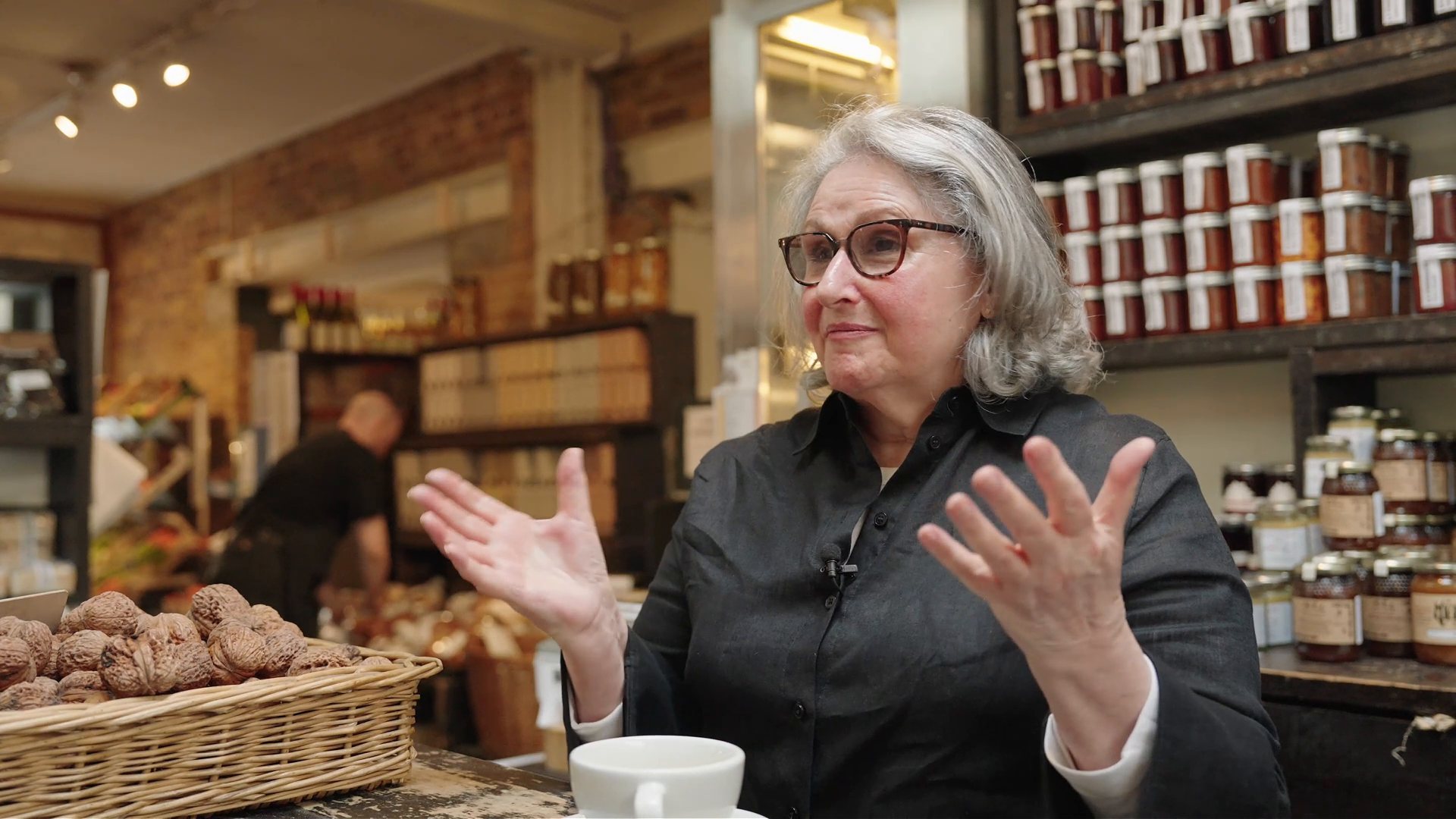
This is where we sit. We make documentary-style brand films, which means we spend most of our time doing the listening, finding and shaping parts of the job, with the camera as the tool. You can see how that works in our film with La Fromagerie, where the founder, the cheesemongers and the wholesale side each tell a part of the same business.
Most UK consumers in this survey say they favour human-feeling content, which is the storyteller's whole job: someone real, saying something true.
Source: Optimizely survey of 1,000 UK consumers and 100 UK marketers (September 2026)
Why does it matter that the storyteller's a real person?
Because the audience can tell. Optimizely surveyed 1,000 UK consumers and 100 UK marketers and published the results in September 2026. It found 62% of the consumers said they trust marketing content less since brands adopted AI, 57% said they can usually spot AI-generated content and 72% said they're more likely to engage with content that feels human. Fieldwork details weren't given, and it's a vendor survey, so treat it as an indication rather than gospel. But it matches what I see on shoots.
A brand's story is a claim that real people did real things for real reasons. That's very hard to deliver without a real person, on camera or on the page, vouching for it. Tools can help with the admin, such as transcribing interviews and sorting footage, and we've written about where AI belongs in AI and brand video in 2026 and why real people on camera still matter. But the storytelling, the judgement about what's true and what matters, is still human work.
What does a good brand storyteller ask you?
Here's a quick test of someone you're thinking of working with. In the first conversation they should ask you things like:
- Why did you start this, in the first place?
- Who's the customer you most enjoyed working with, and why?
- What do you do differently that you've stopped noticing?
- What's gone wrong, and what did you learn?
- What would you like people to say about you when you're not in the room?
If instead the first question's "what's your budget and what style do you like?", they're selling production. That's fine, as long as it's what you want. But it's not storytelling.
How should you brief a brand storyteller?
Keep it plain. Tell them who you want to reach, what you want those people to do afterwards and who they'll need to talk to. Give them access, because the story lives in the people, and let them have the conversations. Don't hand them a script. A good brief's covered in how to write a video brief, and the part people most often skip is the business goal, which I go into in why a brand film needs a business goal.
Then trust the process. The best films we've made came from clients who let us ask awkward questions and didn't edit their own answers in advance.
What does a brand storyteller's day look like on a shoot?
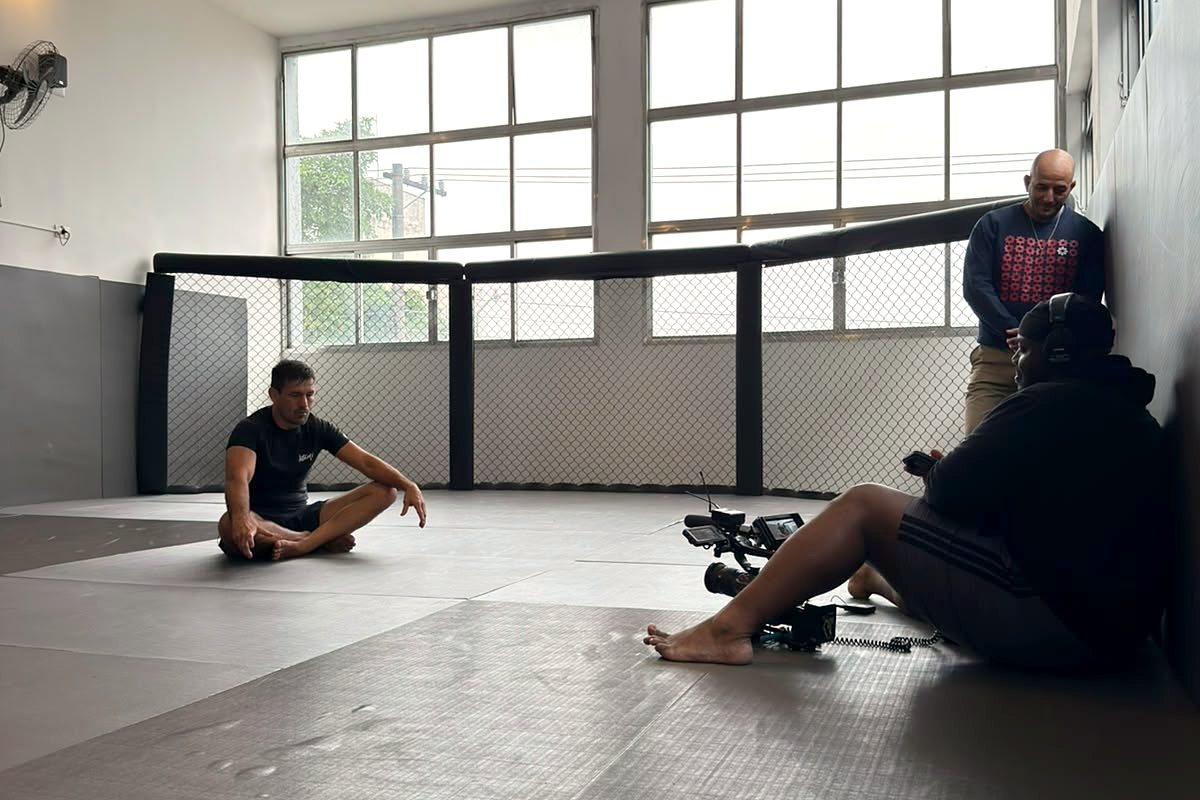
Mostly conversation. On a documentary-style shoot the camera's set up quickly, and the real work starts when someone sits down and gets talking. I'll spend the first few minutes on small talk, because a person who's relaxed says things a nervous one won't. Then come the questions, which I mostly build from what they've just said rather than from a list.
The telling moments are often small. Someone mentions the first customer they ever had, or how they nearly packed it in, or what their dad used to say about the trade. Those are the lines that end up in the film, and they rarely come from the questions you'd planned. A good storyteller notices when one's landed and stays quiet for a beat so the person carries on.
Afterwards it's the edit, which is where the shaping happens. Hours of conversation get cut to minutes, and the decision of what stays is the storytelling in its clearest form.
What mistakes do people make when choosing one?
A few, and I've seen all of them:
- **Hiring for the look rather than the listening.** A beautiful showreel says nothing about whether someone can get a real answer out of a nervous person.
- **Handing over a finished script.** If the story's already written, you don't need a storyteller, you need a crew, and the film will sound like an advert.
- **Expecting a story to be invented.** A good storyteller finds what's true. If a business has nothing it believes in, no one can make that up convincingly.
- **Treating it as a one-off.** The film's the start. Someone has to keep the thread going afterwards, whether that's you or us.
Do you need one at all?
Not always. If your business is new, your story's still forming and you've got little to show, spend the money on the work and tell it simply in your own words. If you've been going for years, you've got a team with something worth saying and people ask "how do you do that?", a storyteller will get you more than you'd expect, because the story's already there and nobody's told it properly.
You also don't have to choose permanently. Many of the businesses we work with start with one film made by us, then keep the story alive themselves with a phone and the bank of moments they've collected. Long relationships tend to work better than one-offs, which is something I wrote about in relationships over transactions.
The job is mostly listening, and the skill is knowing which part of what you heard to keep.
Where to go next
For the practical side of putting a story to work, see how a brand story should be used in content creation, and for who's doing it well, what brands use storytelling. The whole subject's in the complete guide to brand storytelling.
If you'd like to talk about whether your business has a story worth filming, get in touch. If it isn't ready yet, I'll tell you that too.