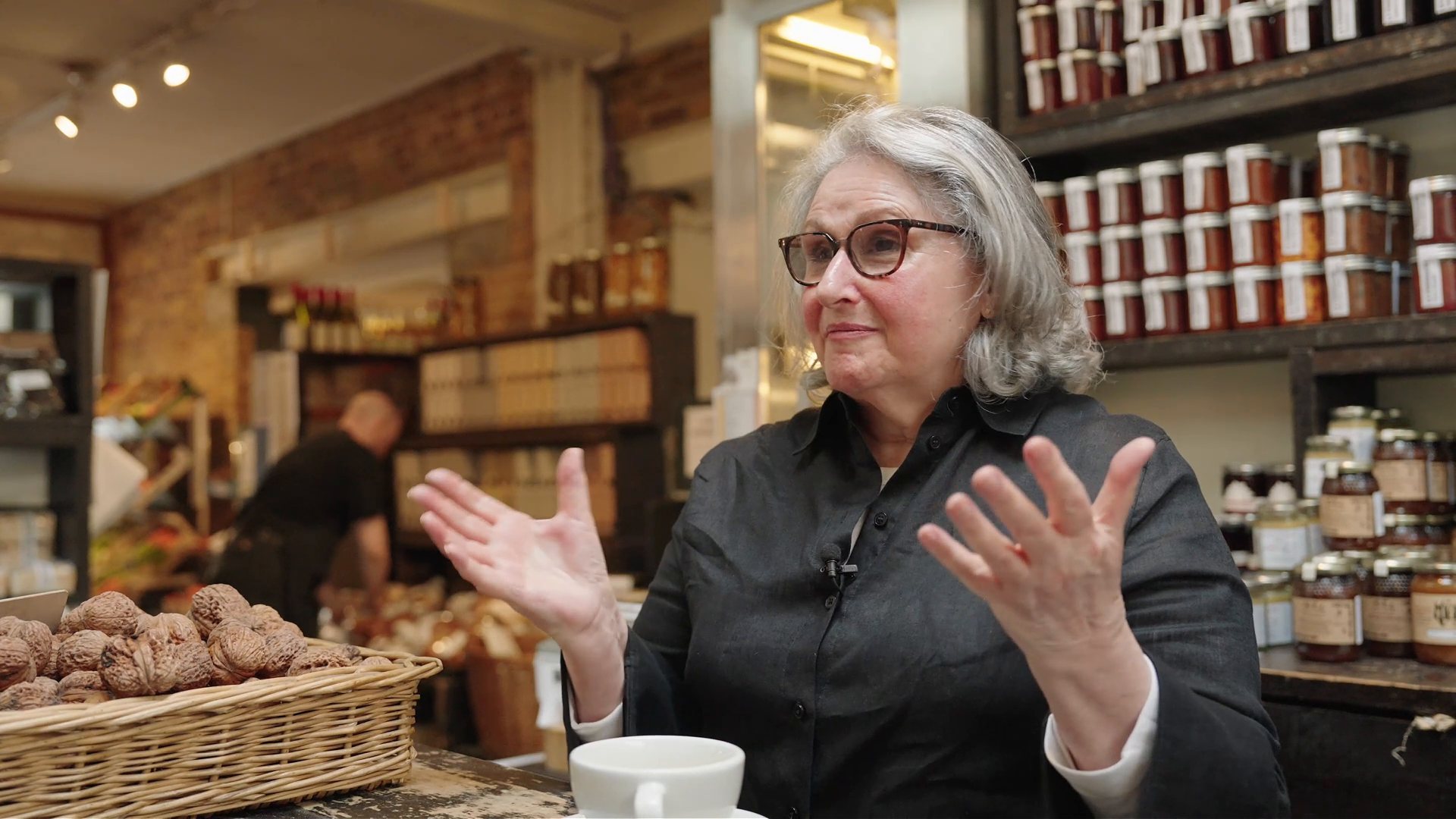
A documentary brand film is a film about a business told by the people who run it, in the place where they work, cut as a story rather than an advert. The example I send people most is La Fromagerie, a London cheese business that started with a wheel of Beaufort in a garden shed. Thirty three years later it's three shops with walk-in cheese rooms and a wholesale side supplying restaurants across London, and the film lets four of the people behind it tell you how.
This is the story behind that film. How it came together, what we chose to put in it, what we steered away from, and why. If you run a small business and you're trying to picture what a film could look like for you, it's a decent place to start.
What is La Fromagerie?
The founder tells the beginning herself, and it's about as unglamorous as starts get. A market stall at Camden Lock. A shop in Highbury at eighty pounds a week. A wheel of Beaufort in a garden shed.
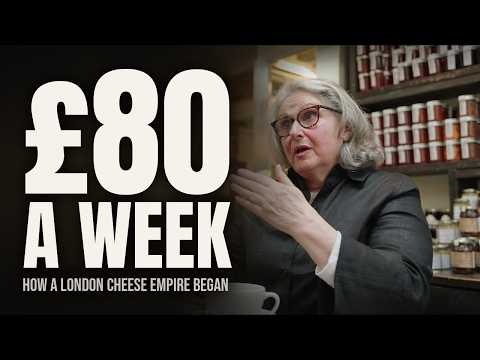 La Fromagerie
From there to three shops, each with its own walk-in cheese room, plus a wholesale business that supplies restaurants across London. That's thirty three years of work, and you can't squeeze it into a sixty second advert without losing most of it.
It's also why we didn't make a film about cheese. The cheese is beautiful, obviously. But a film made of cheese close-ups tells you very little about why a business is still going after three decades, or who's behind it.
Why didn't we shoot it like a food advert?
Most food films are shot as adverts. Shallow depth of field, hands, a voiceover, and nobody actually in them. I'll be honest, I find most of them a bit forgettable. They look lovely. You could also swap the logo at the end and the same film would work for pretty much any deli in the country.
I wanted this one to go the other way. People on camera, talking in their own words, in the place where they actually work. If you'd never heard of La Fromagerie before, I wanted you to come away knowing who runs it, how it started, and what it's like now.
That's the whole idea behind how we make our films. Real conversations, real places, nothing read off an autocue, and enough room in the edit for the thing to breathe.
Why does the film have four voices instead of one?
The founder carries the origin story. She was there for the market stall and the shed, so nobody else could tell that part. But a business that's grown to three shops and a wholesale operation has a lot more people in it than one, and a film that only showed the founder would've told half the story.
So we interviewed the cheesemongers and the wholesale side as well. Four people's accounts of the same business. The founder gives you where it came from. The cheesemongers and the wholesale team fill in what it actually is today.
The hard part was stopping that from turning into a corporate video. Four people taking it in turns to say their bit is exactly the format I was trying to avoid. The edit had to hold several voices at once without feeling like a round of introductions at a team meeting.
That's a structure problem more than a picture problem. In our edits structure comes first, then pace, then picture, and on a film like this it's where the real decisions get made.
Why more than one voice helps a small business
If you're a founder, it's tempting to be the whole film. You know the story better than anyone. I get it.
But the people thinking about buying from you, and the people you might want to hire, want a sense of what it's like on the other side of the counter too. Hearing from the team shows there's more to the place than one person, and that it carries on when you're not in the room. A single voice can't really show that, however good the interview is.
Why film while the shops were open?
We filmed during trading hours, around customers, rather than waiting for the shutters to come down. That was a choice, and it made the job harder.
The cheese rooms are cold and dark. When the shops are open they're full of customers. You can't take over a working shop the way you'd take over an empty set, and nobody wants a crew in the way while someone's trying to buy cheese.
But a shop filmed after hours looks like a shop after hours. Empty, tidy and a bit lifeless. La Fromagerie is a place people come into and get served, and if you film it closed you lose the part that makes it a shop at all.
So the coverage moves through the shops, the cheese rooms and the counter while the business carries on around it. It's less controlled than a closed set. I think it's more honest for it, and honesty is most of what you're paying for with this kind of film.
What did we choose to show, and why?
Every film is a long list of decisions about what goes in. These were the ones that mattered here.
The most interesting thing about a business is usually the thing nobody’s filmed yet.
- The founder at the counter in her own shop. It's the frame we used as the cover for the case study, and it sums the film up. She isn't in a studio or in front of a backdrop. She's where she works.
- The cheese rooms. Walk-in cheese rooms are a big part of what the shops are, so they had to be in it, cold and dark as they are.
- The cheesemongers. They're the people a customer actually deals with, so their account of the business carries real weight.
- The wholesale side. Supplying restaurants across London is part of what La Fromagerie is now, and a film about the shops alone would've missed it.
What we steered away from was the advert version: a narrator over beautiful close-ups, with nobody in shot. There's a place for that kind of thing. It just doesn't tell you anything about the people, and the people are the reason this business is worth a film.
Your customers already use video to decide where to spend their money, so a small business with a good film is meeting them where they're looking.
Source: Wyzowl, Video Marketing Statistics 2026 (survey of 266 respondents, late 2025)
What makes a small business brand film work?
I don't think you need thirty three years and three shops to have a film in you. What you need is a real story and people willing to tell it on camera.
When I'm researching a film, I'm looking for the person who started it, the part of the job nobody outside gets to see, and the people who make it work every day. At La Fromagerie that was the founder, the cheese rooms and the counter, and the team behind both the shops and the wholesale.
The other thing I'd take from this one is to let the business be itself on the day. Open, busy, a bit cold, customers in the background. Viewers can tell when a place has been dressed up for the camera, and they can tell when it hasn't.
A garden shed, a market stall and an eighty pound a week shop aren't the kind of start most companies would put in their marketing. Here they're the heart of the film, told by the person who lived it, with the people who run it alongside her filling in the rest.
You can watch it on the La Fromagerie case study. If you want to know how we make films like this, from research to the final mix, it's all on the films page, and if you think your business has a story in it, tell us about it.