
A brand story benefits content creation by taking away the hardest questions before anyone sits down to make anything. You already know who it's for, what it should sound like and what it's trying to say, so ideas arrive faster, drafts need fewer rewrites, approvals are quicker and different people end up sounding like the same business.
This post is about the maker's side of it: what changes for the person who has to produce the content, week in, week out. How to build that system is in how a brand story should be used in content creation, and the wider effect on results is in how a brand story enhances marketing. Here I want to stay on the day-to-day benefits, and be honest about where they stop.
Why does content creation feel so hard without a brand story?
Because every piece starts with the same three decisions. What are we saying? Who's it for? How should it sound? Without a brand story, you make those decisions again every time, usually in a hurry, often alone, and sometimes differently depending on who's holding the pen that week.
That's why so many small businesses burn out on content. Making a video or a post isn't the hard bit. Every single one being a fresh argument is. Then the approvals start: someone says it doesn't feel right, nobody can say why, and it goes round again.
Most UK businesses are tiny, which makes it worse. The government's Business Population Estimates put the number of private sector businesses at 5.69 million at the start of 2025, and 4.3 million of them had no employees apart from the owners. For a huge share of the economy, the person making the content is the same person doing the job, and every hour spent agonising over tone is an hour not billed. A story that settles those decisions in advance is worth more to them than any editing tool.
Does a brand story really make content faster?
Yes, and it's the benefit people notice first. The speed doesn't come from typing faster. It comes from not having to decide the basics.
When you can see, on one page, that your audience is homeowners who've been burnt by a builder before, that you're the plain-speaking option and that your belief is "we show you the price before we start", a lot of ideas generate themselves. You know a post about a hidden-cost horror story belongs. You know a glossy stock-photo montage doesn't. You can say yes or no in seconds.
On shoots, the effect is the same. If we've agreed what the story is before the camera comes out, we know what to ask, which moments to wait for and which shots we can skip. It's the difference between coming home with a day's footage that's about something and a day's footage that's about everything. The second one takes far longer to edit.
What does it do for ideas?
It gives you a way to find them. Without a story, "what should we post?" has no edges. With one, the question narrows to "what's a moment that shows our belief about X?", and that's much easier to answer.
A story also tells you where to look. Your best ideas tend to live in the places where your belief meets real life: a customer's reaction, a mistake you fixed, a thing a team member does without being asked. If your belief is that you build things to last, a repair job from fifteen years ago is a story. A routine delivery isn't.
You'll also stop worrying about originality. Most subjects have been covered. What can't be copied is your reasons, your people and the way you do it, and the story puts those front and centre. That's why our work with Catherine Marche centres on her recycled-metal rule rather than on the jewellery, because lots of people make earrings and very few hold their packaging to the same standard as the metal.
How does it make approvals easier?
This one's underrated. Most approval pain comes from disagreement about taste, and taste is hard to argue with. A brand story swaps "I don't like it" for "does this fit the story?". That's a question with an answer.
If you've got a boss, a client, a partner or a board who signs things off, giving them the story up front changes the conversation. They've agreed what you're trying to say, so the feedback is about whether the piece says it, not about their personal preference for blue. It's also much easier to push back politely on a late suggestion, because you can point to the page.
I'd go further. A shared story is the cheapest way I know to reduce rounds of revisions. On a film, every round of changes costs time on both sides, and a clear story at the start means most of the notes are about trimming, not about direction. For more on how briefing affects the edit, how to write a video brief covers the film side.
Most UK businesses are one-person operations, so the person making the content is usually also the person doing the job. A shared story saves the decisions they don't have time for.
Source: Department for Business and Trade, Business Population Estimates 2025
Does it help when more than one person makes content?
It's one of the biggest benefits. The moment a second person, a freelancer or an agency touches your content, your voice starts to drift. They're doing their best, they just don't have what's in your head.
A brand story is how you get what's in your head onto paper. A new freelancer reads it, watches your main film, and within an hour they've got a decent grip on the tone. A new starter does the same. You spend less time correcting and more time reviewing.
It also helps with people inside the business who aren't "the marketing person". If an engineer wants to write a post about a job, or an installer wants to film something on their phone, the story gives them guard rails. They don't have to ask what's allowed. For more on getting non-specialists comfortable on film, how to prepare for being filmed is worth sharing around.
What does it do for the quality of the raw material?
If you plan to film, the story improves what you capture. People who know what the story is tend to say better things on camera, because they understand what the film's trying to do and can speak to it. Interviews with someone who's never been told the point tend to wander, and you end up cutting around the vagueness.
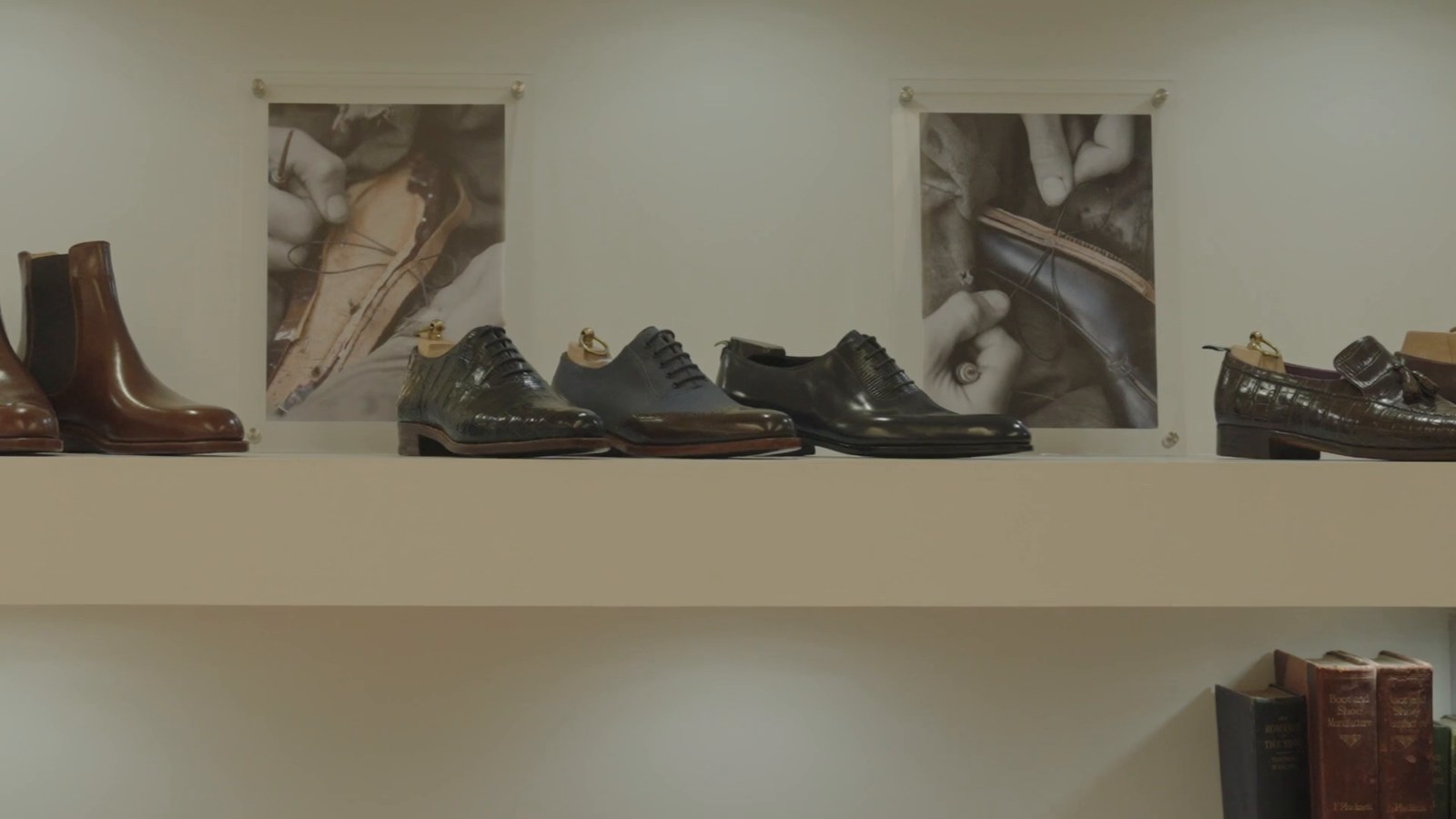
It also changes who you ask to appear. When the story's about a family business that's lasted three generations, you want the person who's been there thirty years, not just the most confident person on the team. Our film with Carréducker is built around two founders who trained at the same bench, and that's why it's filmed as one conversation rather than two separate interviews. The story told us how to shoot it.
Documentary-style brand film is particularly well suited to this, because it starts with real people and real answers. You can read more on how that differs from a standard promo in brand documentary versus corporate video.
Can it help you say no?
Yes, and it'll save you more time than any scheduling tool. Every business gets offered content ideas that don't fit: a trend someone's seen, a competitor's format, a suggestion from a well-meaning relative. Without a story, you either do it and dilute the brand, or you say no and feel guilty.
With one, you can check it against the page and decline. "It's a good idea, it just isn't us." Over a year, that discipline is the difference between content that adds up and a feed that looks like six different companies took turns.
Content gets easier the moment you're allowed to say no to most of the ideas.
What does it change week to week?
The honest answer is that it makes the work calmer. Monday morning stops being a scramble for something to post. You open the story, look at what you've got in the bank of real moments, and pick. The person making the content stops feeling like they're guessing, and that's worth a lot, because guessing is what wears people out.
It also changes how you review old content. Instead of asking "did that get likes?", you can ask "did that sound like us?" Both questions matter, but the second one's the only one you fully control. Over a few months you'll see which pieces felt most like the business, and which ones were off. Usually the off ones were made in a rush with no story to hand.
Does it help the creative side, or just the admin?
Both, and the creative benefit surprises people. A tight brief is good for creativity. Give a filmmaker a clear story and they can spend their energy on how to show it, such as where to put the camera, what to wait for and when to leave a silence. Give them a vague one and they spend that energy guessing what you want.
The same applies to anyone writing, designing or editing for you. Constraints give them something to push against. The best creative work I've seen on a shoot has usually come from a very clear idea of what the film was for, followed by a lot of freedom in how it got there.
What are the limits? Where won't a brand story help?
I'd be doing you a disservice if I made it sound magical. A few honest limits:
- **It won't make poor content good.** A clear story told badly is still a bad video. Craft still matters.
- **It won't replace knowing your audience.** The story says what you stand for. You still need to learn what your customers actually ask, search for and worry about.
- **It won't save a story that isn't true.** If the founder never really believed the thing the story says, the content will feel hollow. People can tell.
- **It needs maintaining.** Businesses change. Review it once or twice a year, and update it on purpose.
None of that cancels the benefit. It just means the story's the foundation, not the building.
How do you get these benefits without spending a fortune?
Start with the page. One side of A4, in plain words, covering who you're for, why you exist, what you believe and what good looks like. If you're stuck, what makes a good brand story is a useful checklist to test it against. Share it with everyone who makes or approves content. Use it for a month and see how many decisions it settles.
Then give it a face. A single short film in which the founder, or whoever really holds the story, tells it in their own words, is the thing a freelancer, a new hire or a prospect can watch to get it in three minutes. That's where we come in. Our brand films are built from real conversations with the people in the business, and they work as both the story and the raw material for everything after.
For the wider picture, the complete guide to brand storytelling has everything in one place. And if you'd like to talk about getting yours on film, get in touch.