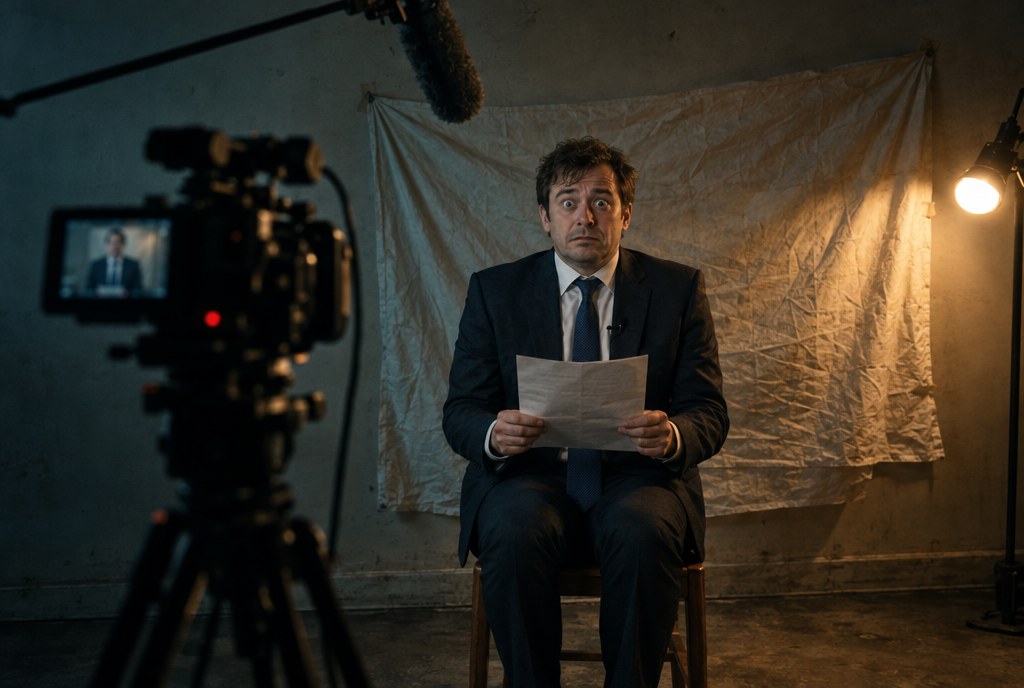
You don't need to learn anything to be filmed for a brand film. Wear plain, mid-tone clothes you'd normally work in, think of a few stories about your job, tidy the clutter but leave the place looking like itself, and turn up. The interview is a conversation, you can restart any answer as many times as you like, and we edit out everything that doesn't work.
That's the short version. Most of the people we film have never been filmed before. Founders, shop staff, tradespeople, the person who's run the warehouse for years and would rather be anywhere else that morning. Nearly all of them are nervous, and nearly all of them are fine once we get going.
 How to Prepare for Being Filmed (Brand Film Interview), s4digital
If you've booked a film and someone on your team is dreading it, forward them this.
Do I need to learn a script?
This is the bit that relaxes people most, so it goes first. There's no autocue and no lines to learn. The interview is a conversation. I ask questions, you answer them the way you'd explain something to a friend who's genuinely interested, and we follow the good bits wherever they go.
It’s a conversation, not a performance. If you fluff a line, you just say it again.
Please don't write your answers out and memorise them. People who do that sound like they're reading, even when they're not. It's much better to think about a few stories beforehand. How you started. A day that went wrong. A customer you remember. The part of your job you're proudest of. Then let the questions bring them out.
Answer in full sentences
This is the one practical habit worth practising. My questions get cut out of the film, so your answer needs to make sense on its own.
If I ask "When did you start the business?" and you say "2011", that's no use to anyone watching. If you say "I started the business in 2011, from my kitchen table", that works. I'll remind you on the day, and if you forget, I'll just ask again.
You can stop and start again
Lost your thread halfway through? Stop, take a breath and start the sentence again. Said the wrong word? Say it again.
Nobody sees any of that. We edit. The ums, the long pauses, the false starts, the bit where you forgot what the question was. They all come out. What's left is you at your clearest, because we've got plenty of material to choose from.
What should I wear to be filmed?
Short version: wear what you'd normally wear for work, in its tidiest form. If you wear an apron behind the counter or overalls on site, wear them. The film is about your business, and you in a suit you never wear will look like someone else.
A few things do matter on camera, though.
- Solid, mid tones film best. Navy, mid grey, olive, a muted blue or green, earthy colours. They sit nicely on camera and suit most skin tones.
- Avoid fine stripes, small checks and tight patterns. They can shimmer and flicker on camera, an effect called moiré. It's distracting, and it's very hard to fix later.
- Avoid big logos and slogans. Especially other brands' logos. Your own company's branding is usually fine, but check with us first.
- Be careful with bright white and solid black. They're harder to expose well next to a face. Not banned, just not the first choice.
- Skip noisy jewellery. Bracelets and long necklaces knock against the microphone, and you'll hear it.
How does the microphone work?
For the interview you'll wear a small microphone, usually clipped to your collar or tucked just under your top, with a cable running to a little transmitter pack on your belt or waistband. Clothes with a collar or a proper waistband make this easier.
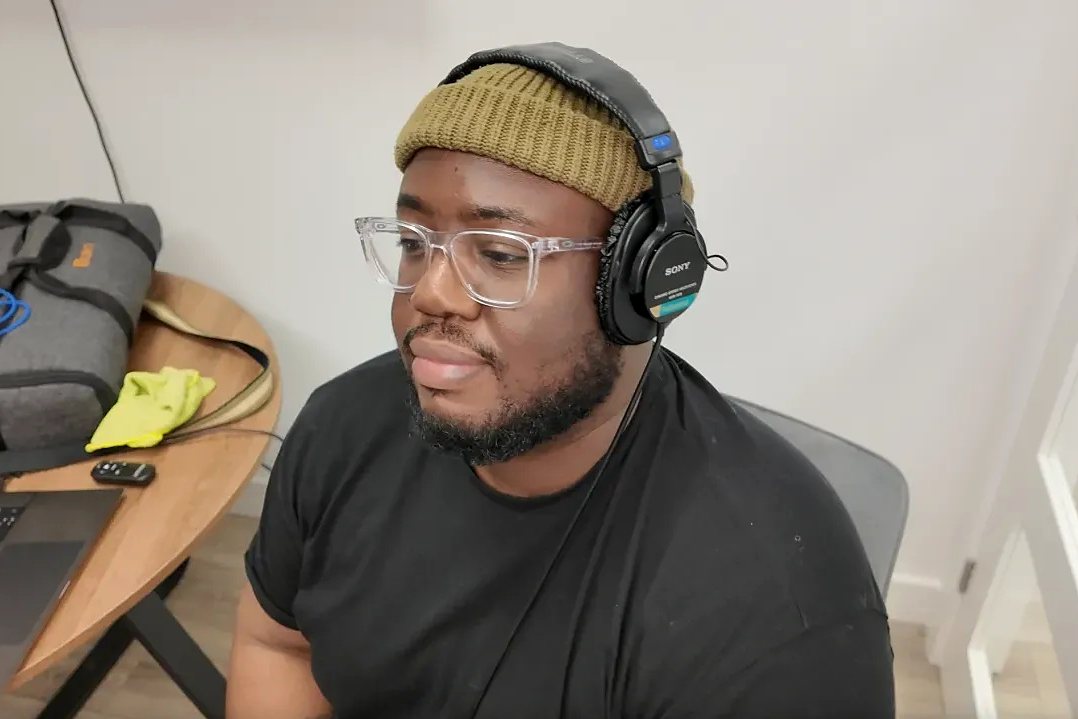
We'll show you where the cable needs to go and you can thread it through yourself. Nobody's going to be rummaging around your clothes without asking.
Two small things. Rustly fabrics like silk or stiff waterproofs can rub against the mic, so avoid them for the interview. And the mic is live until we take it off you, so if you nip to the loo, tell us first.
Most people forget they're wearing it within five minutes.
Should I tidy up before the crew arrives?
People worry a lot about how their space looks. My advice is to tidy the clutter that's just clutter, and leave everything that's the work.
Take out the bins. Clear the coffee cups off the desks. Move the pile of boxes that's been in the corner since Christmas. Turn off or tidy any screens with customer details or anything private on them.
But don't repaint, don't hide your tools and don't make a workshop look like a showroom. Real places look real on camera, and that's a big part of why people believe a documentary film. A bit of wear on the bench tells a viewer you actually use it.
What happens on the filming day?
Every shoot is different, but most days follow a similar shape.
- We arrive and have a look around. A coffee, a walk through the space, a chat about the day. No cameras rolling.
- We set up for the interview. Lights, sound and framing take a while to get right. You don't need to sit there while we do it.
- The interview. You sit down, get mic'd up and we talk. Expect it to take a lot longer than the bit that ends up on screen. That's normal.
- Filming you at work. This is the B-roll, the footage that plays while your voice carries on underneath. More on that below.
- Photography. Stills are captured across the same days, so you might find a camera pointing at you at odd moments.
What happens when you film me working?
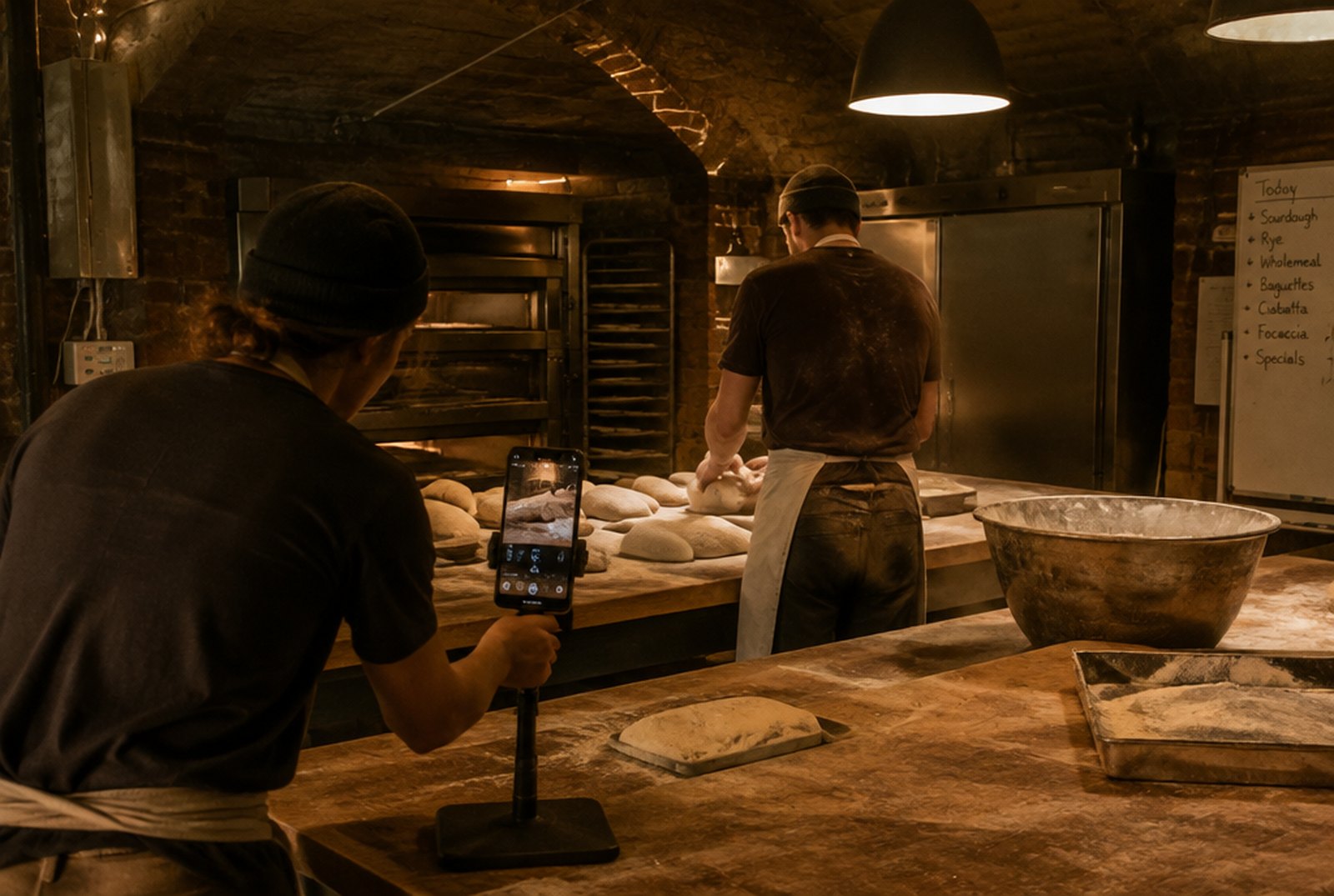
The B-roll is you doing your job. Serving a customer, making something, fixing something, talking a colleague through something. The best advice I can give is to do it exactly the way you normally would, at your normal pace.
Don't look at the camera. Pretend we're not there, which gets easier after the first twenty minutes.
We might ask you to do something again. Maybe from a different angle, maybe because someone walked through the shot. That isn't because you did it wrong. A film needs the same moment from a few angles so it can be cut together smoothly. It can feel a bit repetitive. Bear with us.
How long does filming take?
A full film is usually two to three shoot days, but most people in it are only needed for part of that. Your bit might be a morning in the interview chair and a couple of hours of us following you around.
The whole project, from the first conversation to the finished film, usually takes six to ten weeks. Most of that is research before the shoot and the edit after it. You'll see a rough cut while changes are still easy to make, and again before it's finished, so nothing goes out that you haven't seen.
Nearly nine in ten people judge a brand by how its video looks and sounds, so the prep you do before the camera rolls shows up in how much they trust you.
Source: Wyzowl, Video Marketing Statistics 2026 (survey of 266 respondents, late 2025)
How do I deal with nerves on camera?
Everyone's nervous. Founders who pitch to investors get nervous. People who talk to customers all day get nervous. It's a camera and a stranger asking questions, so of course you are.
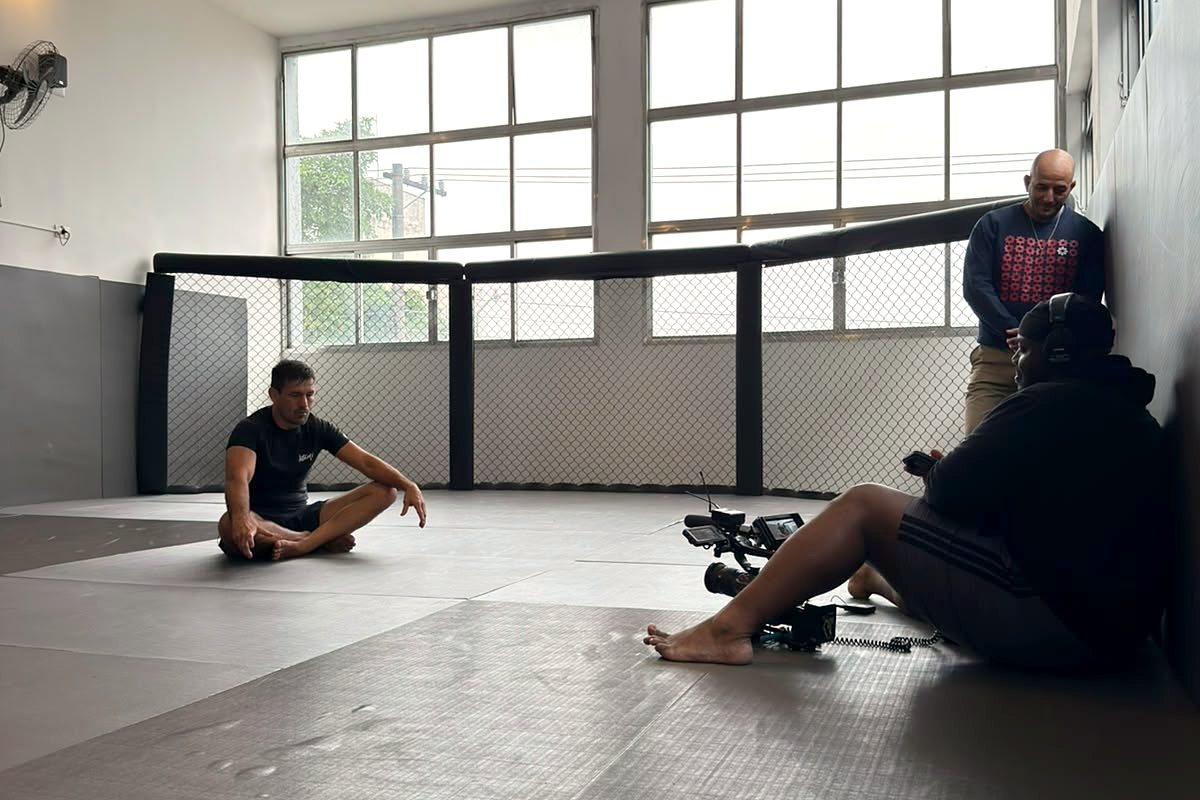
A few things genuinely help:
- Talk to me, not the camera. You're having a conversation with a person who's interested in what you do.
- Eat something beforehand and keep some water nearby.
- Remember the first few minutes are a warm-up. People loosen up as they go, and the best answers usually come later.
- Remember you're the expert in the room. Nobody knows your business better than you do, and that's all you're being asked about.
A bit of nerves on camera is no bad thing either. It usually reads as caring about what you do, which is exactly what we're trying to show. Frankly, I'd rather film someone who's a bit nervous and means every word than someone who's polished and says nothing. The first one makes a better film every time.
If you've got questions before the day, or you want to see what the finished films actually look like, have a look at our films or get in touch. We'd much rather answer a worry a week before the shoot than find out about it on the morning.