Real people on camera matter more as AI content floods feeds because they're proof. A generated face can say anything, so it carries no weight. A real founder, a real member of staff or a real customer, filmed where the work actually happens, is evidence that the business exists and stands behind what it says. Research from The Harris Poll UK, published in April 2026, found seven in ten consumers trust adverts made entirely by humans, and that drops to two in ten when an advert is generated by AI alone.
I've believed this for a long time, but the gap is getting wider. The cheaper it gets to make something that looks real, the more a viewer's first question becomes whether it is.
Why do people trust a brand more when they see real people?
Because a person on camera is putting their face to it. They can be recognised, called, held to what they said. That's a risk a business takes on deliberately, and viewers read it as confidence. A stock presenter or a generated spokesperson costs the business nothing to put in front of you, so it proves nothing.
It's also about who's speaking. People have always believed customers and staff more than the company talking about itself. We wrote about why in brand documentary vs corporate video, and it's the same instinct here. Someone in your position, describing what happened to them, is the version people believe.
What happens to trust when AI is involved?
It falls, and it falls further the more of the work AI does. The Harris Poll UK found trust in an advert drops from seven in ten when it's made entirely by humans, to four in ten when AI tools are used, to two in ten when it's generated by AI alone. Six in ten said a person should always be involved in making advertising that uses AI.
The same research picked out what makes people suspicious. Images that look too perfect, scenes that feel unrealistic and small inconsistencies were the most common giveaways. That's an interesting turn. For years, polish was how a brand showed it had spent money. Now flawless can read as fake.
The cheaper it gets to make something that looks real, the more people want to know whether it is.
Trust drops sharply as AI takes over the work, so a film that shows real people doing real things has more to offer than ever.
Does it have to be the founder on camera?
No, and often it's better when it isn't only the founder. The most convincing person in a film is usually the one with the least reason to flatter the business.
On Barry Road it's the homeowner describing a full renovation in their own words, once the family had moved back in. On the Car Planet film for Plug In Stations, the whole thing is the customer talking. The installer never makes the claim about themselves, which is exactly what makes it usable in a sales conversation.
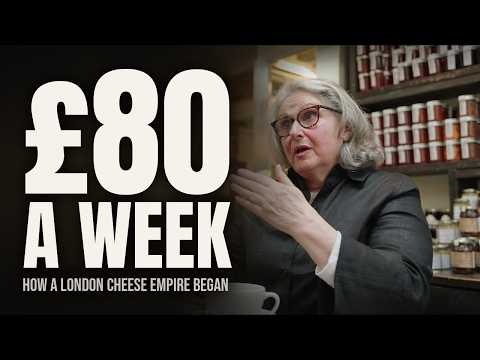 La Fromagerie
And La Fromagerie carries four people's accounts of the same business. The founder tells how it started, with a wheel of Beaufort in a garden shed, and the cheesemongers and the wholesale side fill in what it is now. Four voices that don't sound rehearsed are harder to doubt than one polished one.
What if you or your team hate being on camera?
Most people do, at first. The good news is that documentary filming doesn't ask anyone to perform. Nothing's read off an autocue, and nobody's asked to do it again with more energy. The interviews are conversations, and the people who are most nervous at the start often give the best answers an hour in, once they've stopped noticing the camera.
We've written a practical guide to preparing to be filmed for a brand film, and the short version is that you don't need to be good on camera. You need to know your subject, which you already do.
How do documentary films use real people differently?
They let the story come from the people instead of handing them a script. We spend time with a business before filming, work out what the story actually is, and then go and film conversations in the places the business really lives. La Fromagerie was filmed during trading hours, around customers, in cheese rooms that are cold and dark. That's harder work. It also looks exactly like the shop you'd walk into, and no prompt can give you that.
The other difference is time. A documentary leaves room for the pause before someone answers and the work happening at the speed it really happens. Those are the moments that make a viewer feel they're seeing something true, and they're the hardest thing to fake.
Isn't AI content just cheaper to make?
Per piece, yes, and that's exactly the problem with it. When anyone can produce a polished video in an afternoon, polish stops telling the viewer anything about you. Feeds fill up with it, and it all starts to look the same. What can't be produced in an afternoon is access: the people in your business, the place they work and the things they've been through.
A smaller business usually has more of that than it thinks. The owner answers the phone. The person on camera is the person who'll turn up. That's something a big brand with a generated spokesperson can't buy, and it's worth putting on screen while it still stands out.
Is polished production a bad thing now?
No. Craft still matters. A badly lit, badly recorded film of real people tells the viewer you didn't care enough to do it properly. The point of a proper grade, proper sound and a patient edit is to show real people clearly. Smooth them into something that looks generated and you've thrown away the reason they were there.
Where I'd draw the line is anything that makes the person look less like themselves. Heavy retouching, a script they'd never say in real life, a set that looks nothing like where they work. Keep the people real and spend the budget on showing them well. If there's someone in your business people should hear from, tell us about them, or see more of the films we've made on our films page.