Use your brand story as the brief behind everything you publish, not as a piece of content in itself. Break it into a handful of recurring themes, collect real moments that prove each one, then decide what each format should do with them. Every post, film and email then starts from the story rather than from a blank page.
This post is the working method. It covers how to split a story into content pillars, how to build a store of material to draw from, what rules to set for each format, and a simple routine to keep it running. The advantages of doing it this way are in how a brand story benefits content creation, so I'll keep this one practical.
What's the first step in using a brand story for content?
Get the story into a form a busy person can use. A three-page narrative is lovely, but nobody's going to open it on a Tuesday when they need a caption. I'd boil it down to one page with four things on it:
- **Who you're for.** The specific person you help, described in a sentence.
- **Why you exist.** The real reason you started, in the words you'd use to a friend.
- **What you believe.** Two or three opinions about your work that others in your sector might disagree with.
- **What good looks like.** The change a customer sees when it goes well.
If you haven't written those yet, how to write a brand story takes you through it, and what a brand story should include lists the parts. Once you've got the page, print it and keep it next to whoever makes your content. That person, whether it's you, a colleague or a freelancer, should be able to hold any idea up against it and see in ten seconds whether it belongs.
How do you split a story into content pillars?
A story is one thing. Content needs to be many. Pillars are how you get from one to the other, and the trick is to take them from the story rather than from a list of topics you think people want.
Take the four parts above and turn each into a recurring theme. Say you run a family joinery firm that started because the founder was fed up with throwaway kitchens. Your pillars might be:
- **The people.** Who's at the bench, how they got there.
- **The belief.** Why you build things to be repaired, not replaced.
- **The work.** One job from start to finish, with the awkward bits left in.
- **The result.** What a customer says a year later.
Four pillars is plenty. Three is fine. Eight means nobody remembers them, and you'll end up posting about whatever's convenient. Each pillar should be able to produce content for years, because it's a theme and not a topic. "The people" never runs dry. "How to choose a hinge" does.
You'll also notice what's missing: a pillar for "promotions" or "company news". Those still happen, but they're not what the story's about. They sit on top, and you'd tag them to a pillar so they don't feel like a different business is speaking.
What's a story bank and why do you need one?
A story bank is a single document, spreadsheet or folder where you drop real moments as they happen, each tagged to a pillar. A customer's message. A photo from site. A line someone said that made the room laugh. A mistake that taught you something. A before and after.
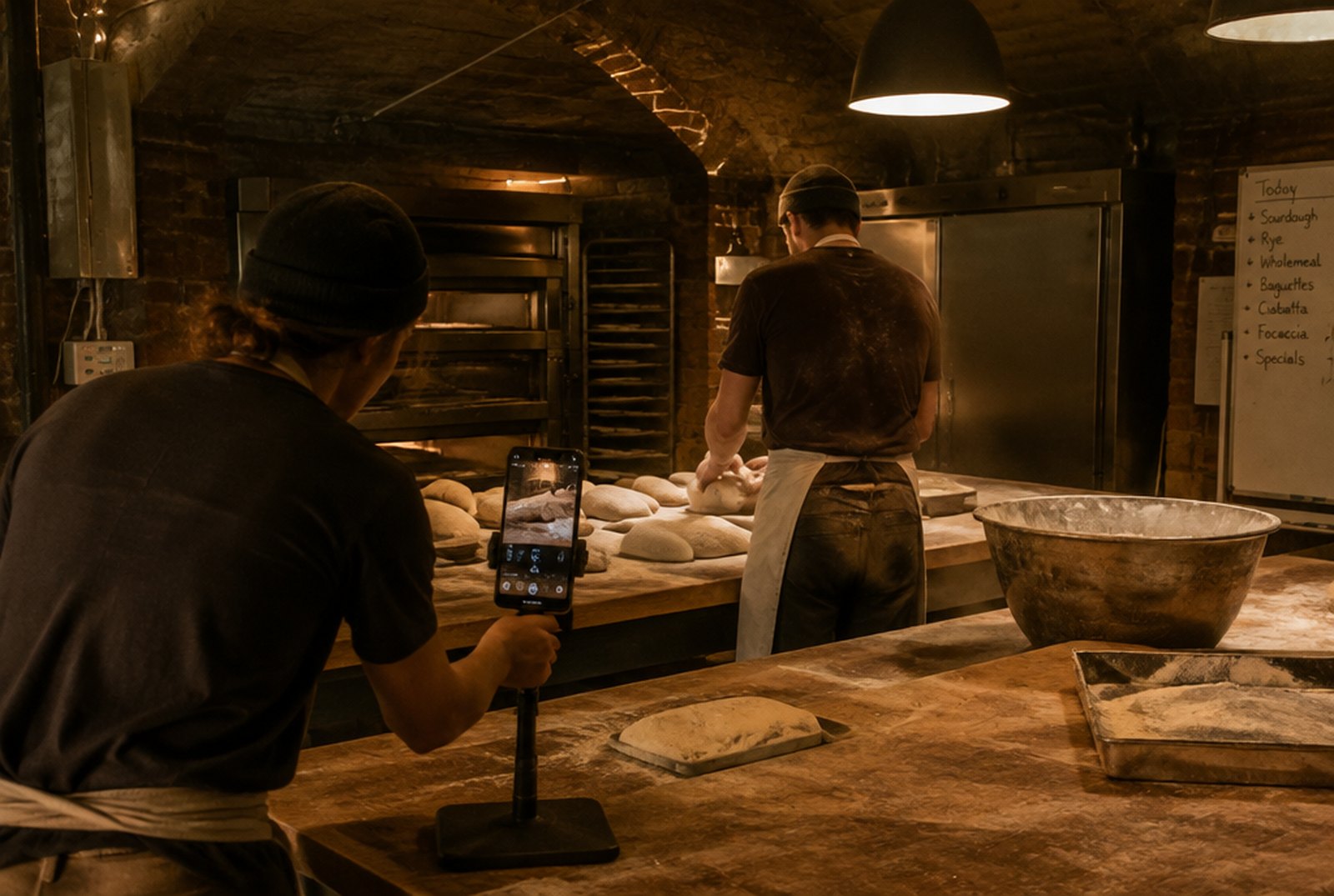
This is the part that makes the biggest practical difference. Most businesses don't lack stories, they lack a place to put them, so they're forgotten by the time anyone sits down to write a post. If you've ever shot a day's filming, you know the best material isn't scripted. It's the offhand thing said at the end of a take, or what someone does when they think the camera's off. A bank catches that sort of thing before it's lost.
Keep entries short. A line or two, a date, a pillar tag and where the raw material lives. Ten minutes a week is enough. If you've got a few months of entries, you'll never face a blank page again.
Short-form wins on daily reach, but most people who start a long-form video say they'll watch it to the end.
Source: YouGov, UK media consumption trends in 2026 (2,130 UK adults)
What rules should each format follow?
The same story behaves differently in each format, and it helps to decide the rules once. Here's roughly how I'd set them for a small business.
Long-form film
This is where the whole story lives and where you get to take your time. One film, built on real people talking about why they do the work, gives you the raw material for nearly everything else. It's how a brand story video does its job, and our guide to how long a brand story should be covers length. Film first, because every short piece can come out of it. Doing it the other way round costs more.
Short video and social
Short-form takes one moment from the story and does nothing else with it. One idea, one person, one reason to keep watching. Don't try to tell the whole story in thirty seconds. Tell one beat and let the viewer chase the rest. Our post on turning one brand film into a year of content goes through how the cutting works.
Website and landing pages
These carry the story in its most compressed form. The homepage says who you're for and why you exist. The About page gives the longer account. Case study pages show the "what good looks like" part with a real customer. They should all use the same wording, because that's what makes a visitor feel they've arrived somewhere coherent.
Email and written pieces
Email is where you can be more personal, and where the "what you believe" part of the story shines. Opinions make good emails. Articles can go deeper on one pillar, and each one should link back to the film or the About page so a reader who's curious has somewhere to go.
Sales material
Decks, proposals and quotes are content too, and they're the ones most likely to drift off-story because someone's in a hurry. Give your sales team the one-page version and a short film to send out before a call.
How do you keep the story from sounding repetitive?
This worry comes up every time, and it's mostly unfounded. You're not repeating the story, you're returning to it from a different angle. A pillar looks different in a film, a caption, a customer case study and a founder's email. People who've seen it four times in four forms don't feel nagged. They feel they know you.
What does help is rotating the proof. Don't tell the "why we started" story every month. Tell it properly once, then show smaller moments that demonstrate it. If your belief is that kitchens should be repairable, show a repair. If it's that you answer your own phone, show the phone being answered.
What does a simple weekly routine look like?
Here's one that works for a small team and doesn't eat a day a week:
- **Monday, ten minutes.** Look at the story bank. Pick the strongest two or three entries, each from a different pillar.
- **Midweek, one hour.** Turn them into the week's pieces, checking each against your one-page story.
- **Friday, ten minutes.** Drop new moments into the bank from the week that's just gone.
Once a quarter, review. Which pillars are getting the most attention? Which are going quiet? Have you got enough footage or photographs, or is it time to book another shoot? The quarterly check is also the time to ask whether the story itself needs adjusting, because businesses change and it's better to update it on purpose than let it drift.
If you're stuck on what to film, the answer is nearly always the bank. Look for the pillars with the thinnest evidence and shoot for those.
How do you stay consistent when more than one person makes content?
Write down three things the story can't say, three phrases you do use and a couple of sample posts that get it right. That's a style guide, and it fits on one side of paper. People who haven't been inside the business for years pick up the tone from examples far faster than from rules.
It also helps to have one person own the story, with the authority to say "that's not us". They don't need to be senior. They need to know the business and care about it, and I've written about what that role actually involves in who a brand storyteller is.
What mistakes do people make when they put a story into content?
The commonest one is treating the story as a slogan. They pull out a tagline, stick it on every post and call it done. A tagline isn't a story, and repeating it doesn't give anyone a reason to care. Show a moment that proves it instead.
The second is making everything about the founder's journey. The origin matters, but customers are mostly asking what's in it for them. Use your origin to explain why you do the work, then move to what the customer gets.
The third is skipping the bank and relying on memory. Within a month you're posting whatever's closest to hand, and the story's gone quiet without anyone deciding it should.
The last is leaving it too late to film. Written content can be knocked out in an afternoon, but good footage of real people takes planning, and it's the thing you'll wish you had more of in six months.
Where do people actually watch all this content?
It's worth knowing, because it shapes where the story shows up. YouGov's 2026 UK media consumption research found 57% of adults watch short-form video daily and 37% watch long-form, and 57% of long-form viewers say they're likely to watch all the way through. That's why I usually recommend the long film lives on YouTube and the website, with shorter cuts going out to wherever your customers are.
Pillars come from the story, proof comes from the bank, and the format decides how much of it you can say.
A worked example
Take a cabling manufacturer, an unglamorous business if ever there was one. Suppose its story is built on one belief: that the cheapest cable's rarely the cheapest job. The pillars could be the people who make it, the belief about quality, a customer job where cheap cable caused trouble, and the result.
The film is a documentary with two or three people from the shop floor and a customer, filmed on site. From it you'd cut a short on the people, a short on the belief, a case study page for the customer, an email to the mailing list, and a clip for sales to send before calls. It's all the same story. It just keeps turning up in a different place.
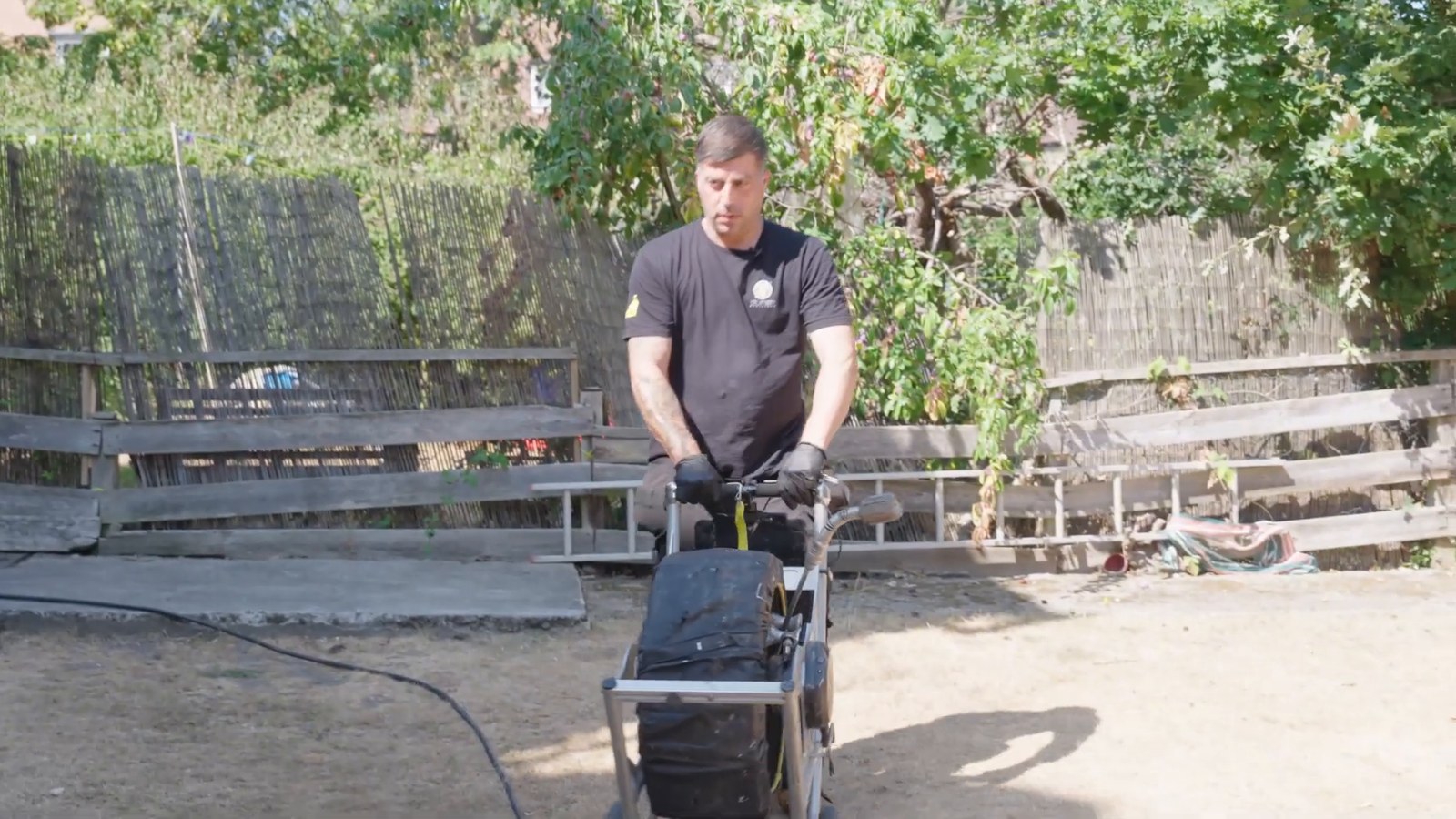
That's essentially how a single day on a drainage job became an eight minute film, a run of vertical shorts and carousels for us. One shoot, one set of real moments, cut for different audiences.
For the broader picture of how this connects to your marketing, how to use storytelling in marketing sits alongside this one, and the complete guide to brand storytelling ties the whole subject together.
If you've got a story and you want help getting it on film so you've got material for a year, tell us a bit about it.