A brand story should include who started the business and why, the problem it exists to solve, what it believes that others in its market don't, proof that it delivers, the real people behind it, and what all of that means for the customer. Leave any of those out and the story starts to sound like every other company's About page.
This post is a checklist of ingredients, not a method. If you want the order they go in, that's covered in how a brand story should be structured, and the question of how much room it all gets is in how long a brand story should be. Here we're just looking at what has to be on the table before you write or film a single thing.
What are the essential parts of a brand story?
After enough shoots you start to notice that the stories that land all carry the same handful of things, whatever the business sells. Here they are in the form I use when I'm planning a film:
- An origin. Where the business came from, in a specific place and time.
- A problem. The thing that was wrong or missing that made the business worth starting.
- A belief. A view the business holds that someone could disagree with.
- Proof. Evidence that the belief turns into something real.
- People. Named humans who do the work, in their own words.
- A point for the customer. What the story means for the person watching or reading.
You don't need to give every one the same weight. A business with a dramatic founding story can spend most of its time there. A business that's been quietly good for forty years might lean on proof and people instead. But if one of the six is missing completely, the audience can feel the gap even when they can't name it.
If you're starting from zero and want the basics first, what brand storytelling is is the place to begin. Everything below assumes you know why you'd want one.
Why does the origin matter?
Because an origin is the only part of your story that nobody else can copy. Competitors can match your prices, your services and your website copy. They can't have started in your garden shed in the year you started.
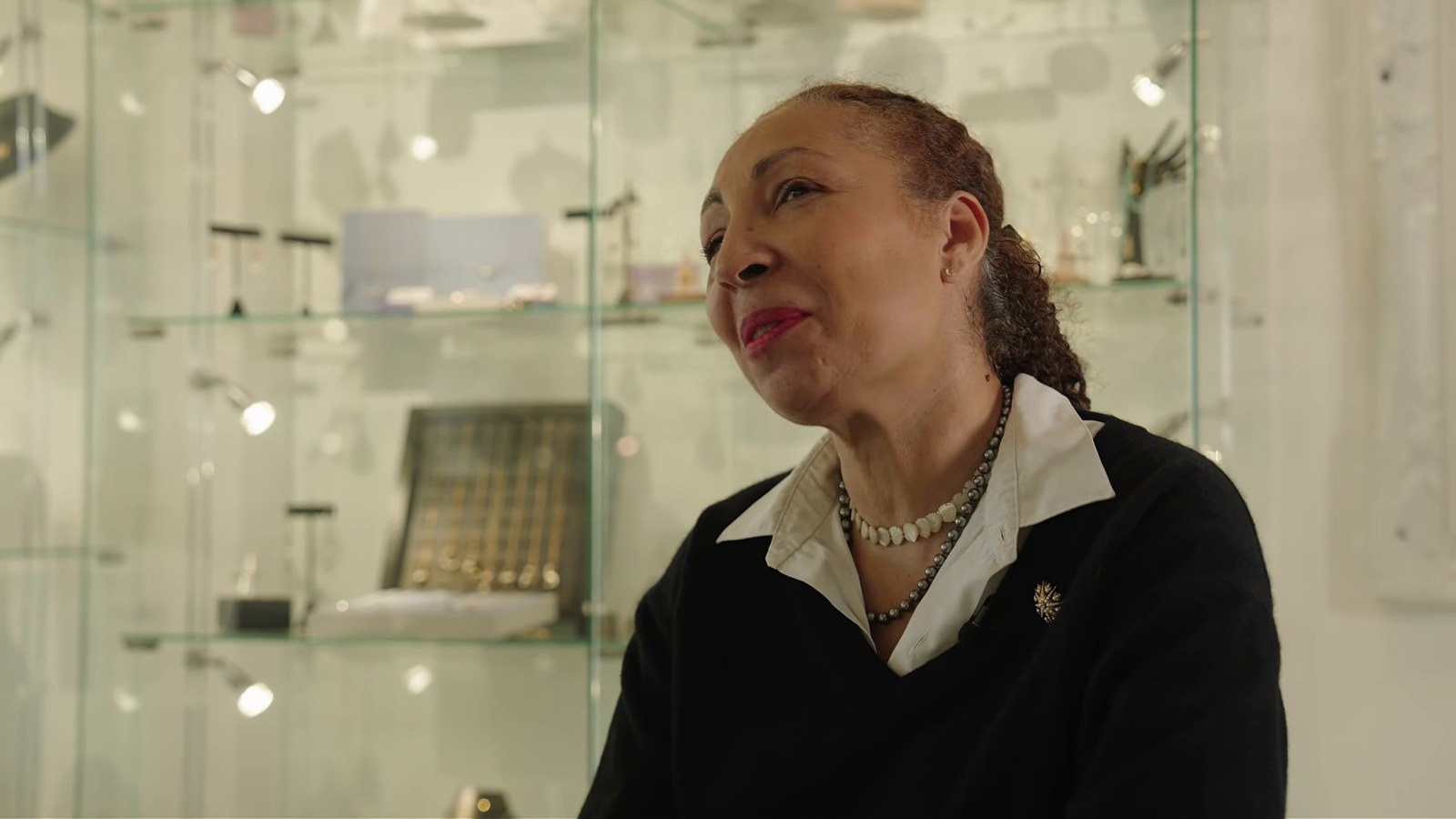
Good origins are small and physical. La Fromagerie is the clearest example I've filmed: a London cheese business that began with a wheel of Beaufort in a garden shed, and thirty three years later the story is still hanging off that image. Nobody has to be told it's a business with real roots. The shed does it.
When I ask a founder how they started, the first answer is nearly always the polished one: "We saw a gap in the market." It's accurate and it tells you nothing. The better answer comes about ten minutes later, usually after they've forgotten the camera is there. It's the job they hated, the conversation in a kitchen, the first customer who paid cash. That second answer is the origin. The skill is in getting to it.
Keep it specific. A date, a place, a first customer, a first mistake. Vague origins ("we've been serving the community for years") read as filler, because they are.
What problem does your business solve?
Every business that has lasted exists because somebody was fed up with something. The problem is the reason the origin matters. A cheese shop started in a shed is just a quaint detail until you know that good, properly aged cheese was hard to find and the founder wanted to fix that.
State the problem from the customer's side, in the words a customer would use. Not "fragmented supply chains" but "you couldn't buy it anywhere near here." If your customers wouldn't recognise the sentence, it belongs in an investor deck, not a brand story.
This is also where a lot of businesses go wrong with a founding story that's all about them. It's lovely that you left corporate life to follow your passion. Your customer wants to know what that did for them. The problem is the bridge between your story and theirs.
Shoppers trust other people's words over yours, so show proof in your story, not only claims.
Source: YouGov, how UK shoppers check an online store is legit (2,119 GB adults)
What do you believe that your competitors don't?
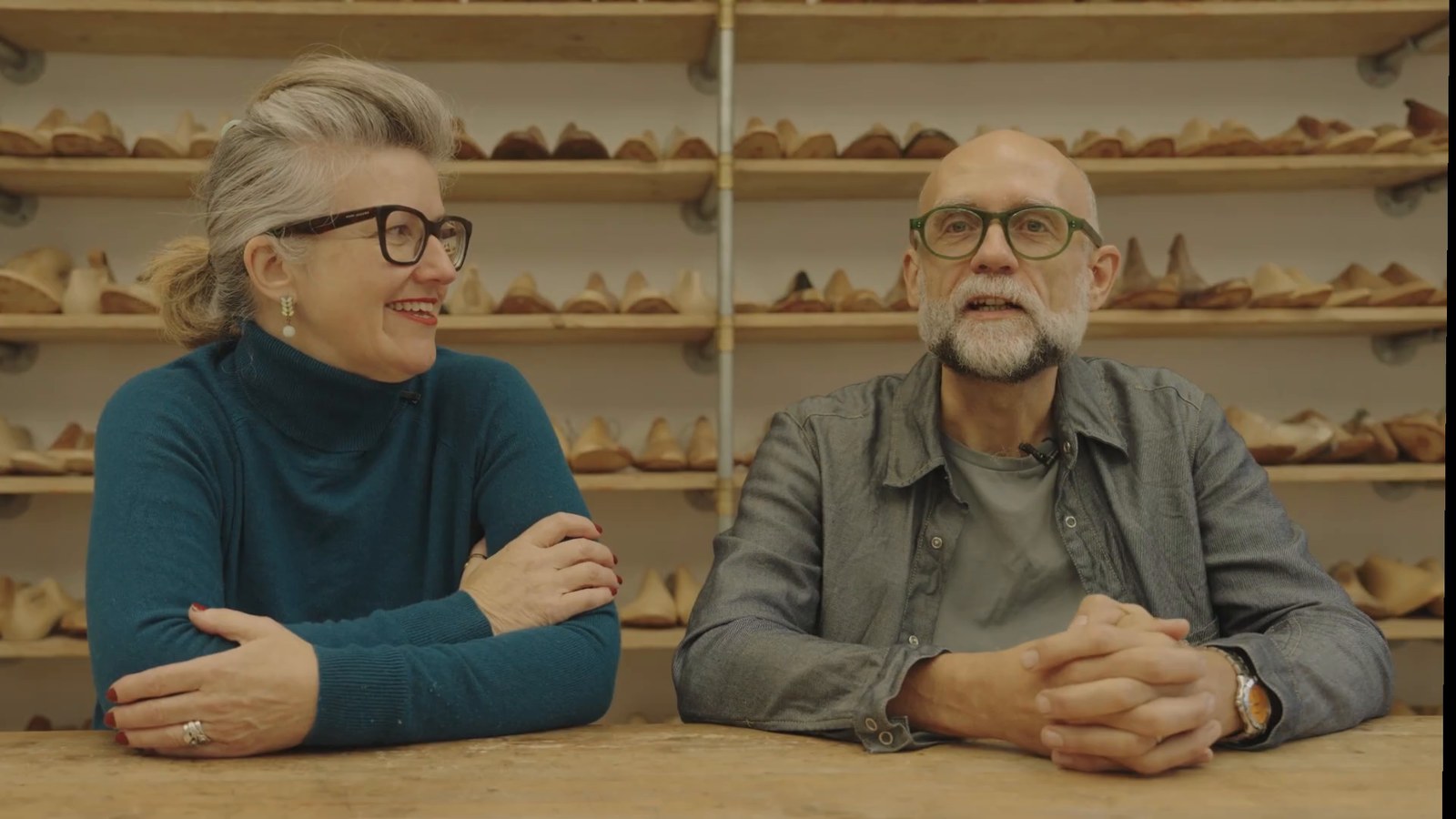
A belief is a position. It's something a reasonable person in your market could say no to. "We care about our customers" isn't one, because nobody says they don't. "A pair of shoes should take six months and 210 steps, and we won't speed that up" is one, because plenty of makers would look for a shortcut. The Carreducker shoemakers film runs on exactly that kind of commitment, a pair of shoes that takes 210 steps and six months, and it carries weight because it asks something of the maker.
Patagonia is the famous example. In November 2011 it ran a Black Friday advert in the New York Times under the headline "Don't Buy This Jacket", asking people to think before buying. A brand has to hold a belief pretty firmly to put it in print on the busiest shopping day of the year. Most businesses don't need to go that far. They do need one belief they'd defend in an argument.
Here's a quick test. Write down your belief, then try to write the opposite. If the opposite is something no sane business would ever say, you haven't found a belief yet. Keep digging.
What proof does a brand story need?
Proof is what separates a story from a slogan. Anyone can say they're trustworthy. A story earns it by showing something that would be hard to fake: years in business, a particular piece of work, a customer in their own words, a process you can watch happening.
This matters more than it used to. People are wary of what businesses say about themselves. YouGov's research found 71% of UK shoppers check reviews or ratings to decide whether an online store is legit, and only 26% look at the seller's own website. So a large share of the people who find your brand story are starting out unsure.
The best proof on film is often the dullest-sounding thing: a process shown at the speed it really happens, in full. On the drainage job we filmed, there was no need for a voiceover claiming the team was skilled. You watch them do the job. Proof is something the audience sees, not something you tell them.
Numbers help if they're yours and they're true. Years in business, jobs completed, repeat customers. Don't borrow a statistic from an industry report and present it as your own result, and never round a number up because it sounds better. That's the quickest way to lose the trust you were building.
Who should be in the story?
Real people, named, saying things in their own voice. This is the part I care most about, because it's the part that most separates a documentary-style film from a corporate one. You can read more about that split in brand documentary vs corporate video.
A brand story needs at least one person who isn't the founder. A founder telling you the company is great is a founder doing their job. A colleague, a customer or a supplier telling you the same thing, unprompted, is evidence. On the La Fromagerie film the story is carried by the founder and by the people who run the business with them, and the difference between those voices is a big part of why it feels true.
Pick people who talk about the work, not about the brand. Somebody who says "it took us three attempts to get that rind right" is more convincing than somebody who says "we're passionate about our product". Ask about the work and the brand takes care of itself.
People believe the person who describes the work. They stop listening to the person who describes the brand.
What does the story mean for the customer?
The last ingredient is the one that gets skipped most. A story that's entirely about the business is a memoir. A brand story ends by pointing back at the person reading it, and says, in effect, here's why this matters to you.
You don't need a hard sell. It can be as light as a closing line: this is why every order gets checked by hand, which is why you can trust what turns up. The point is that the audience leaves knowing what they get from all of this.
The Easee brand films are built this way. Each starts from a moment in the customer's life, like moving house or passing a driving test, rather than from the company.
Do these ingredients change for a small business?
The list stays the same. What changes is where you find the material. A large company has archives, old adverts and a long line of people to ask. A small one has the owner, a couple of staff and a few customers who've been around from the start, and that's plenty.
Smaller businesses often have the advantage on people and origin, because the founder is still there and can be filmed. Larger ones tend to be stronger on proof, with years of work to point at. Play to whichever you've got. Trying to sound bigger than you are is one of the commonest mistakes I see, and it strips out the very detail that would have made the story worth telling.
If you can only gather three of the six today, make them the origin, the people and the proof. The belief and the customer point can be sharpened in the edit, once you can hear how everyone actually talks about the work.
What should you leave out of a brand story?
Almost everything that isn't one of the six. A few things show up in first drafts again and again and can usually go:
- A full list of services. That's what the services page is for.
- Awards and logos in bulk. One that matters is plenty.
- Corporate vocabulary: solutions, synergies, "world class".
- Every founder's career history. Keep the bit that explains the business.
- Anything you wouldn't say out loud to a customer across a table.
Cutting is the hardest part, and it's where people who aren't used to editing struggle. Every extra detail feels like it's earning its place. It isn't. A story with six clear ingredients is easier to remember, and easier for someone else to repeat, which is how stories really spread.
How do you check your brand story is complete?
Before anything is written or filmed, try saying the story out loud in about two minutes to someone who doesn't work for you. If you hit all six without notes, you've got the material. If you keep reaching for adjectives where a fact should be, that's the part missing.
Then ask the other person one thing: what would you tell someone else about us? Their answer is your real brand story, because it's what survives. Compare it to what you meant to say. The gap between the two is your editing brief.
If you want to see how the finished thing looks, a brand story example walks through a full one, and the complete guide to brand storytelling ties the whole subject together. When you're ready to turn the material into a film, our brand films page shows how we work, and if you'd like to talk it through, get in touch.