Brand storytelling is the practice of explaining who a business is, why it exists and what it does for people through real events, real people and a clear sequence, rather than through a list of features and claims. It turns "we're reliable and passionate" into something a viewer can picture. Done well, people remember it and repeat it.
This post is the plain definition: what brand storytelling is, what it isn't, the parts every one of them contains, and what it looks like once it's a film on a screen. I'll leave the reasons it matters, the craft of a good one and the how-to for their own posts, and link to them as we go.
What does brand storytelling actually mean?
It means using a story to communicate your brand. A story has someone in it, something they want, something in the way, and a change by the end. A brand story points that at your business: the founder who couldn't find what she wanted so she made it, the customer whose problem went away, the team that spent six months getting one thing right.
The word "brand" trips people up. A brand isn't your logo or your colours. It's what people think and say about you when you're not in the room. Storytelling is the most reliable way I know of shaping that, because people don't repeat a list of services to a friend. They repeat what happened.
Here's the short version I give clients on the first call. Brand storytelling is being specific about the true things that make you who you are, in an order that makes someone care.
What isn't brand storytelling?
Quite a lot of what gets called storytelling isn't, and it's worth separating it out.
- A mission statement. "We deliver innovative solutions to our clients" tells nobody anything. A story would show one solution, one client and one afternoon.
- A company timeline. Founded 1998, moved premises 2004, new website 2019. Dates aren't events anyone felt.
- An advert with a narrative bolted on. A 30 second ad can have a mini plot, and some are brilliant, but its job is a sale this week. A brand story has a longer shelf life.
- Made up customer personas. If the person is invented, the story is invented. People can smell that.
None of this means a timeline or a mission statement is useless. They're just not the story. The story is the thing underneath that makes either of them worth reading.
A story is what's left when you take the adjectives out.
What are the parts of a brand story?
Every one I've worked on has the same bones, even when it's a five minute film about a cheese shop. If you want the detailed version, I've put the full checklist in what a brand story should include and the order in how a brand story should be structured. Here's the plain-English version.
- A person. Somebody the viewer can look at. Usually the founder, a maker, a customer or a member of the team.
- A reason. Why they started, or why they do it the way they do. It's rarely "to make money", and when it is, it's more interesting to say so.
- A difficulty. Something was hard, or went wrong, or nearly didn't happen. Without this, it's a brochure.
- A change. Something is different at the end, for them or for the customer.
- Proof. Things you can see: the workshop, the work, the faces, the numbers if they're real.
Notice what's missing from the list. Nowhere does it say "our values". Values show up inside the other five. If someone says they care about craft, show the 210 steps of making a hand-sewn shoe and you won't need to say it.
Where do brand stories come from?
From the business, nearly always. I've never needed to invent one. When I sit down with a founder, the story is typically in the first twenty minutes, said in passing, usually followed by "but that's not really interesting".
It nearly always is. A cheese business that began with a wheel of Beaufort in a garden shed. A pair of shoemakers who trained under the same master, then left to make shoes their own way. A jeweller who works only in recycled metal and holds her packaging to the same rule. Those are real films we've made, and in each case the founders thought the interesting bit was something else.
If you're hunting for yours, ask these:
- What did you do before this, and why did you stop?
- What's the thing customers say about you that you didn't expect?
- What did you almost give up on?
- What do you do that a competitor wouldn't bother with?
The answers are your raw material. The craft is in choosing which of them to tell, and in what order. That's covered in how to tell a brand story.
Most people skip what they can, so a story people choose to watch has the advantage over an ad they're forced to sit through.
Source: Attest, 2026 UK media consumption report (1,000 UK adults)
What does a brand story look like on screen?
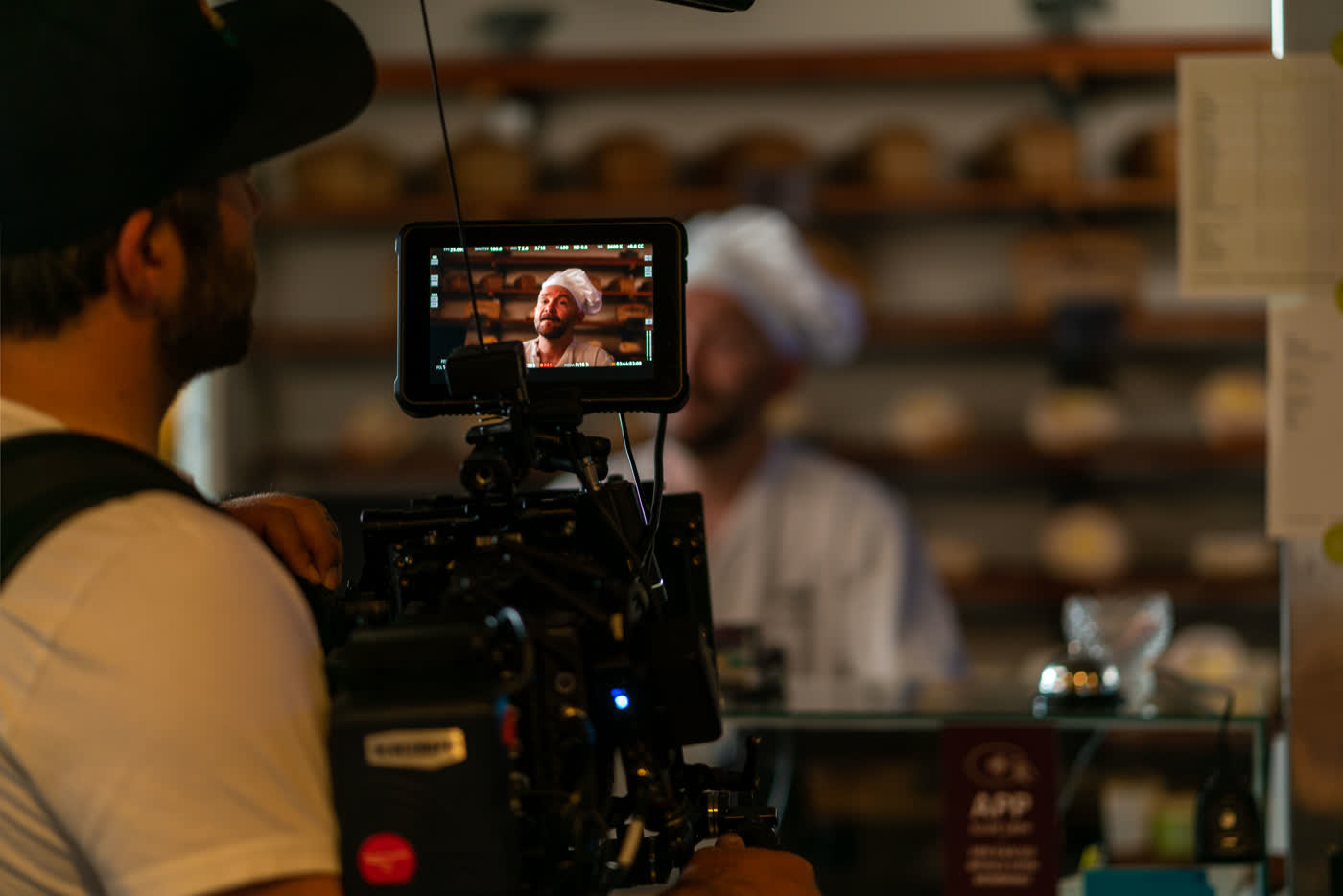
It's a person, in their own place, talking about their own work, with the work shown over the top. That's the whole format of a documentary brand film, and it's the reason I make them that way. You can read more about how it differs from a conventional promo in brand documentary vs corporate video.
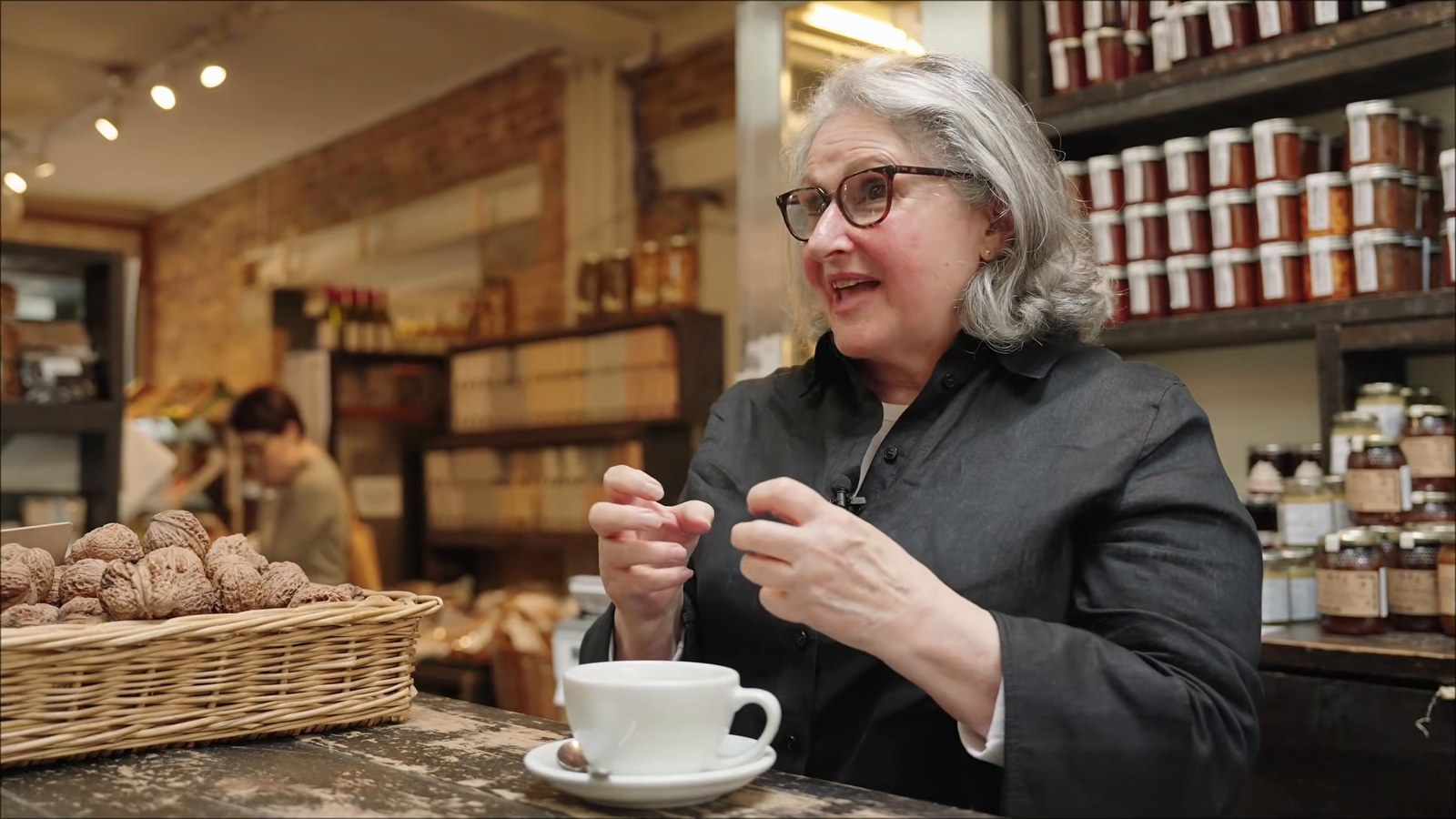
Take our La Fromagerie film. The founder tells how it began, the cheesemongers and the wholesale side fill in what the business is now, and we filmed it in shops that were open and trading. Nobody reads out a slogan. You come away knowing what kind of people run the place, which is the entire point.
The same story can live as a longer film on the website, a three minute cut for social, and a vertical clip of one good sentence. I've written about stretching one shoot a long way in how to turn one brand film into a year of content.
What are the main kinds of brand story?
Most of the ones I see fall into a few families, and it helps to know which you're reaching for.
- The origin story. How it started. Powerful when the beginning was odd or small, like a market stall or a garden shed.
- The craft story. How it's made, and why that takes the time it does. Strong for makers, trades and anything hand done.
- The customer story. What changed for somebody who used you. It carries the most trust because it isn't you saying it.
- The purpose story. Why you do it the way you do, often tied to a belief or a standard you won't drop.
- The behind the scenes story. What a normal day looks like, including the awkward bits. People love seeing the real thing.
Most brands have all five and need one at a time. I'd start with whichever your best customers already bring up unprompted. The mix is what the big guide on brand storytelling helps you plan.
What are the common mistakes?
The one I see most is telling the story from the company's side of the desk. The viewer doesn't care that you're proud of your innovation. They care whether you can solve their problem and whether you seem like people they'd trust. The second is making everyone sound the same. When four staff members all say "we put the customer first", the film has told you nothing.
The third is hiding the difficulty. Brands are scared of showing the time it went wrong. But a story with no obstacle has no shape, and viewers are quick to distrust anything too smooth. Patagonia's 2011 "Don't Buy This Jacket" advert is a good example of a brand being honest about its own impact, and people still talk about it.
Who tells a brand story, and who should?
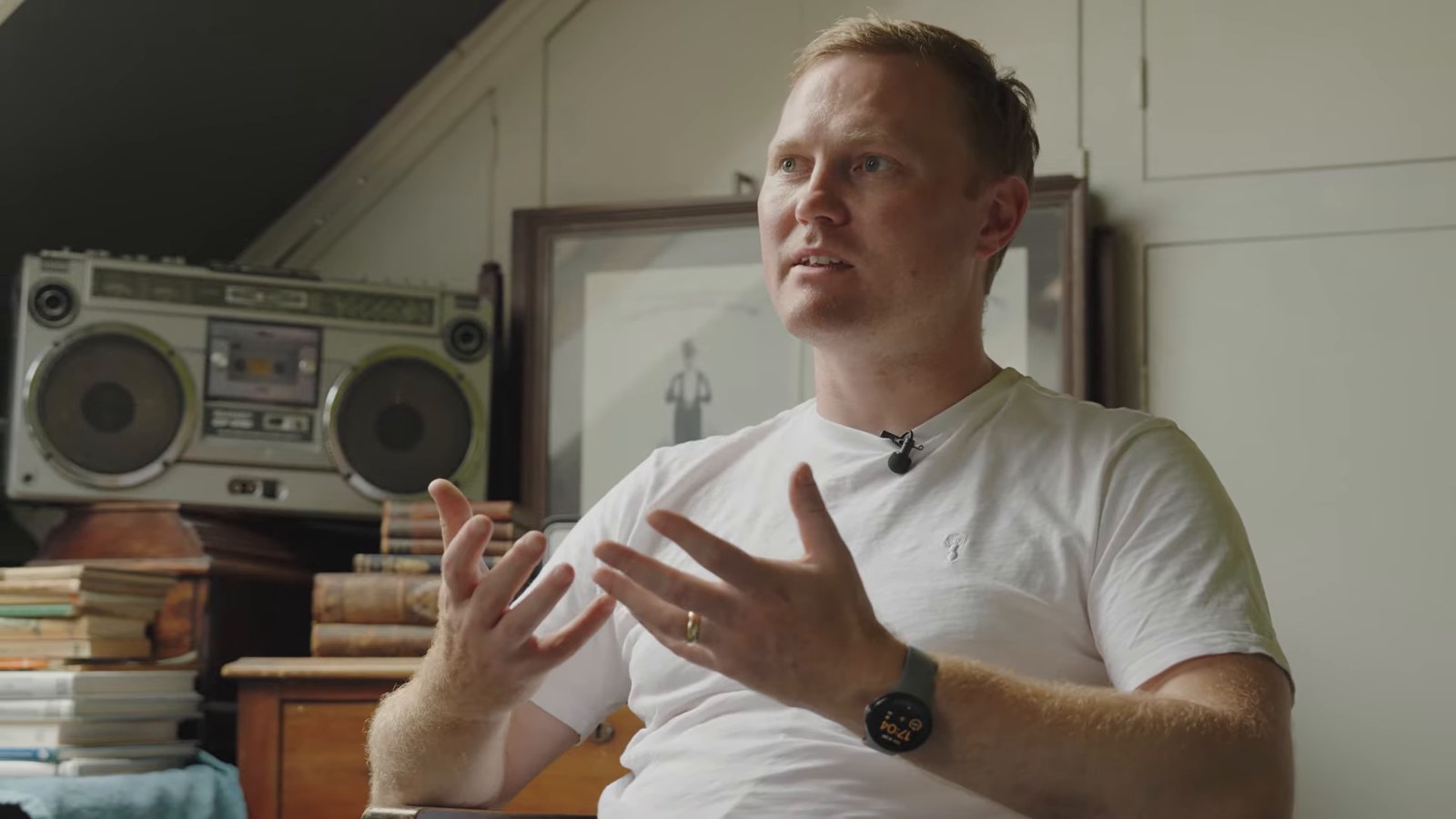
Whoever lived it. That's usually the founder, but not always. In a lot of the best films I've made, the most convincing person is the one closest to the work: the cheesemonger, the installer, the maker at the bench. A founder gives you the why. The people doing the job every day give you the proof that the why is real.
It's worth thinking early about who is comfortable on camera, because it shows. Nobody needs to be a natural. They need to be talking about something they know cold, in a place where they feel at home. If someone's nervous, preparing for being filmed takes most of the sting out of it.
Is brand storytelling the same as marketing?
No, though it feeds it. Marketing is everything you do to get found and chosen. Storytelling is one way of making the message part of that stick. It's a different thing from a campaign, which has a start and an end date. A story carries on. If you want that framed as a strategy question, brand storytelling in marketing goes into it.
I'd also say it's not the same as content. Content is the container: a video, a post, a page. A story is what you put in it. You can fill a calendar with content and never tell anyone anything.
Why does the format matter so much now?
Because of where people spend their time. Attest's 2026 UK media consumption research found 88% of Gen Z always or usually skip ads, and even 60% of baby boomers do. People watch what they choose, and a lot of that is other people talking about what they know. A brand story fits in naturally. A brochure doesn't.
It's also the place where a stranger is deciding whether to trust you. Video lets them see your face, your premises and how you talk before they ever pick up the phone. I explain the practical case for it in why brand storytelling is important.
What makes a brand story good or bad?
The difference is mostly specificity and honesty. A good one has a real person saying real things you couldn't have guessed. A bad one has a lot of passion and no proof. I've given that its own post in what makes a good brand story, including a few quick tests you can run on your own.
You'll also find examples worth studying in what a brand story example looks like. Dove's 2013 Real Beauty Sketches is the one many marketers cite, in which a forensic artist drew women from their own descriptions and then from a stranger's, and the strangers' versions were kinder. It works because there's a real person, a real surprise and a change in how the women saw themselves. There's no product on screen until the very end.
How do you start telling yours?
Don't start with a film. Start by writing down the three or four moments in your business that you'd tell a friend over a drink. Then ask yourself which one a stranger would find most interesting, and which one is most true to how you work today. Where those two overlap is usually where your story sits.
After that, the real decisions are practical: who tells it, where it gets filmed, how long it runs, and where it's going to live. Our video brief guide will help you turn that into something a production company can price.
For the full picture across every part of this, our complete guide to brand storytelling links to everything in one place. And if you've got a story you think is worth filming, get in touch and we'll talk it through.