A good brand story is specific, true and about a person. It has a clear difficulty and a change, it shows its proof instead of claiming it, and it leaves the viewer knowing something they couldn't have guessed about you. If it could be swapped onto a competitor's website without anyone noticing, it isn't good yet.
This post is the quality check. Rather than defining the thing or walking through how to write one, it gives you seven tests to run on a story, the warning signs of a weak one, and examples of the difference. The basics are in what brand storytelling is, the checklist of parts is in what a brand story should include, and the drafting process is in how to write a brand story.
What are the tests of a good brand story?
I use seven. A story that passes five or six is in good shape. One that passes two or three needs another go.
Is it specific?
"We care about quality" fails. "We make each pair in 210 steps and it takes six months" passes. Specifics are what a viewer remembers and what a competitor can't borrow. If you can swap a number, a name or a place in your story for another without it changing anything, it was vague.
Is it true?
Obvious, but it's where many stories fail quietly. A founder polishes the origin story until it sounds like a pitch, and it loses the one slightly awkward detail that made it real. Customers can't always say what's off, but they can feel it. Keep the odd bits in.
Is it about a person?
People connect to people. A story about "our team" is a story about nobody. Pick one face. A founder, a maker, a customer. The viewer should be able to describe them to a friend afterwards.
Is there a difficulty?
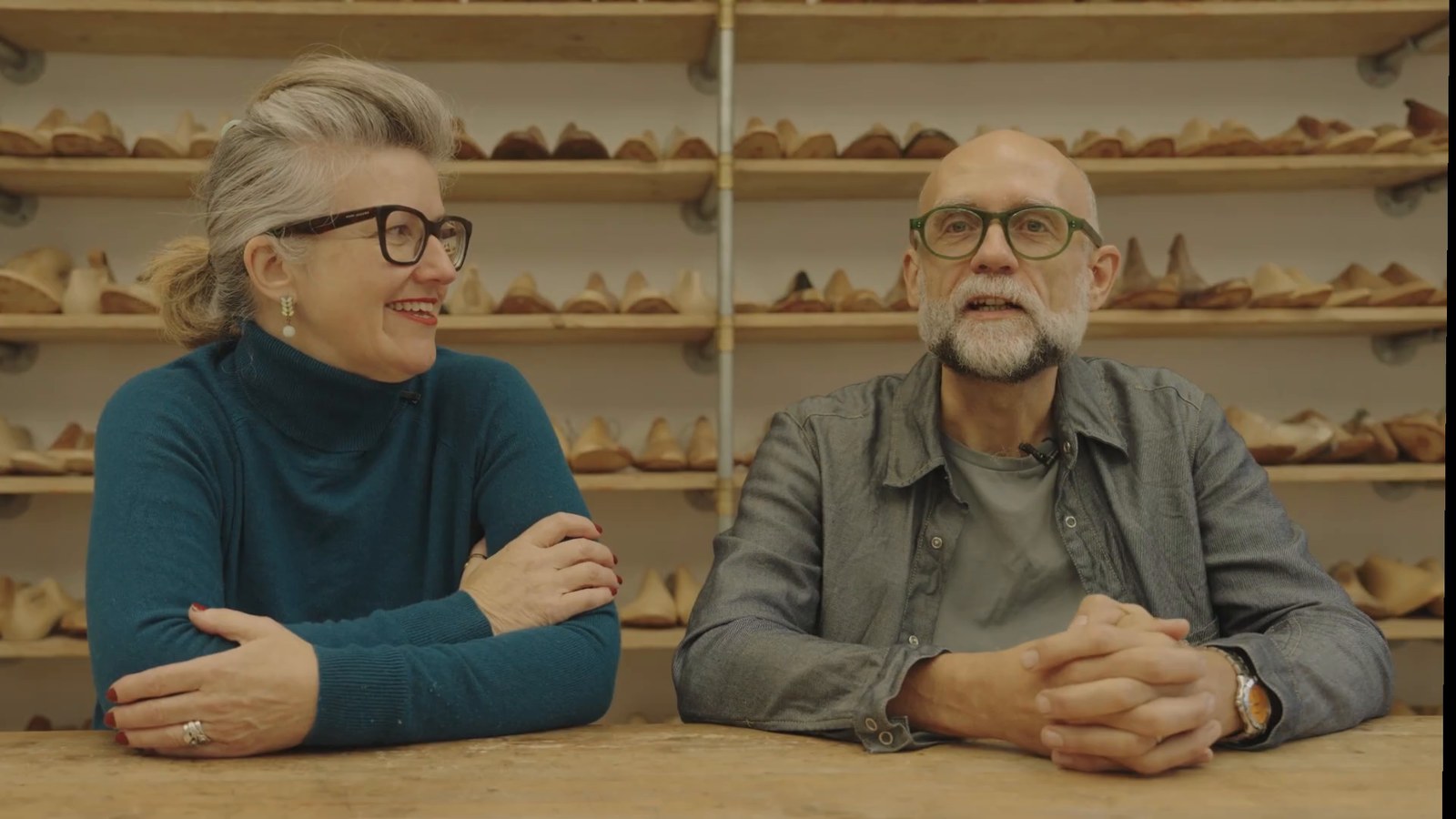
Without something in the way, there's nothing to resolve. It doesn't need to be dramatic. A renovation that had to be finished in eight weeks with a baby due. A shoemaker whose order takes six months from first measurement to delivery. The obstacle is what gives the audience something to lean towards.
Is there a change?
By the end, something has to be different. The business grew, the customer's problem went away, the maker passed the skill to someone else. If a viewer reaches the end and thinks "so what happened?", the change is missing.
Does it show its proof?
Anyone can say they're the best. A good story shows the workshop, the work, the customer, the result. In film terms, it's the difference between a person saying "we're meticulous" over a shot of a logo and the camera staying on a hand as it does the work at the speed it really happens.
Would someone repeat it?
The final test is the one I find most useful. After watching or reading, could somebody retell it in two sentences to a friend? If yes, it's working. If they'd have to say "it was a nice film, I can't quite remember what it was about", it isn't.
If nobody can retell it in two sentences, it's a mood, not a story.
What does a good brand story look like in practice?
Our signwriting film is a handy illustration, because the subject is a trade that's almost entirely hand and eye. The film doesn't explain signwriting. It watches the brush load, the single unbroken line and the finished sign on the street. A viewer comes away understanding why it's hard, without anyone telling them. That's proof doing the work that a claim would normally try to do.
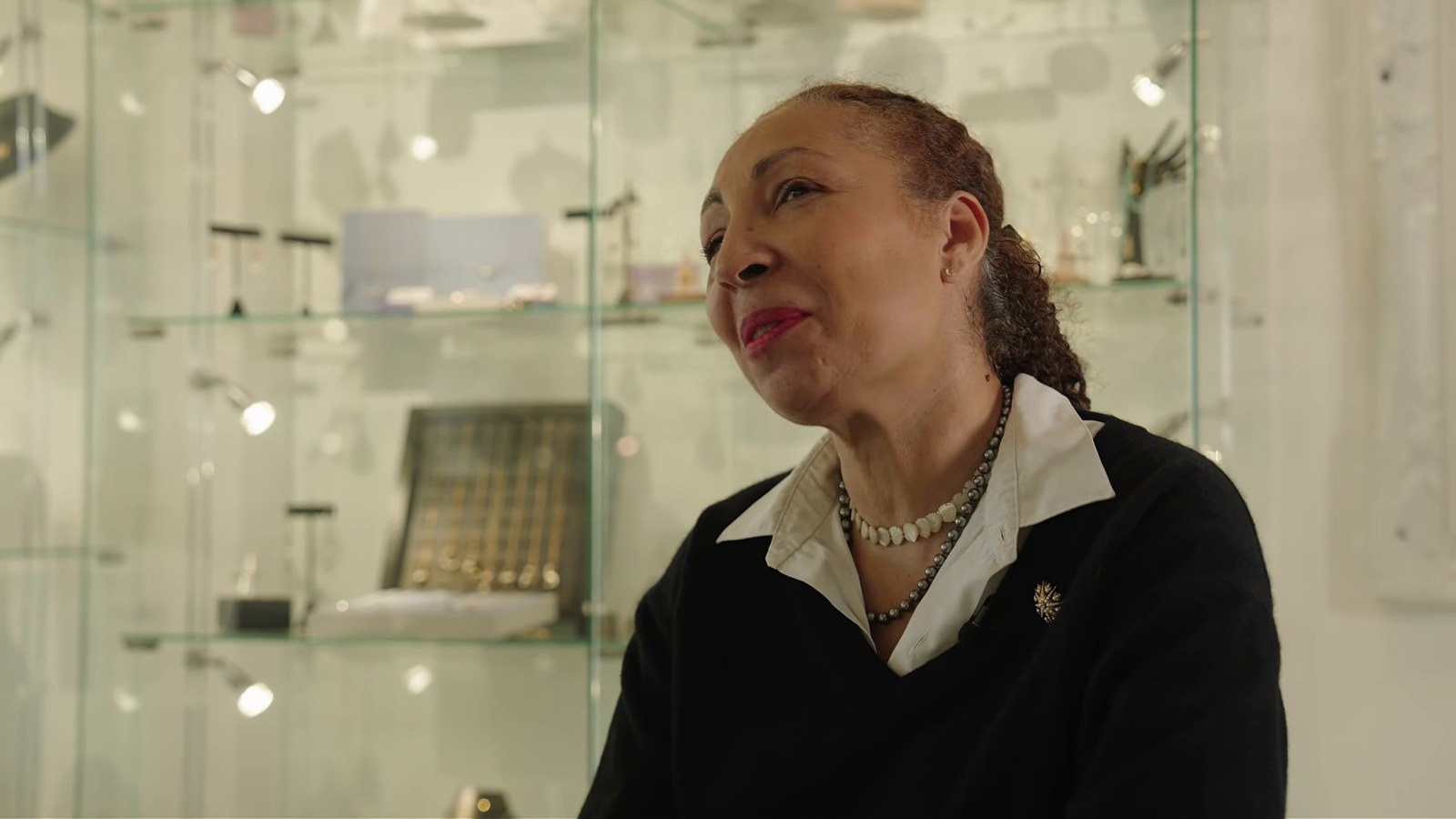
The Catherine Marche film takes a different route. It's built around why she works only in recycled metal, told by her at the bench. The reason is the story. The jewellery is the evidence.
Beyond our own work, two campaigns are worth studying for their craft. Dove's Real Beauty Sketches (2013) is built on a single surprising moment, and Patagonia's "Don't Buy This Jacket" Black Friday advert (2011) works because a clothing brand told customers to buy less, which was a real position it then had to live up to. Neither relies on a slogan. Both rely on something that happened or something the brand actually did.
What are the warning signs of a weak brand story?
- Everyone says the same word. "Passion", "innovation" and "solutions" crop up in a hundred other brands' stories. If you can predict the vocabulary, it's weak.
- It's told from the company's side. "We're proud to announce" is a press release. The viewer is the hero, or at least a person they recognise is.
- No proof on screen. A lot of talking over generic stock footage and drone shots.
- Too many people. Eight voices in four minutes means no voice. One or two, deep, beats six on the surface.
- It never mentions a problem. Smooth is suspicious.
- It's long on history, short on now. Founding dates are fine, but the viewer needs to know what you do for people today.
What does weak turned into strong look like?
Here's a made up example, so nobody gets embarrassed. A plumbing firm's About page says: "We're a family business with over twenty years of experience, committed to delivering the highest standards of service." It's not untrue. It just isn't anything.
Now sit with the owner for twenty minutes and ask what a bad week looked like. He tells you about the winter the boilers all failed on the same cold weekend, and how he and his brother drove around the borough until two in the morning because they'd told one elderly customer they'd be there. That's the story. It has a person, a difficulty, a promise kept and a reason the business works the way it does.
Nothing about the facts changed. The first version is a description. The second is something that happened. That move, from description to event, is the single biggest upgrade you can make to any brand story, and it almost always starts with a conversation rather than a writing session.
People are wary of what brands say about themselves, so a story that's visibly true has a lot of work to do.
Source: Feefo, UK consumer research (3,000 UK consumers, Censuswide fieldwork)
How should a good story handle the difficult parts?
Include them, proportionately. A difficulty isn't a confession. It's the part of the story that proves the business is real. Nobody believes a company that has never had a bad day.
The rule I use is to show the problem, show what was done about it and show who did it. Leave out blame, drama for its own sake, and anything that would embarrass a customer or colleague. And if a part of the story is still raw for the person telling it, check they're comfortable with it being public before it goes anywhere. A story that costs the storyteller something they didn't agree to give is a bad story, however well it plays.
What's the biggest mistake you see?
Starting with the logo and the mission. Most films I'm asked to fix open on the company name over a sweeping drone shot, then a voiceover saying what the company believes. Within ten seconds the viewer knows it's an advert. Start instead on a person doing something or saying something unexpected, and the viewer stays long enough to find out why.
The runner-up is trying to cover everything. A brand story isn't the whole company in four minutes. It's one true thread that makes a viewer curious enough to ask about the rest. Pick the thread with the most feeling in it and let the rest wait.
Who should judge your brand story?
Not only you. You're too close to it, and so is everyone in your office. Ask two people who fit your ideal customer, plus one person who knows nothing about your industry. Show it to them cold, and ask what they'd say about the business afterwards. Their answers beat any internal review, because they're hearing it for the first time, which is exactly how your future customers will.
Be careful with feedback from people who'd prefer to see themselves in it. Everyone wants a line, a logo or a thank you. Politely keep to the thread that passes the tests.
Do good brand stories need a big budget?
No. The tests above cost nothing to run. Whether a story is good depends on the thinking and the honesty, not the kit. A phone, decent sound and a founder who talks easily can produce something far better than a glossy production with nothing to say.
A bigger budget buys you things around the story: better light, sound that's easier to listen to, more coverage of the work and careful editing. It doesn't buy the story itself. I've written more on the difference between a polished video and one people actually watch in how to make a brand video people watch.
Does a good story have to be emotional?
It has to be felt, which isn't the same as being sad or sentimental. A dry, funny founder explaining something they've obsessed about for twenty years is an emotional experience. A cheese shop owner describing a wheel of Beaufort in a garden shed is emotional because it's tender and a bit absurd.
Trying to force a tear usually backfires. Viewers are sceptical of manufactured emotion, and the sensible approach is to let the person be themselves and trust the audience to feel what they feel. If someone cries in an interview, that's theirs, and the decision on whether it stays in is a joint one with them.
Why does consistency make a story better?
A brand story isn't one film. It's what comes through across your site, your sales calls, your social posts and your packaging. The most memorable brands tell the same true story a hundred ways. Familiarity matters too. Feefo's 2026 research with 3,000 UK consumers found 63% are concerned about fake reviews. People are wary of what brands say about themselves. A good story, told consistently and visibly true, is how you become believable.
That's the reason I like documentary-style brand films. One shoot gives you enough real material to cut a long film, short clips and quotes that all say the same thing in the same voice. It also means a sales team and a social team aren't inventing different versions of who you are. The difference between this approach and a conventional promo is set out in brand documentary vs corporate video.
How do you test yours before you spend anything?
Here's a cheap exercise. Tell your story out loud to someone who doesn't work in your industry, with no slides. Watch their face. Where do they lean in? Where do they glance at their phone? Those are the parts to keep and the parts to cut. Then ask them to repeat it to you afterwards. What they remember is your real story. What they forget was filler.
Do that, then work through the seven tests, and you'll have a version worth putting in front of a camera. The wider picture is in the complete guide to brand storytelling, and if you'd like a second pair of eyes on your story, get in touch.