Brand storytelling is important because people buy from businesses they understand and trust, and a story is the quickest honest way to earn both. It makes you memorable, gives customers a reason to choose you beyond price, and gives staff, partners and the press something true to repeat. It matters most when your competitors all look the same.
This post is the business case: the practical reasons a UK company should bother, what the evidence does and doesn't back up, and what it costs you to skip it. For the psychology of why stories stick, see why storytelling works in marketing. For hard numbers on results, how effective storytelling is in marketing goes further.
Why do customers choose a business with a story?
Because most businesses in a given market look and sound the same. Open ten websites for electricians, accountants, gyms or marketing agencies in the same postcode and count how many say "friendly, professional, reliable". Every one of them. When the claims are identical, the buyer falls back on the one thing that's easy to compare, which is price.
A story breaks that deadlock. It gives somebody a reason to pick you that isn't a number. They know who started it, why, what you won't compromise on and what working with you feels like. None of that is on a price list, and none of it can be copied by a competitor with a cheaper quote.
I've seen this on shoots many times. The film isn't what changes the business, the clarity is. When a founder has said out loud, on camera, why they do things the way they do, they can say it in sales calls, on tenders and to new hires. The film just makes it travel.
Does it really build trust?
Trust is the bit I'd put first, because it's getting harder to come by. Ofcom research from late 2024 found four in ten UK adults had come across misinformation or deepfake content in the previous four weeks, and most of them had seen it online. People are on their guard, and they're right to be.
In that climate, polished claims carry less weight than they used to. What carries more is evidence that real people are behind the business: a face, a voice, a workshop that exists, a customer who says something specific. A brand story done properly is a pile of that evidence in one place.
The more people doubt what they see online, the more a real person in a real room is worth.
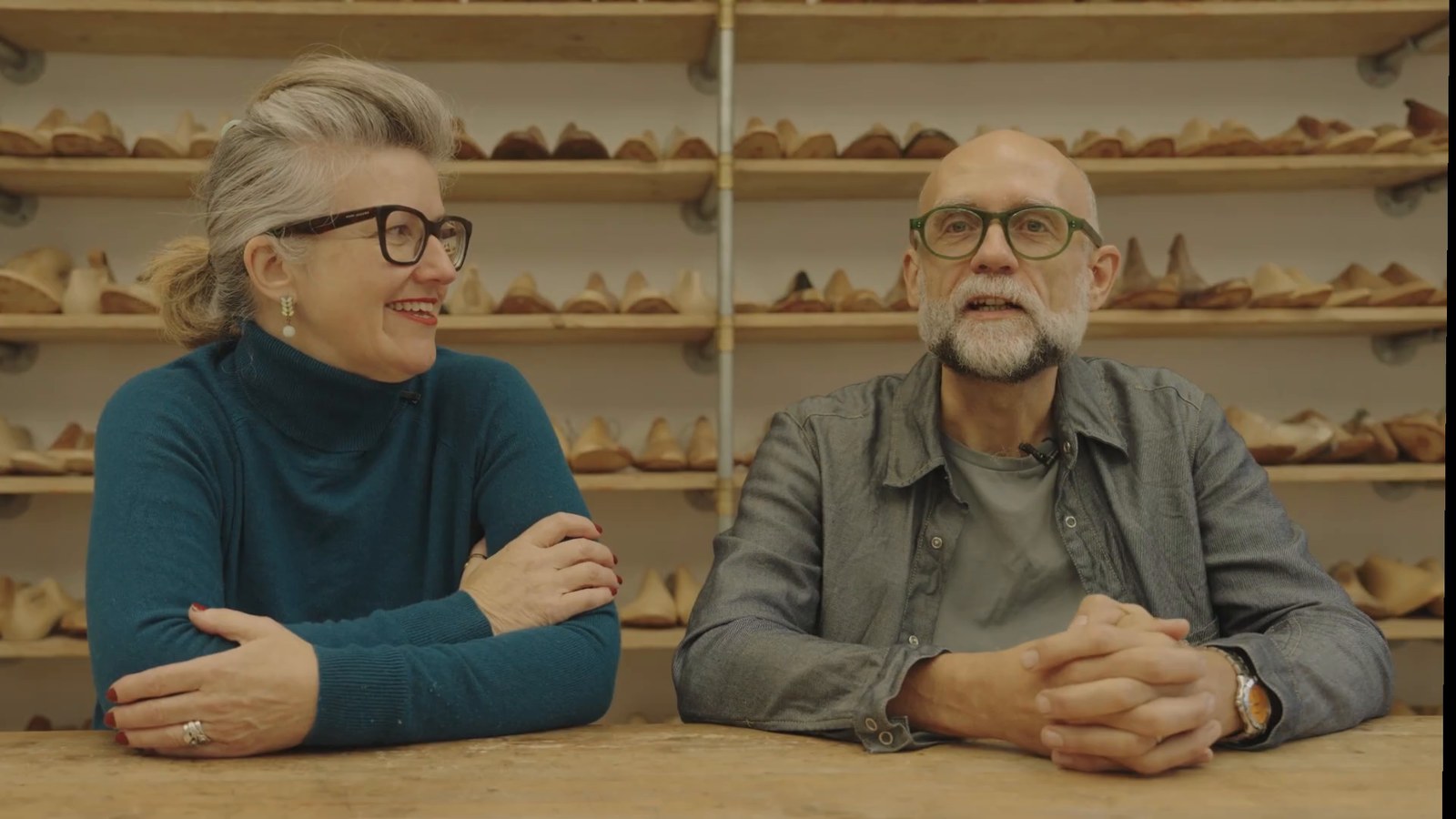
It also helps that stories are hard to fake convincingly. Anyone can write "passionate about quality". Very few can spend four minutes explaining the 210 steps in a hand-sewn shoe, as the two makers in our Carreducker film do, without the detail giving them away one way or the other.
Why does a story make you memorable?
Nobody remembers a feature list. They remember a moment, a person or something that surprised them. If someone watches your film on a Tuesday and brings it up on a Friday, the story is what they repeat, not the services page.
That matters because most purchases in B2B and in high-value consumer decisions aren't made on the day someone first hears of you. There's a gap, often weeks or months, between first contact and the decision. A story is what survives the gap. When your name comes up in a meeting, somebody says "oh, they're the ones who..." and finishes the sentence with your story.
That's the practical test of whether your brand storytelling is working. Can a customer finish the sentence "they're the ones who..." without looking at your website?
Does storytelling help with price?
It does, indirectly. When a customer understands why you do something the way you do, the price makes more sense. It's the difference between "£X for a pair of shoes" and "£X for a pair that takes two people six months to make by hand". Nothing about the shoes changed. The customer's understanding of what they're paying for did.
I'd never promise that a film will let you put your prices up, because it depends on the business and the market. But I've seen over and over that businesses with a clear story get fewer "can you do it cheaper?" conversations, because the people who come to them already know what they're buying.
That's connected to why a film should have a job to do. I've written about that in why a brand film needs a business goal.
Four in ten UK adults had met misinformation or deepfake content in the previous four weeks, so people increasingly look for evidence that a business is run by real people.
Source: Ofcom, Four in ten UK adults encounter misinformation (November 2024)
What does it do for hiring and staff?
More than most owners expect. A story tells potential employees what it's like to work somewhere and what the business stands for, and it tells existing staff what they're part of. The people in the film become the best recruitment material you've got, because candidates see how they speak about the job when nobody's selling.
There's a quieter effect too. The staff who appear in your film tend to stand a bit taller afterwards. They've been asked to explain what they do and why it matters, and most don't get asked that very often. If you're building the case for this side of it, take a look at recruitment and employer brand videos.
Does it matter for B2B as well as consumer brands?
Yes, possibly more. In B2B, several people have to agree before anything is bought, and none of them has time to read everything. A short film that explains who you are lets one champion inside the buyer's business pass your story to the others without having to retell it badly.
Our char.gy work is a good example. Being certified as a B Corp is hard to earn and dull to explain, so we let the people who'd done the work explain it in plain language. The film is now the most viewed video on their YouTube channel. Complex, serious subjects don't need to be told in a complicated way, and they often land best when told through the people who lived them.
What does the evidence actually say?
I'd rather be straight about this. There's plenty of research on video and on trust, but very little that cleanly proves "story X produced Y extra pounds". Be wary of anyone quoting a precise multiple for what a story does to sales. Most of those figures come from marketing surveys that ask people what they think works, which isn't the same as measuring it.
What I'd rest the case on is simpler and easier to check against your own business. Do customers mention your story unprompted? Do enquiries arrive already warm? Do you spend less time explaining who you are in the first call? Those are the signs I look for with clients, and they show up in sales conversations long before they show up on a dashboard.
The Ofcom figures above are a good example of the kind of evidence worth trusting. They don't claim stories sell more. They show the environment you're talking into, one where people are more guarded about what they see online. How a business responds to that is a judgement call, and mine is that showing real people is the best response going.
What if my business seems boring?
Almost nobody thinks their business is interesting, and almost every business is. The cabling manufacturer, the drainage firm, the accountant who's been in the same building for thirty years. What makes it interesting isn't the product. It's the person who cares about it more than seems reasonable, and the specific, slightly odd detail that shows it.
You don't have to be glamorous. A day on a drainage job in Enfield turned into a longform YouTube film, a run of vertical shorts and two carousels for one client of ours, because the work and the people were real and nobody tried to dress it up. Ordinary trades are often easier to film well than polished ones, because there's nothing to hide.
If you're in a regulated sector, such as finance, law or healthcare, you can still tell a story. It just needs to stay inside what you're allowed to claim. Stick to the people, the process and the reasons, and leave outcome promises out.
How do you know if it's working?
Pick one or two things before you start, and look at them after a few months. Some options:
- Sales calls. Do prospects mention the film or the story without being asked?
- Enquiry quality. Are the people getting in touch closer to your ideal customer than before?
- Win rate on tenders and pitches. Does the film travel with your proposals, and what happens when it does?
- Hiring. Do candidates mention it, and are they a better fit?
- Watch figures. Views matter less than whether people watch to the end, but they tell you where the film is landing.
None of these needs special software. It needs somebody to keep notes. If you want help picking the right measure for your goal, our post on how video makes a business money is a sensible companion.
What does it cost you not to have one?
Three things, in my experience.
- You compete on price. When there's nothing to tell, the only difference left is the number at the bottom of the quote.
- You're forgettable. Customers can't recommend you in a sentence, so they don't, or they describe you generically.
- Other people tell your story for you. Reviews, competitors and search results fill in the gaps, and you don't control what they say.
None of those are dramatic. They're a slow drag on enquiries, referrals and margin that you'll never see as a line on a report, which is why it's easy to put off.
Is it worth it for a small business?
I'd argue small businesses benefit most. A large company has a recognised name and a marketing budget to push it. A sole trader or a ten person firm has the owner, the work and the people, and those are exactly the ingredients of a good story. You can't outspend a national brand, but you can be more real than one.
The caution I'd add is that a story only works if it's true and you actually deliver on it. If the film says you care about service and your phone goes unanswered for days, the gap shows. That's why I like to film the business as it is, rather than as it wishes it were.
What should you do first?
Before you think about cameras, get clear on what the story is. If you're not sure where to start, what makes a good brand story gives you the tests to apply, and the plain definition is in what brand storytelling is.
Then decide what you want the story to do: win tenders, attract better customers, hire, or support sales calls. A story with a job is far easier to make and far easier to measure than one made because everyone else has one. Our guide to how video makes a business money goes through the ways that plays out.
You can see how all the pieces fit together in the complete guide to brand storytelling. And if you'd like to talk about whether a film is right for your business, get in touch.