The hard part of filming a craft or heritage business is that the value lives in the process, and the process is slow, small and mostly in someone's hands. A good craft film gets close to that work, lets it run at the speed it really happens, and has the maker explain why they do it that way. Show only the finished object and you've made a product video for something nobody can judge from a picture.
Most craft businesses have the same problem online. The work takes weeks or months, and what a customer sees is a photo of the result next to a price. The price makes no sense without the process, and the process is invisible. Film is the best tool I know for fixing that, because it can show time, touch and skill in a way a photograph can't.
Why do craft businesses need film more than most?
Because what they're selling is the part nobody sees. Online, a handmade pair of shoes and a high street pair are just two pairs of shoes. The difference is in hundreds of hours of hand work, and until somebody shows that, the price looks like a typo.
There's a bigger reason too. Heritage Crafts, the charity that tracks traditional skills in the UK, publishes a Red List of crafts at risk. Its 2025 edition covers 285 crafts, and more than half of them are rated endangered or critically endangered. If you're still doing something by hand that most of the country has stopped doing, that's a story in itself, and most people have never seen it done.
How do you film a process that takes months?
You don't try to show all of it. You pick the moments that carry the most skill, film those properly, and let the maker describe the rest.
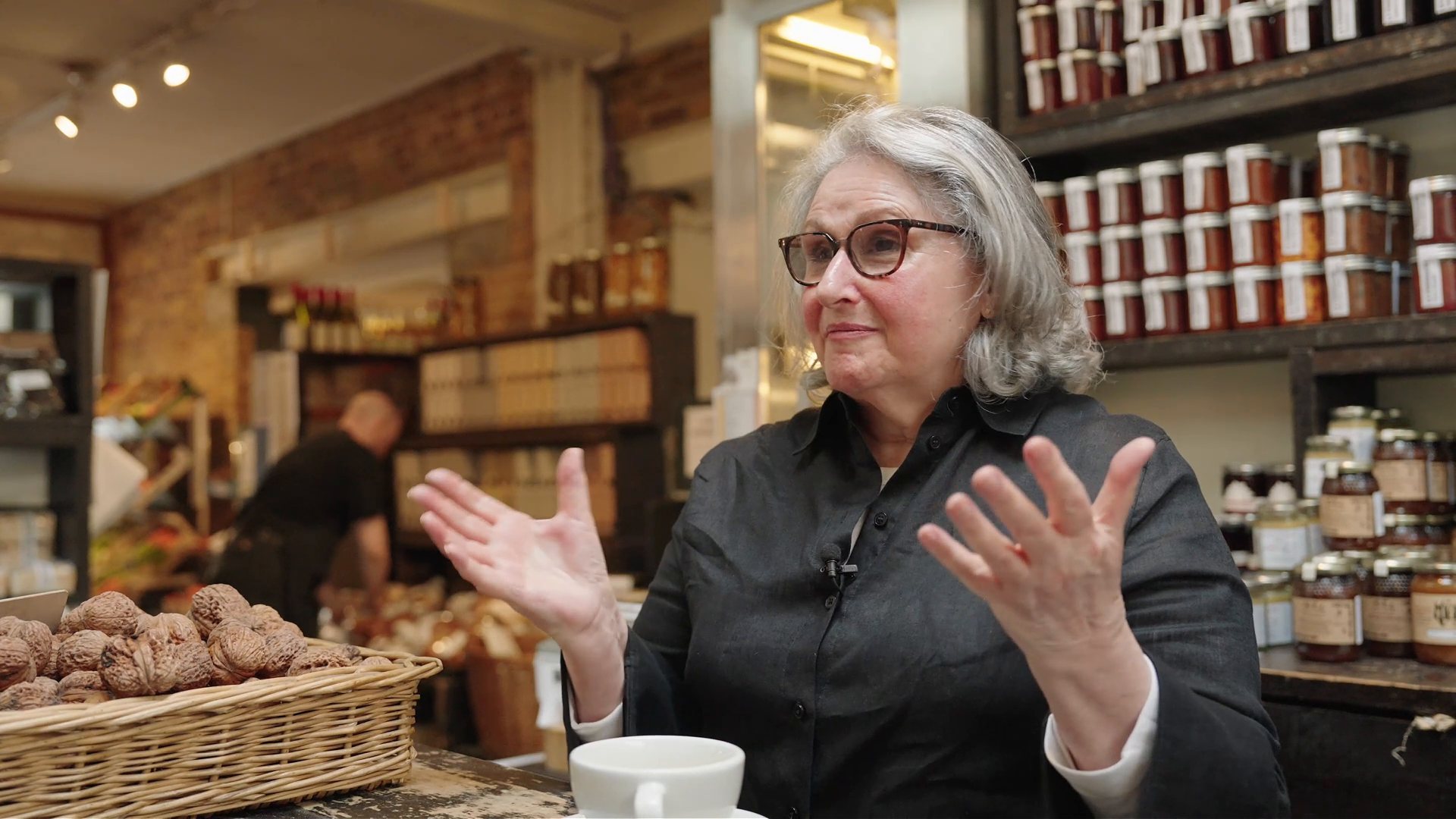
When we filmed Carreducker, the numbers were the challenge. Deborah Carre and James Ducker make every pair by hand, from measuring the foot through to the shoe trees, and it's 210 steps and around six months from order to delivery. None of that fits in a film. So the coverage went close on the hand sewing and the bench work, at the speed it happens, and the two of them explained the rest as one conversation in front of their wall of lasts. They'd already documented all 210 steps publicly, one post at a time, years before anyone called that content. The film didn't need to repeat it. It needed to show what it's like to watch it done.
That's the general rule. A handful of processes, shot well and given room, tell a viewer more about the skill involved than a quick montage of every stage.
More than half the traditional crafts assessed are at risk, so a business still doing the work by hand is showing people something many of them have never seen.
Source: Heritage Crafts, The Red List of Endangered Crafts, 2025 edition
Why shouldn't you speed up the craft?
Because the speed is the evidence. Time lapses and fast cuts make everything look easy, and easy is the last thing you want a customer to think about something that took years to learn.
 Signwriting Jack
 is the clearest example we've made. Hand painted signwriting has largely been replaced by vinyl, and the work is slow, precise and almost entirely in the wrist. The thing worth watching is the brush loading and a single unbroken line that either works or doesn't. Chop that into half second shots and you've thrown away the one moment where the viewer holds their breath. So we filmed close, waited, and let the shots run. Then we filmed the finished signs in place on the street, so you see where all that care ends up.
Time lapses make everything look easy, and easy is the last thing you want a customer to think.
Should the maker be in the film or just their hands?
Both, and in my view the face matters more than people expect. Hands show the skill. The person explains why anyone would choose to work this way, and that's often what a customer is really buying into.
Catherine Marche is a French goldsmith who's been designing and making bespoke jewellery in London for around twenty five years. She works only in recycled metal, holds her packaging to the same rule, remodels pieces people have stopped wearing, and teaches as well as makes. You can't photograph any of that. Jewellery films usually end up as product photography that moves, and with bespoke work the person is what the client's actually choosing. So the film is built around how she works and why, told by her at the bench and in the shop, with the bench coverage close on her hands.
What does a craft film need to show?
- The hands at work. Close, steady and long enough to follow what's happening.
- The tools and materials. Workshops are full of objects with history, and they do a lot of the storytelling for free.
- The maker talking. Why this way, who taught them, what they won't compromise on.
- Where the work ends up. On a shopfront, on a foot, on a hand. It closes the gap between the process and the price.
- The sound. A brush on glass, a hammer on silver, a needle through leather. Leave it audible. Music wall to wall is the quickest way to make a craft film feel generic.
How do heritage businesses use a craft film?
The obvious place is the homepage, where it explains the price before anyone has to ask. It's also useful anywhere you'd otherwise describe the process in words: commission enquiries, trade conversations, press, exhibitions, and recruiting students if you teach. Carreducker and Catherine Marche both teach as well as make, and a film that shows the bench is a strong advert for a course.
Cut it short for social as well. Craft does unusually well in vertical video, because a satisfying process holds attention without anyone needing to explain it. Ten seconds of one clean line is often enough to stop a thumb.
It also lasts. Process doesn't date the way a campaign does. A film about how you make something will still be accurate in five years if you still make it the same way, which for a heritage business is rather the point.
How do you prepare a workshop for filming?
Mostly you don't, beyond a tidy and a conversation about what's on the bench that week. Plan the shoot around real work rather than staging it, because a piece being made for a real customer has stakes, and you can see that in the maker's concentration. Tell us what stage each job is at so we're there for the interesting bits, and expect the crew to wait rather than direct. The film runs on your timing.
If you run a craft business that people don't understand from photographs alone, have a look at our films and tell us what you make.