
Businesses get copyright claims on their videos because a piece of music was used without a licence that covers that use, that platform or that length of time. Usually nobody meant any harm. Someone picked a track they liked, a library licence ran out, or a social edit got posted somewhere the licence never reached. What follows is general guidance from how music licensing works in production. It isn't legal advice, so if there's real money or a live dispute involved, talk to a solicitor or the rights holder directly.
Music is the part of a film people think about last and argue about most. It's also the part most likely to come back a year later, when the film's doing well and somebody's software finally notices it.
Why do businesses get copyright claims on their videos?
Mostly because of automated matching. On YouTube, every upload is scanned by Content ID, which compares it against audio and video that rights holders have registered. When it finds a match, the owner chooses what happens: block the video, run ads on it and take the money, or just track the viewing figures. Those choices can differ from country to country, so a film can play fine in the UK and be blocked somewhere else.
Letters and emails are the other route. Rights holders, and firms that work on their behalf, look for their music on business websites and social channels and write asking for a licence fee. That's a lot less pleasant than a YouTube notification, because it usually comes with a number attached.
The causes are boringly familiar:
- A commercial track on a business post. The trending sound everyone's using is licensed for personal accounts, not for your company.
- The wrong library for the account. TikTok's own commercial music terms say its Commercial Sounds are the only sounds available for commercial use, and only within TikTok. Meta has its own Sound Collection too, so check which library your account is drawing from.
- A licence that didn't travel. The edit was made for one platform with that platform's music, then uploaded to YouTube or LinkedIn with the track still on it.
- A licence in somebody else's name. A freelancer's or an old agency's subscription covered the original upload, and nobody checked whether it covered you.
- A subscription that stopped. Some libraries keep you covered for anything published while you were paying. Some don't. The terms decide, so read them.
What's the difference between library music and commercial music?
Every recorded track carries two copyrights. One is in the song itself, the melody and lyrics written by the composer. The other is in the recording, the actual performance the label paid to make. In the UK, PPL and PRS for Music look after those two sides for broadcast and public performance, which is a handy way to see that they're separate things.
To put a commercial track in a brand film, you need permission for both. A sync licence from the publisher for the song, and a master licence from the label for the recording. That takes time, it costs real money for anything people would recognise, and either side can simply say no. Big brands do it because a famous song does a specific job for them. For most businesses it's the wrong fight.
Library music, sometimes called production music, is written to be used in films and adverts. The library owns or controls both sides, so one licence covers the lot. You pay per project or by subscription, and the terms are written down before you start. The quality at the good end is excellent. The quality at the cheap end sounds like a hold queue.
One thing that catches people out. TheMusicLicence from PPL PRS lets a business play music in its premises, to staff and customers. It's for the radio in the shop. Putting a track inside a film is a different use, and that licence doesn't cover it.
Royalty free means you don't pay per play. It doesn't mean nobody owns it.
What does a music licence actually cover?
Every music licence draws a box around what you're allowed to do. The four edges of that box are the things to read:
- Term. How long you can use it. Perpetual, a year, or only while a subscription is live.
- Territory. Where it can be shown. Worldwide is common for online use, but not universal, and commercial tracks are often cleared country by country.
- Platform and media. Website and social only, or also broadcast, cinema, events and trade shows. A licence that covers organic social posts may not cover paid adverts on the same platforms.
- The project. One film, or the film plus its cut-downs. If you're getting a sixty second version and a run of vertical edits, check the licence covers every one of them.
There are smaller questions inside those, like whether the track can be cut, looped or faded, and whose name the licence is in. That last one matters more than it sounds. If the licence belongs to the production company, ask what happens when you use the film on your own channels for years after the job is done.
Is royalty free music actually free to use?
No. Royalty free means you pay once, or pay a subscription, instead of paying every time the film is played. You still need a licence, and the licence still has edges.
It also doesn't mean you'll never see a claim. Some libraries register their tracks with Content ID, so a properly licensed film can still get flagged. That's usually sorted by sending the library your licence details so they can clear your channel, or by disputing the claim with the licence attached. Annoying, fixable, and a good reason to keep the paperwork somewhere you can find it.
Can you use AI generated music in a brand film?
You can, with two checks. First, the tool's terms. They vary on whether you can use the output commercially and what you actually own, so read them before the track goes anywhere near a client film. Second, disclosure. YouTube's rules on altered or synthetic content ask creators to disclose generated music when it's the main focus of the video. For a bed under an interview that's less of an issue, but it's worth knowing the rule is there.
Do you always need music in a brand video?
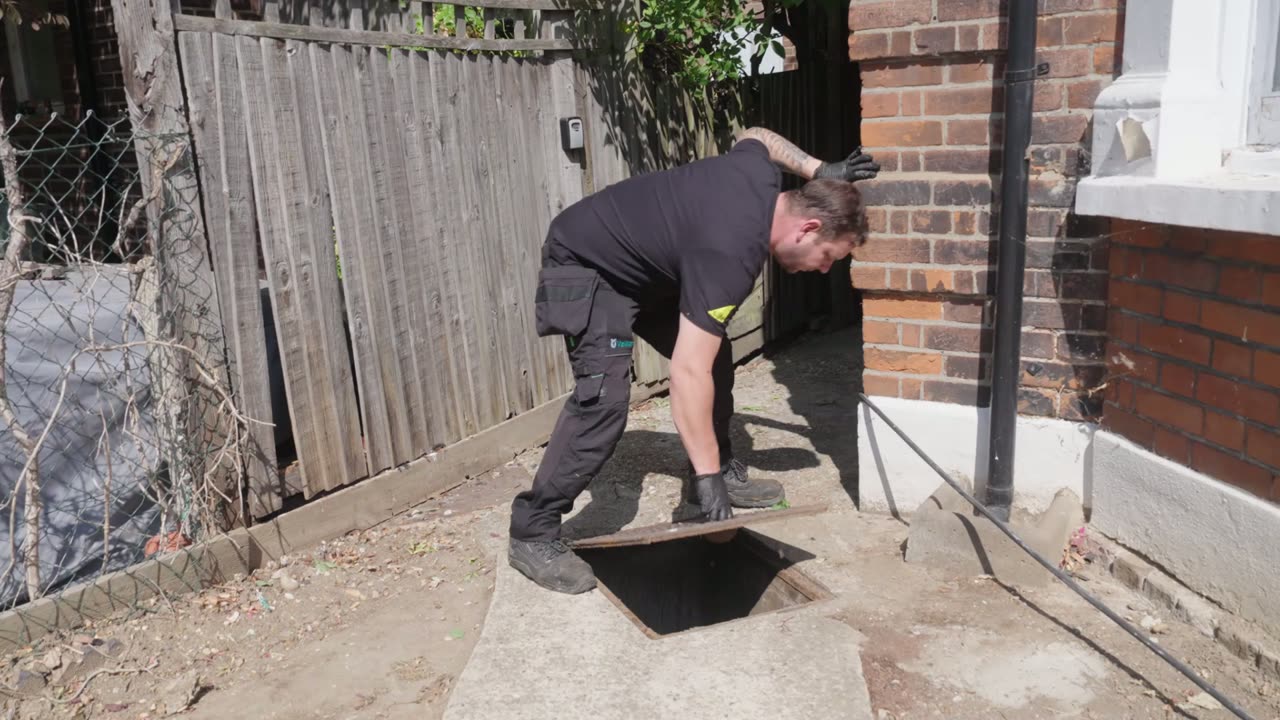
Honestly, no. Some of the best moments in a film are the sound of the work. When we cut the vertical edits for Super Efficient, the jetter and the water were left alone rather than buried under a track, because the sound is half of why people watch a drain clear.
 Super Efficient, the full job
That's the longform film from the same day. Music has a job in it, but it never fights the people or the work. In an interview-led film the voice matters most, and music sits under it.
What should you ask about the music before you sign off a film?
- Is it library music or a commercial track, and who licensed it?
- Whose name is on the licence, and can I have a copy?
- Does it cover paid adverts as well as organic posts?
- Does it cover every cut-down and every platform we'll use?
- How long does it last, and what happens if a subscription stops?
- Is the track registered with Content ID, and how do we clear a claim if one comes up?
On our films, the licence covers everything indefinitely on every platform, so the music has to be chosen to fit that from the start. We go into how licensing sits inside a film budget in how much a brand film costs in the UK, and if you've got a film coming up and want a second pair of eyes on the music, get in touch.