Video mostly makes a business money indirectly. It builds trust before the first call, shortens the time between someone finding you and deciding, lifts conversion on the pages where people make up their minds, helps you hire, gives the press and partners something to run, and keeps feeding your channels for months. It's rare for someone to watch a film and buy on the spot. The way to know it's working is to pick one of those routes before you make the film, and measure one number against it.
I'd rather be straight about this than sell you on magic. A film is a tool for a sales process you already have. Used well, it makes that process quicker and easier. Left on a homepage on its own, it mostly makes you feel good.
How does a film actually turn into revenue?
Through a handful of routes, and most good films work on two or three at once.
Trust before the first call
If a prospect has already watched your founder talk, seen your team at work and heard a customer describe the job, the first call starts further along. You spend less time proving you're real and more time talking about their problem. For higher priced services, where people research before they ever get in touch, that's where a film does its heaviest lifting.
Shorter sales cycles
Most business decisions involve more than one person, and some of them never meet you. A film you can send after a meeting goes to the finance director, the partner, the board member who'll make the call without ever speaking to you. Fewer meetings to get everyone comfortable means a quicker yes or a quicker no, and both save you money.
Higher conversion on the pages that matter
The pages that make you money are usually a few service pages and the contact page. A short, relevant film on those pages gives someone who's nearly convinced the last bit of reassurance. That works far better than a general film on the homepage that's trying to talk to everyone.
Recruitment
Good people check you out the same way buyers do. A film that shows the real work and the real people helps the right candidates apply and the wrong ones rule themselves out, which saves money on every hire.
PR and partnerships
Journalists, event organisers and partners need something to show. A well made film gives a partner something to post on their own channels and gives a story a visual to run with.
Repurposing
One shoot becomes a main film, a short cut, vertical clips and stills. That's months of content that would otherwise cost time or money to produce. We cover how in turning one brand film into a year of content.
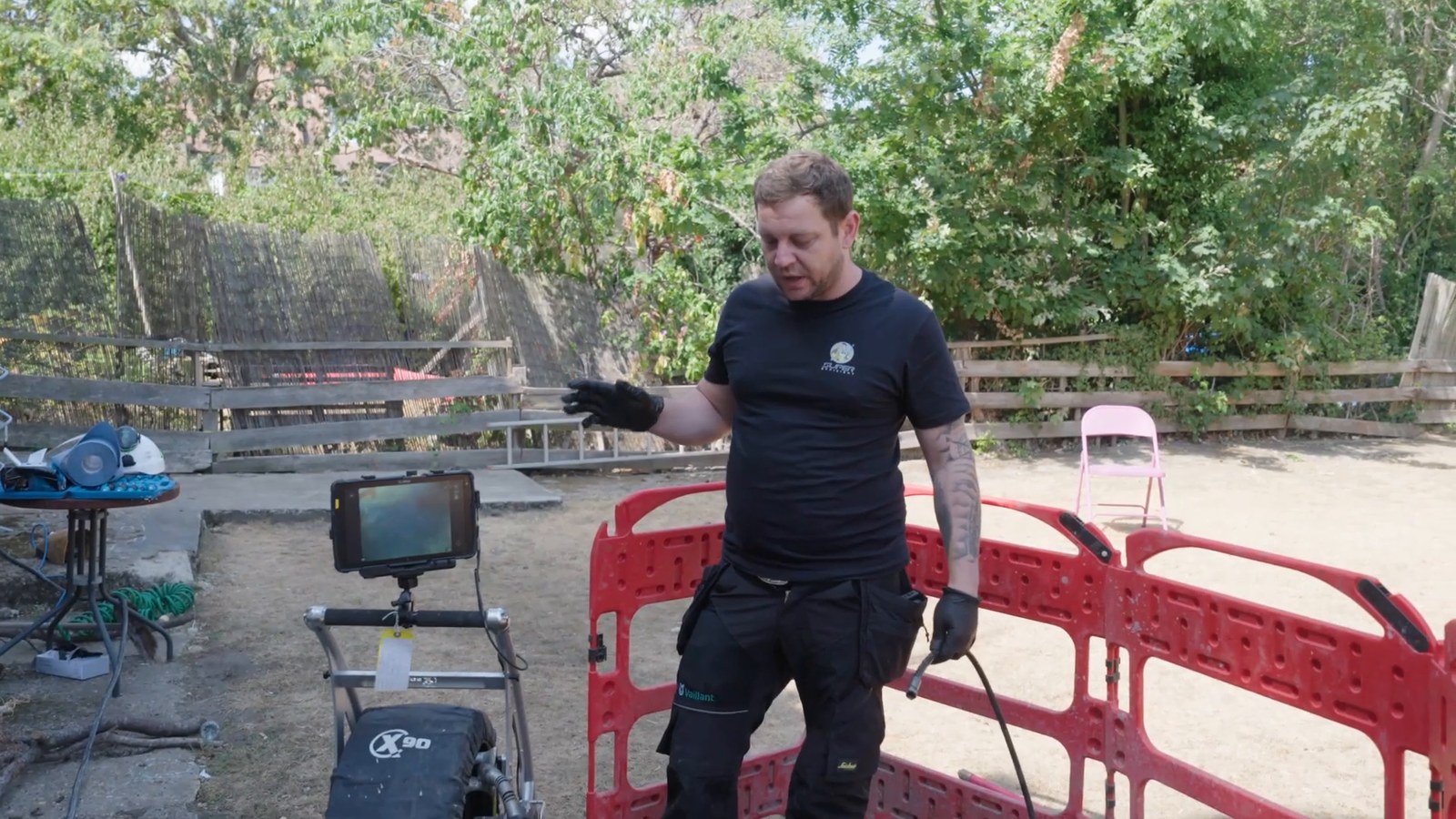
 Super Efficient, the full drainage job
Super Efficient are a good example of the trust route. Almost all of their work came from recommendation, which is a good problem and a fragile one. The brief was to turn the work they already do into something a stranger can watch, judge them on and call them about, without adding a single day to their diary. One day on one job became a longform film, shorts and carousels aimed at two different buyers.
How do you measure whether a video is making money?
Simply. Fancy attribution models tend to give confident answers to questions they can't really answer. A few honest measures beat a dashboard nobody trusts.
- Decide the route first. Is this film meant to help sales calls, a specific service page or hiring? That's the whole argument of why a brand film needs a business goal.
- Take a baseline. Enquiries per month from that page, how long deals take to close, how many applicants a typical job ad gets. Write it down before the film goes live.
- Ask people. Add "did you watch our film?" to your enquiry form or first call. It's crude, and it's also the most reliable signal a small business has.
- Track the sends. If the film's for sales, count how often it's sent and how those deals go compared with the ones where it wasn't.
- Check the watching. YouTube and most hosting tools show how much of a film people watch. If everyone leaves at thirty seconds, the film's job is being done by the first thirty seconds.
Then give it time, which is the hard part.
Most marketers believe video sells, far fewer measure it against sales, so decide on one honest measure before your film goes live.
Source: Wyzowl, Video Marketing Statistics 2026 (266 respondents, late 2025)
How long before a video pays for itself?
About as long as your sales cycle, and usually a bit longer. If customers take a week to decide, you'll get a feel within a couple of months. If deals take six months and involve a committee, the first film sent in a sales conversation might not show up in revenue for half a year.
That's why I'm wary of anyone who promises a return figure up front. The honest answer depends on your prices, your margins and how many people are already looking at you. Our film budget calculator can help with the cost side, and how to set a video budget works backwards from what a new customer is worth.
Which film should you make first if money's the goal?
The one closest to the sale. For most businesses that's a customer story about the service you most want to sell, told by a customer whose situation looks like the people you want more of. It goes straight into sales conversations and onto the page where that service is sold. A founder story or a broader brand film earns its place too, but it usually works further from the moment someone decides. There's more on making the customer version land in testimonial videos that don't sound like testimonials.
What can't video do for a business?
Quite a lot, and it's better to know before you spend.
- It can't fix an offer people don't want or a price that's wrong for the market.
- It can't make up for slow replies. If enquiries sit for three days, a better film just means more people waiting.
- It can't reach people on its own. A film nobody's sent, posted or put behind ads does nothing. See where to put your brand film.
- It won't usually produce a sale you can trace neatly from one view to one invoice. Most of its value shows up as things going a bit easier.
A film is a tool for a sales process you already have. On its own, it mostly makes you feel good.
If you've got a process that works and you'd like it to work faster, that's exactly when a film is worth making. See how we make them, or tell us where your sales get stuck and we'll tell you honestly whether a film would help.