A brand story looks like a short, specific account of why a business exists, told by a real person, and repeated in different forms: a paragraph on the About page, a film, a line on the packaging, the answer your team gives when someone asks what you do. It's rarely a single document, and more often the same story turning up in several places.
This post is about what you'd actually see. I'll go through the common forms, from written to filmed to physical, with real examples of each, and then show what separates a story that looks real from one that looks like it came out of a template. If you want a single worked example taken apart line by line, that's in what a brand story example looks like, and for the skeleton underneath, see how a brand story should be structured.
What are the main forms a brand story takes?
Think of a brand story as a thing that has a core and several outfits. The core is the same: who you started for, why, what you believe and what good looks like. The outfits change with the place. These are the ones you'll see most.
- **The About page.** The most common form, and the most often done badly.
- **The origin story.** How and why it started, usually a single moment.
- **The founder's voice.** In a film, a letter, an email or on stage.
- **The customer story.** The same story, told from the side of someone you helped.
- **The product or process story.** How something's made, and why it's made that way.
- **The physical story.** Packaging, signs, a note in the box, the way the shop looks.
- **The spoken story.** What your people say when someone asks.
You don't need all of them. Most good brands have three or four done well. Let's look at each.
What does a brand story look like on an About page?
At its best, it's short and it's about someone. The first thing a visitor sees is a human reason, not a corporate timeline. "Founded in 2009 and growing steadily ever since" tells you nothing. "I spent eleven years fitting kitchens for people who'd been let down by the last firm, and I got tired of arriving at jobs that were already a mess" tells you a lot (that's an invented line, but you can hear the difference).
A good About page usually has a few things in order: the person or people, the moment or frustration that started it, what you do differently because of it, and what a customer can expect. It's got a photograph of actual humans, not a stock team. It reads like somebody talking. And it's honest about size. If you're four people in a unit, say so, because it's a strength, not an embarrassment.
What it doesn't have is a mission statement written by committee, a list of values like "integrity, excellence, innovation" or a paragraph that could be pasted onto any competitor's site. If you could swap the logo and keep the text, it's not a story.
What does an origin story look like?
An origin story is a moment. The most famous UK example I can think of is Innocent, the smoothie company. In 1999 its three founders sold their first smoothies at a London music festival and put up a sign asking people whether they should give up their jobs to make them, with two bins for the empty bottles, one marked yes and one marked no. By the end, the yes bin was full, and they resigned the next day. It's a small, funny, concrete scene with a clear before and after, and that's why it's repeated.
You'll notice what made it work. It's a single scene. It involves real people taking a real risk. There's a bit of humour. It also tells you something about the brand: a bit cheeky, quite honest, not corporate. The story and the tone are doing the same job.
Not every business has a scene like that, and you shouldn't invent one. But most have a moment they've told friends a dozen times, and it's usually better than whatever's currently on the website. If you can't find yours, ask whoever's been there longest what they remember about the first customer.
What does a brand story look like on film?
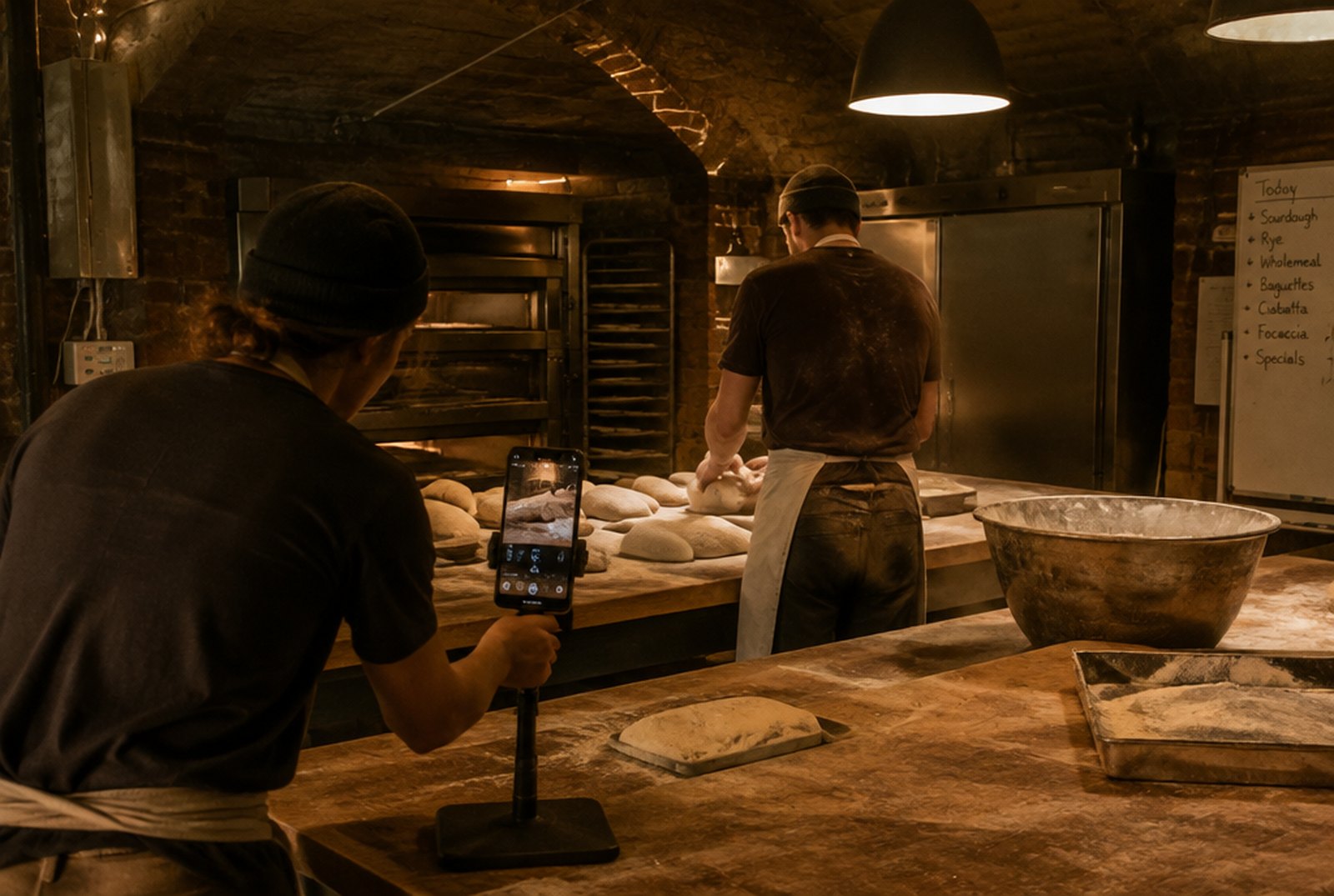
On film it looks like people talking, with the business happening around them. That's the honest answer, and it's why I think film's the best medium for it. A paragraph can tell you a founder cares about their craft. A film can show you their hands.
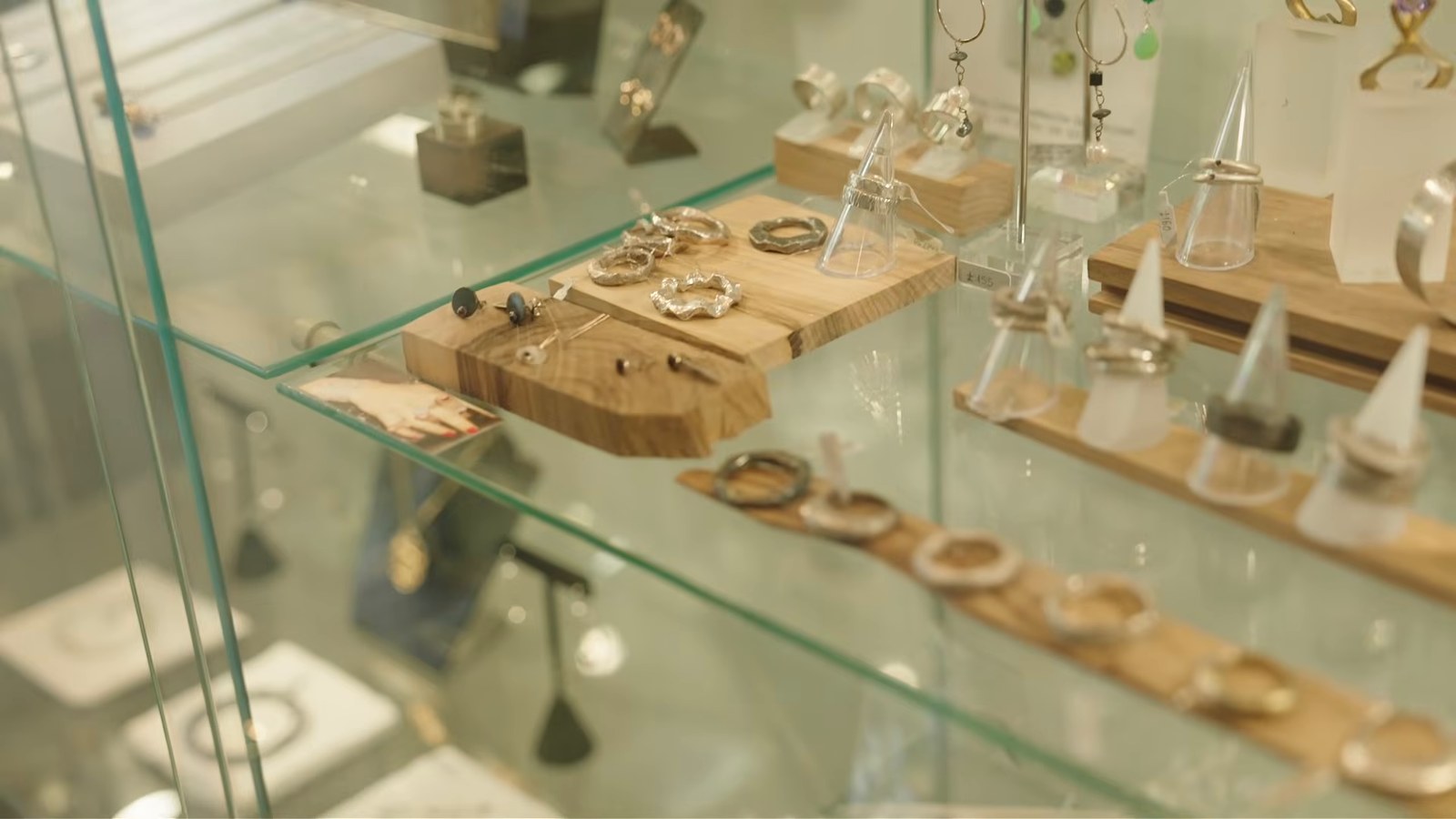
Take our film with Catherine Marche. She's been making bespoke jewellery in London for around twenty-five years and works only in recycled metal, with the packaging held to the same rule. The film skips the tour of the collection and has her at the bench explaining why she works that way, with the camera close on the hand work at the speed it actually happens. That's what a brand story on film looks like: a person, a reason and the craft, with nothing between you and them.
Or take Carréducker, two makers who trained under the same master at John Lobb and set up on their own. Their story includes the fact that they'd documented all 210 steps of a pair of shoes publicly, one post at a time. The film's built around the two of them talking as one conversation. A viewer gets the whole story in a few minutes: the training, the patience, the standard.
Documentary-style brand films have a particular look. There are real locations rather than sets, natural light where it's possible, people who aren't reading a script, and silence left in. If you want to know how this differs from a standard company video, brand documentary versus corporate video goes through it.
Authenticity is the thing people say they reward, and they judge it from what they can see for themselves.
Source: Emplifi, Digital authenticity survey 2026 (1,600+ US and UK consumers)
What does a customer story look like?
A customer story is your brand story with the camera pointed the other way. The customer does the talking, you're the thing that helped them, and what the viewer sees is a real person like themselves who ended up somewhere good.
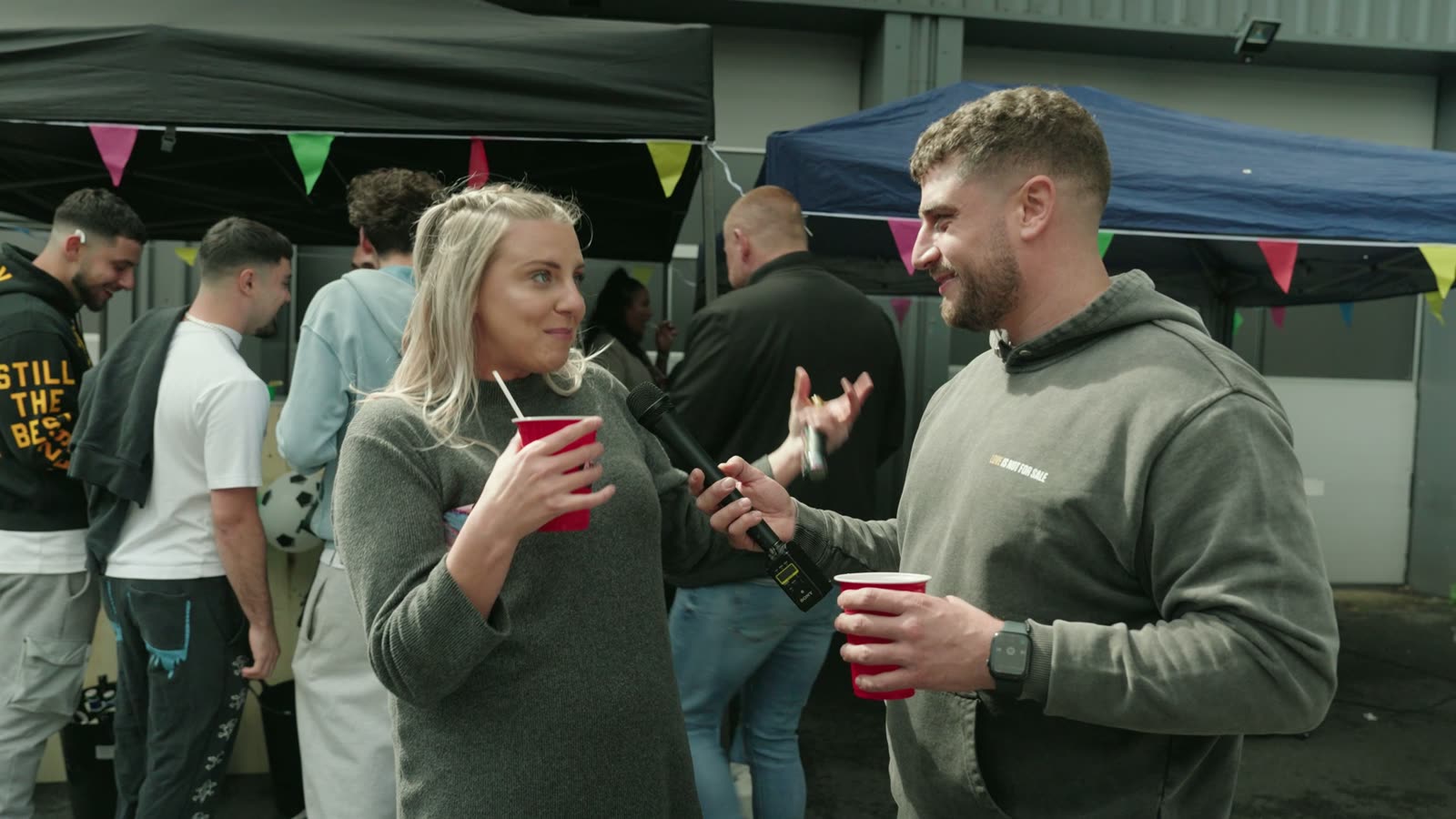
Our film for a couple who renovated a period house in Tooting is a clear example. It's told by the people who paid for it, filmed after they'd moved back in. Most renovation films are made from the builder's side, which a prospective client discounts straight away. This one's the account of someone who's been where they are. If you're thinking about this form, customer testimonial videos goes into how to do it well.
A customer story tends to follow a simple pattern: where they were, what went wrong or what they wanted, what happened and where they are now. It looks like a conversation, and it works best when the customer's allowed to be a bit critical, because a story with no friction doesn't feel true.
What does a product or process story look like?
It looks like showing how something's made and why it's made like that. The best ones put a person in front of the process and let them explain the choices. Why recycled metal? Why 210 steps? Why that timber? Those "why" questions are where the brand lives.
It might be a short film at the workbench, a photograph with a caption, a page on the site that follows one product from raw material to doorstep, or a label that says where it came from. The test's whether a customer comes away knowing something they didn't, and caring about it.
Patagonia's habit of publishing the story behind its products and running a repair service is a well-known case of this form working as a brand. The facts are on the page, the actions match them, and customers can see that.
What does a physical brand story look like?
The most overlooked form. It's the note in the parcel, the wording on the box, the signwriting on the shopfront, the way the person behind the counter says hello. These small things carry the story when no one's reading anything.
I notice this most in craft businesses, where the physical object is the story. A hand-painted sign on a shopfront tells you something about the business before you've read a word. It's the reason our film about traditional hand-painted signwriting spends so long on the brush loading and the single unbroken line. The work itself is the story, and the film's job is to get out of its way.
How can you tell a real brand story from a fake one?
A few quick checks:
- **Specifics.** Does it have names, places, numbers, a moment? Real stories do. Fake ones have adjectives.
- **A person.** Can you picture someone saying it? If it reads like it was written by nobody, it probably was.
- **A cost.** Did it cost something, such as a risk, a sacrifice or a hard decision? Stories where nothing was ever at stake feel like adverts.
- **Consistency.** Do the film, the packaging and the way the phone's answered all agree? A story only the About page tells isn't believed.
- **Something you'd repeat.** Could a customer tell a friend in one sentence?
Emplifi's 2026 survey of more than 1,600 consumers in the UK and US found 93% say authentic engagement builds trust in a brand, and 85% say they'd pay more for brands they see as authentic. It's a mixed UK and US sample, but it fits with everything above.
A real brand story has a person in it, a reason behind it and something you could repeat to a friend.
Does a brand story look different for a small business?
It usually looks better, because it's closer to the truth. A small business can name the person, show the workshop and say what went wrong on the first job. A large company has to work harder to sound that human, and often ends up with something smoother and less memorable.
The practical difference is production. A small business doesn't need a campaign. It needs one honest page, one good film with the real people in it and a team who can say the same thing in conversation. That's a manageable job, and it tends to look the part precisely because it hasn't been over-produced. The jeweller and the shoemakers above are tiny businesses, and their films carry as much weight as anything a big brand makes.
How long is a brand story, visually?
On a page, it's usually a few short paragraphs and a photograph. On film, it's typically a few minutes, and then cut into shorter pieces. How long to make it is a question with a proper answer in how long a brand story should be.
Where should you start?
With the version you can do this week. Write the page: who, why, what you believe, what good looks like. Put it on your About page in your own voice. Then decide where it deserves a better outfit. For most businesses that's a short film with the real people in it, because it's the one form that lets a stranger see and hear you before they've met you.
If you're comparing forms and want the full picture, the complete guide to brand storytelling collects everything in one place. And if you'd like to talk about what yours could look like on film, get in touch.