A good brand story example is Dove's Real Beauty Sketches: a forensic artist drew women twice, once from their own description and once from a stranger's, and the gap between the two drawings made the point about self-image without a single product claim. Hovis, Patagonia and John Lewis tell stories in different ways, and a small London cheese business can do it too.
This post is a set of worked examples, picked apart so you can see what each one actually does. I'll go through five from the wider world, one from our own work, and then pull out the pattern they share. I'm not covering how to write your own, which is in how to write a brand story, or Nike, which gets its own post in what Nike's brand story is.
What counts as a brand story example?
Anything where a brand tells you who it is by showing something happen, rather than listing what it sells. It might be a film, an advert, a page on a website, a founder's talk or a product launch. What makes it a story rather than a slogan is that there's a person, a tension and a change, even if the whole thing lasts ninety seconds.
A quick test I use: could you retell it to a friend at the pub without looking anything up? If you can, it's a story. If all you remember is the logo, it was an advert. The examples below pass that test, which is why they're still talked about years later.
Which brand story examples are worth studying?
Dove: Real Beauty Sketches (2013)
Dove had been running its Real Beauty campaign since 2004. In 2013 it made a film with Ogilvy Brazil in which a forensic sketch artist, Gil Zamora, drew each woman twice. First from how she described herself without being seen, then from how someone else, who'd just met her, described her. The two portraits hung side by side. The stranger's version was kinder, and more accurate.
Why it works: the product is never mentioned until the end card, and the story belongs entirely to the women. The idea does the persuading. It won the Titanium Grand Prix at Cannes Lions that year, and Guinness World Records verified it as the most viewed online video advert at the time, with 124.9 million views by November 2013.
The lesson for a smaller brand isn't to hire a forensic artist. It's that the strongest stories are built around a human truth your customers already feel, with the brand as the one who noticed it.
Hovis: Boy on the Bike (1973)
A boy pushes a loaf of bread uphill on an old-fashioned bike, delivers it, and freewheels back down a cobbled hill to the sound of Dvořák's New World Symphony. Ridley Scott directed it, in Shaftesbury in Dorset. It's a British classic, and I'd argue it's still one of the best brand story examples because it sells an emotion, wholesome and traditional, rather than a loaf.
Why it works: it's one scene, one character, and a place. It takes a plain product and ties it to a feeling people already have about Britain's past. A caution, though. That kind of nostalgia only works if it's true to the brand, which is why it's tricky to copy.
Patagonia: Don't Buy This Jacket (2011)
On Black Friday 2011, Patagonia ran a full-page ad in the New York Times with a picture of one of its fleeces and the words "Don't Buy This Jacket". The text explained the environmental cost of making it and asked customers to think before buying. A brand telling people to buy less sounds like a joke, but it was consistent with a story the company had been telling since its founding by Yvon Chouinard, and later it was backed up in 2022 when ownership passed to a trust and a non-profit to protect the planet.
Why it works: the story isn't a campaign, it's the behaviour. The advert was believable because the company had already acted that way for years. If a brand story doesn't match what the business does, people spot the gap fast.
John Lewis: the Christmas films
Every year the department store releases a Christmas film that gets talked about in the pub and written about in the papers. In 2014 it was Monty the Penguin, a boy's lonely imaginary friend who gets a companion on Christmas morning. The product is a toy penguin in the shops. The story is about giving.
Why it works: it's a short film with one emotional beat, made for the moment people are thinking about presents. It turns an annual retail event into something people look forward to, which is the real prize.
The best brand stories are about the customer's life, with the brand turning up as a helpful extra.
Airbnb and the host stories
Airbnb has built much of its marketing around real hosts and guests telling what happened: the person who rents out a spare room and ends up making a friend, the family who travel to meet relatives. These are small and specific, and the brand barely appears. They show what the platform is for.
Why it works: it uses real people rather than actors, in their own words, and the stories are different enough to feel true. That's a useful pointer for any business that has customers worth hearing from.
A film built around a human truth, with the product barely in it, travelled further than any advert had before.
Source: Guinness World Records, Most viewed online video advertisement
What does a brand story example look like for a small business?
Most of the famous examples come with enormous budgets, which makes them look out of reach. They're not the only model. Some of the best brand stories I've seen are small, local and shot on a couple of days.
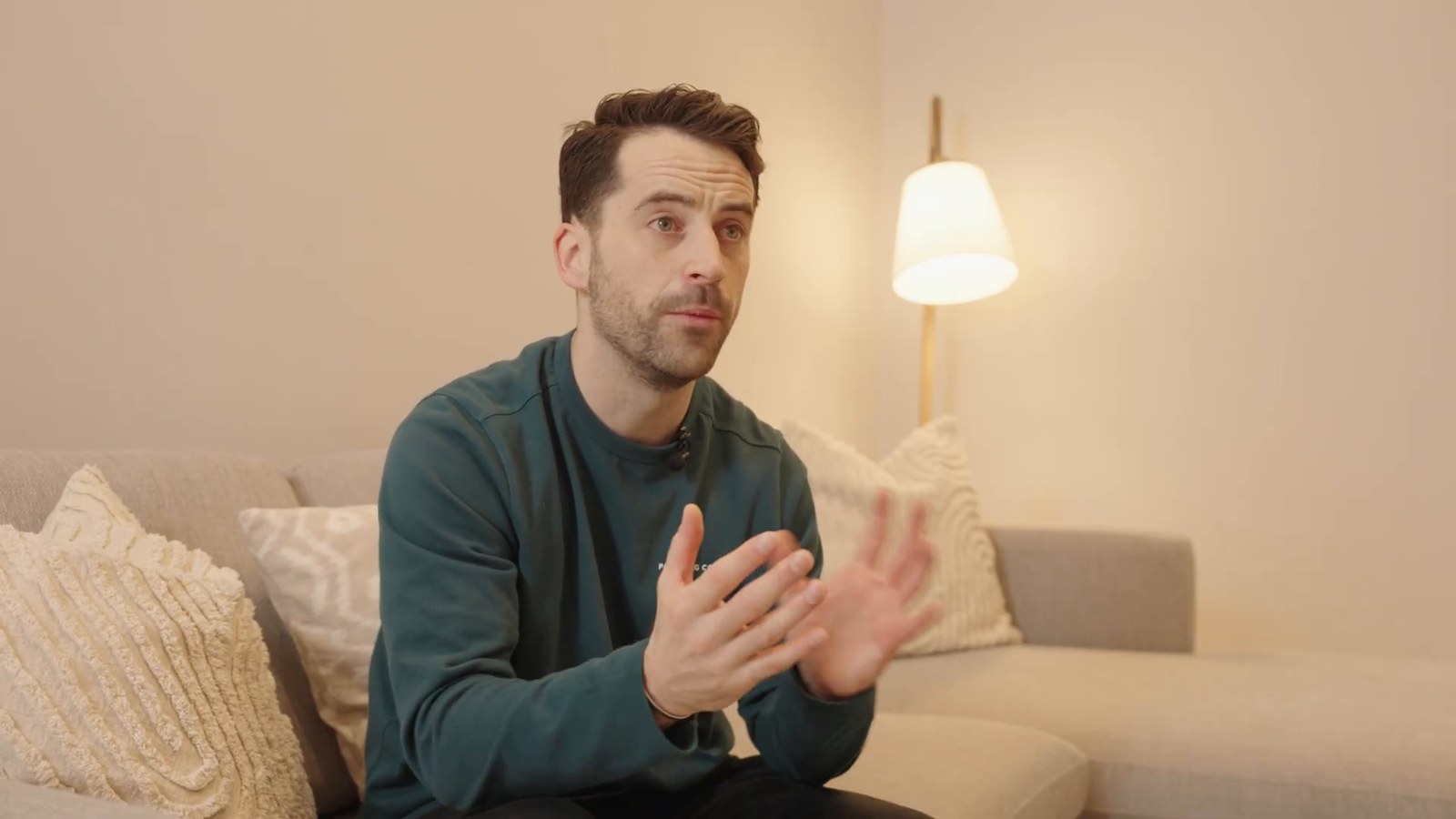
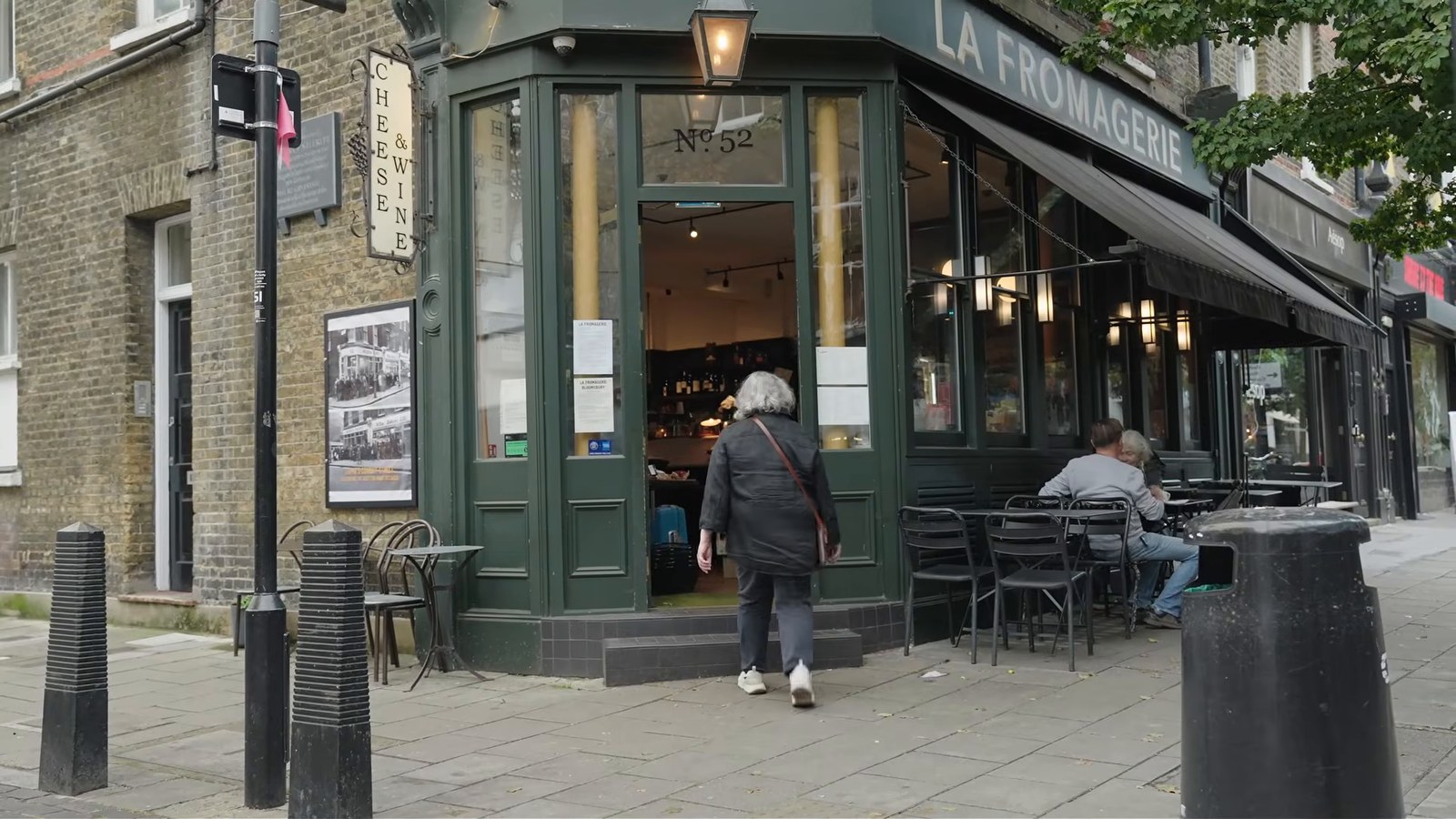
Take La Fromagerie, the London cheese business. The story is a real one: it started with a market stall at Camden Lock and a shop in Highbury at eighty pounds a week, and thirty three years later it's three shops with walk-in cheese rooms and a wholesale side supplying restaurants across London. The founder tells it, and the cheesemongers and the wholesale team fill in what the business is now. We filmed it during trading hours, around customers, in cheese rooms that are cold and dark.
Look at what it has in common with the big names. There's a person. There's a beginning that's small and a bit unlikely. There's a change over time. And there's nothing invented. The reason it works as a brand story is that someone who watches it knows what it would be like to walk into that shop and talk to those people.
A craft example is Carreducker, two shoemakers at the Oxo Tower who trained at John Lobb. The story sits in the numbers they've always been open about: 210 steps, six months a pair. And the film we made for Signwriting Jack is built around the hand, the brush loading, a single unbroken line. Neither needs a voiceover telling you the brand is passionate. You can see it.
What do these brand story examples have in common?
Put them side by side and the same handful of things keeps turning up. This is the pattern, and it's more useful than any single example.
- A real person or a real place. Nobody's moved by a company. They're moved by a boy on a bike, a woman describing her face, a founder in a shed.
- A tension. Something is at stake or something is wrong: self-image, a hill, a lonely penguin, a planet. Without it you've got a brochure.
- The product comes last. In nearly all of them the thing being sold barely appears, or appears at the end.
- It matches the business. Patagonia could tell its story because it behaves that way. The ones that fail are the ones where the story and the company don't line up.
- It's specific. Eighty pounds a week. 210 steps. A wheel of Beaufort. Specific details make a story believable and make it stick.
If you're wondering how this fits into the wider picture, the examples sit at the "what does good look like" end of the subject. The principles behind them are in what makes a good brand story, and there are more brands to look at in which brands use storytelling.
What can you take from these examples without a big budget?
Three things, in order.
First, find the true beginning. Most businesses have one that's more interesting than their "About us" suggests: the first customer, the odd decision, the thing that nearly didn't happen. Ask the founder how it started and write down what they say before they tidy it up.
Second, put a real person on camera. Documentary-style film exists for exactly this. You don't script it, you ask good questions and keep the answers that sound like a human being. I've written about how that differs from a corporate video, and there's a longer look at one project in the La Fromagerie film.
Third, leave things out. A good story is mostly editing. Strip out the awards, the list of services and the mission statement. Keep the part somebody would retell.
What does a weak brand story example look like?
It helps to know the failures too, because you'll see far more of them. The commonest is the founder's-vision page: "Our passion for excellence began in 2009, and we've been delivering innovative solutions ever since." Nothing happens in it. There's no person, no moment and no detail you could repeat. It's a CV for a company.
The second is the story that doesn't match the business. A brand that talks about care and then takes three weeks to answer an email has told a story the customer can disprove in a day. The third is the borrowed story, a copy of something that worked for somebody else, with the names swapped. On shoots I often meet a founder who's worried their own story is too ordinary. It almost never is. The ordinary details, the first shop, the rent, the person who helped, are exactly what a viewer finds believable.
So when you look at any brand story example, ask what's real in it, what's specific, and what you could still repeat a week later. If the answer is "not much", it's an advert dressed up as a story.
What's the difference between a brand story example and a brand story?
An example is a finished piece someone else made. Your own brand story is the raw material those pieces are built from: a short statement of where you came from, what you're for and who you help. Studying examples is useful for taste, but copying one is a mistake. Dove's idea works because it's Dove's. Yours has to come from the facts of your own business.
When you're ready to build yours, the complete guide to brand storytelling sets the whole subject out in order, and what a brand story looks like covers the written version on a website. If a film would carry your own story best, take a look at our films and get in touch when you want to talk it over.