Brand storytelling in marketing means using real narrative, people, a problem and a change, as the thread running through your marketing, so customers remember who you are and why you exist instead of just reading a list of features. It's less a single campaign and more a way of deciding what goes on your website, in your sales calls, on social and in your films.
This post is about the marketing side of it: where storytelling sits in the mix, what job it does at each stage of a customer's decision, which channels carry it, and how a small UK business can tell whether it's working. If you want the plain definition first, start with what brand storytelling is. Everything below assumes you've got that and want to know what to do with it.
How is brand storytelling different from advertising and content marketing?
Advertising buys attention. Content marketing earns it by being useful. Brand storytelling is the thing underneath both that decides what they say. You can run a paid ad with a story in it, or a blog post with none. The story is the point of view that makes your advertising sound like it came from one place rather than from whichever freelancer wrote the last batch.
I find it helps to think of three layers. At the top there's the campaign, which comes and goes. In the middle there's content, which keeps the shelves stocked. At the bottom there's the story, which is slow to change and decides how the other two layers sound. A business with strong campaigns and no story ends up with a lot of good-looking one-offs that don't add up to anyone remembering it.
That's also why storytelling in marketing isn't the same as a brand story. A brand story is a document, usually a page on your site. Storytelling in marketing is what you do with it every week. I've covered the page itself in what a brand story should include, and whether the approach counts as a proper strategy in is storytelling a marketing strategy.
Why does marketing need stories at all?
Because attention is the scarce thing, and everyone is paying for it. The Advertising Association and WARC put UK advertising investment at £11.7 billion in the first quarter of 2026, up 9.3% on a year earlier, with social media spend up 17.7%. When that much money is chasing the same few seconds of someone's eye, what you say once you've got it is what counts.
A feature list loses that contest almost every time. A person doing something interesting, with something at stake, wins it more often. That's not a mystical claim about the human brain, it's just what happens on a shoot when we play back a rough cut to the client: they sit forward when a human being starts talking about why they do the work, and they reach for their phone during the spec section.
The deeper reason it works, and I'd rather not oversell this, is that stories are how people explain things to each other. When a customer recommends you to a friend, they don't recite your service list. They tell a bit of a story: "they came out the same week, the bloke explained it all, and he was honest about the price." Brand storytelling in marketing is the act of giving them a better story to pass on. I go into the mechanics in why storytelling works in marketing.
What job does storytelling do at each stage of the customer journey?
This is the part most guides skip. Stories aren't only for the top of the funnel. They do a different job at each stage, and it helps to know which one you're asking of a given piece.
Awareness: being worth remembering
At the first meeting, nobody cares about your company. The job here is to be interesting enough that they'd recognise you next time. A short, human film or a sharp piece of social content about the people behind the business does this far better than a logo and a tagline. You're not trying to sell. You're trying to leave a trace.
Consideration: showing how you think
When someone's comparing three suppliers who all look much the same, the story is what separates them. This is where the longer pieces earn their keep: the founder talking honestly about why the business started, a customer describing what changed, a look at how the work is done. It's the stage where a documentary-style film does its best work, because it answers the question buyers can't ask out loud: "Are these people the real thing?"
Decision: lowering the risk
Late in the process, buyers aren't looking for excitement. They want to feel safe. Customer stories, case studies and testimonials that sound like a person rather than a press release do the job here. They show the outcome and the manner of working together, which is what someone worried about being let down wants to see.
After the sale: giving people something to repeat
Existing customers are the most overlooked audience in marketing. A story they recognise themselves in gets forwarded, referenced in meetings and used by your own team when they onboard someone new. Retention and referral are quiet storytelling jobs.
The story isn't the campaign. It's the reason every campaign sounds like it came from the same people.
Money is moving to social and addressable screens while ordinary TV barely grows, so a brand story has to work wherever people are already looking.
Source: Advertising Association/WARC, Expenditure Report Q1 2026
Which marketing channels carry a brand story?
All of them, which is exactly the problem. If the story lives only on the About page, it's not doing marketing work. A few places it needs to show up:
- Your website. The homepage headline, the About page, the case studies. Visitors decide in seconds whether you sound like a real business with a point of view.
- Video. The strongest carrier, because people can see and hear the person. A single documentary-style film can sit at the top of the site and be cut into shorter pieces for social. I've written about how to turn one brand film into a year of content.
- Social media. Not a different story, but a different dose. Small fragments of the same one, posted consistently. More in storytelling in social media marketing.
- Sales conversations. The founder or salesperson who can tell the origin and a customer outcome in two minutes beats the one reading from a deck. This is storytelling too, and it costs nothing but preparation.
- Email and PR. Newsletters that tell what happened this month rather than what's on offer, and press pitches that lead with a human angle.
- Recruitment. Your story is half of your employer brand. Candidates check. See recruitment and employer brand videos.
The consistency matters more than the volume. I'd take one clear story told in five places over five different stories told everywhere.
What does brand storytelling in marketing actually look like in practice?
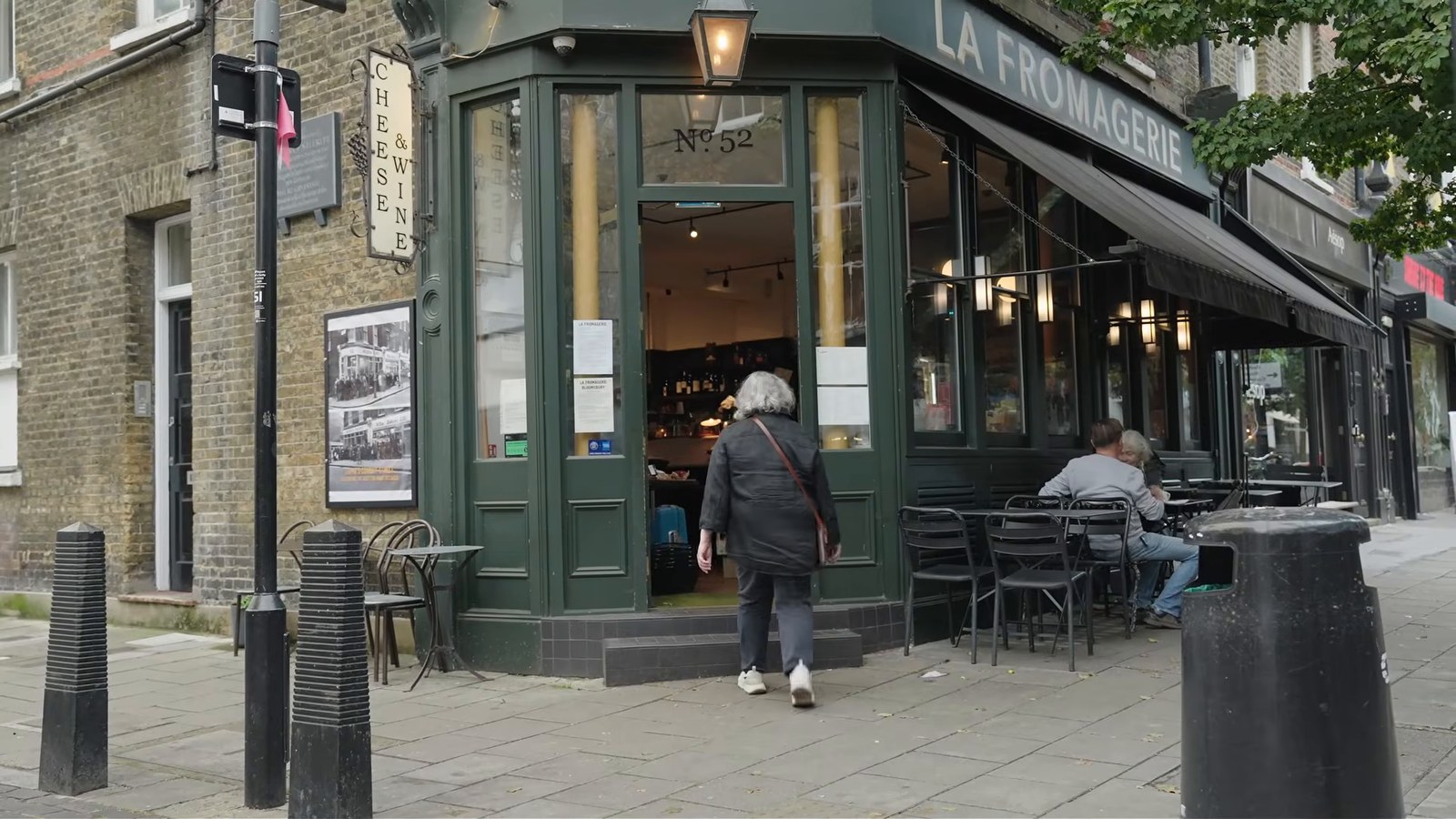
It looks less grand than the famous examples suggest. Take a small London food business. The marketing-friendly version of its story is "premium, artisan, passionate about quality". The storytelling version is the founder explaining how it began with a wheel of Beaufort in a garden shed, then a market stall at Camden Lock, then a shop in Highbury. That's what we filmed for La Fromagerie, and the point is that the facts did the work. Nothing was dressed up.
Or take a craft business like Carreducker, where two makers who trained at John Lobb now run their own bench at the Oxo Tower. The story isn't "bespoke shoes". It's two people who finish each other's sentences describing 210 steps and six months a pair. The marketing implication is that every channel can pull from that one source: the website, the Instagram, the sales conversation, the film.
If you want more worked examples from brands you'll know, I've set a few out in what a brand story example looks like, and there's a longer list in which brands use storytelling.
How do you measure whether storytelling is working in marketing?
Honestly, indirectly, and you shouldn't expect a single number. Storytelling works on memory and preference, and those don't show up in a click report. I'd be wary of anyone who promises you an exact return on a brand story. I've never seen one that held up.
What you can watch is a set of signs that move together over a few months:
- Branded search. More people typing your name into Google is one of the cleaner signals that you're being remembered.
- Direct and referral traffic. People who turn up on their own, rather than from an ad.
- Sales conversations. Prospects arriving already knowing what you stand for, and fewer arguments about price. Ask your sales lead what the first five minutes of calls feel like now.
- Watch time on video. Whether people stay for the human parts, and where they drop off.
- What customers repeat back. If they quote your own language to you, the story has landed.
Give it a decent window. Short campaigns can be judged in weeks. A brand story needs a few quarters of consistent showing up before you can read anything useful from it. For the evidence side, I've pulled together what's known in how effective storytelling is in marketing.
What mistakes do businesses make when they bring storytelling into their marketing?
Telling the company's history instead of the customer's change
"Founded in 1998 by two friends" is a fact. It's not a story until something happens. The most useful stories in marketing are about what changes for the customer, with your business as the guide rather than the hero. The opening of the story matters more than most people think.
Treating it as a one-off project
A brand film that's launched once, posted on the homepage and never mentioned again is a waste of a decent film. The story has to show up in the sales deck, the emails, the cut-downs and the way your team talks.
Making it up
Invented personas and polished origin tales get found out. People can tell when a story was workshopped in a meeting room rather than lived. The reason documentary-style film works so well for this is that it captures the real thing, awkward pauses included, and that reads as honest.
Skipping the proof
A story without evidence is just a claim. Pair it with specifics: what was made, for whom, how long it took, what changed. Even a small number does more than an adjective.
How much does a small business need to do?
Less than you'd think. You don't need a campaign. You need one clear story, one proper piece of video that carries it, and the habit of using the same language everywhere. A single well-made documentary-style brand film, cut into a long version for the website and a handful of short ones for social, covers more ground than a year of scattered posts.
The order I'd go in: get the story straight on paper, film the real people telling it, put it where buyers look first, then repeat the best fragments consistently. If you want the full picture of how this fits together, the complete guide to brand storytelling is the place to go next, and how to use storytelling in marketing covers the practical rollout in more detail. For a sense of what a film can do on a real site, have a look at our films, or read why a brand film needs a business goal before you commission anything.
If you're working out how storytelling could fit your own marketing, get in touch and we'll talk it through.