Nike's brand story is that sport belongs to everyone, and that effort is the thing worth celebrating. It began in 1964 with a runner, Phil Knight, and his Oregon coach, Bill Bowerman, selling shoes out of a car at track meets. Over decades it grew into a story about the athlete inside anyone who's willing to try, summed up in "Just Do It".
This post walks through how that story was built, from the founders to the slogan to the 2018 campaign that split opinion, and then asks the useful question for anyone running a smaller business: what can you actually borrow from it? For other brands and their stories, there's a wider list in which brands use storytelling, and some worked examples in what a brand story example looks like.
How did Nike start?
The origin is the first half of the brand story, and it's a good one because it's true and a bit scrappy. Phil Knight ran middle distance at the University of Oregon under Bill Bowerman. After business school he and Bowerman founded Blue Ribbon Sports in 1964 to import running shoes from Japan, selling them at track meets from the back of Knight's car. Nothing about it looked like a future global brand. It was two men who cared about runners and thought the shoes could be better.
That's the foundation of everything that follows. The company didn't start from a marketing idea. It started from people in sport solving problems for people in sport. Bowerman tinkered with shoes constantly, and the most repeated tale is that he poured rubber into his wife's waffle iron to make a lighter sole with better grip. It became the waffle sole in the early 1970s. Whether or not every detail is polished by retelling, it works as story because it's concrete: a coach, a kitchen, a gadget, a better shoe.
By 1971 the company had a name and a logo. Nike is the Greek goddess of victory. The Swoosh was drawn by Carolyn Davidson, a graphic design student at Portland State, who was paid $35 for it. Knight's reported first reaction was a lukewarm "I don't love it, but maybe it will grow on me". The story of the logo has been told so often precisely because it's the opposite of the corporate branding exercise: a student, a small fee, a shrug.
What is Nike's brand story today?
The company states its mission as bringing inspiration and innovation to every athlete in the world, with a footnote that has become the most important line in the whole story: "If you have a body, you are an athlete." The line is attributed to Bowerman. It does two things at once. It keeps the founding link to sport and performance, and it widens the idea of "athlete" to include every customer.
That widening is the clever bit. The brand isn't selling to elite runners only. It's telling someone jogging round the park, or trying a first gym class, that they belong in the same story as the people on the podium. The hero isn't Nike, and it isn't even the famous athlete. It's the person pulling their trainers on.
Nike's story isn't about shoes. It's about what you're willing to do in them.
It's worth separating the pieces, because they do different jobs:
- The origin (runners helping runners) gives it credibility.
- The mission (every athlete, and everybody is one) gives it breadth.
- The slogan (Just Do It) gives it a single instruction to remember.
- The athletes (from Michael Jordan to Serena Williams and others) give it faces and proof.
Where did "Just Do It" come from?
The slogan came out of the agency Wieden+Kennedy in 1988, working with Nike. Nike's sales weren't as strong as they wanted in the late 1980s, partly because aerobics and fitness had pushed Reebok ahead in the US. The brand needed something that spoke to a wider public than serious sport. Dan Wieden, the agency's co-founder, is generally credited with the line.
What's smart about it is how little it says. "Just Do It" is an instruction anyone can apply to anything: starting a run, quitting a job, getting off the sofa. It doesn't mention shoes. It offers no features. It leaves a gap that the customer fills with their own situation, which is the reason it has lasted decades.
Notice that this is also a story-telling technique in miniature. The campaign didn't tell people what Nike made. It showed people, often ordinary and older athletes as well as stars, doing the hard thing, and left the logo to appear at the end. If you want to see how that restraint works on a small scale, I've talked about it in how brand storytelling should begin.
Even one of the strongest brand stories in the world doesn't make sales automatic, so a story works best alongside a good product, price and service.
Source: NIKE, Inc., Fiscal 2025 fourth quarter and full year results (SEC filing)
How does Nike use athletes to tell the story?
Athletes are the characters. Michael Jordan signed in 1984 and the Air Jordan line launched the following year, turning a single player into a whole sub-brand. Later campaigns have put Serena Williams, Eliud Kipchoge and many others at the centre, and increasingly the people on screen are ordinary runners and young players, not just champions.
Look at what the films tend to show: the training, the failure, the early mornings, the doubt. Nike's strongest work lingers on the effort rather than the trophy. That's the same instinct as good documentary. The interesting part of a story is usually the struggle before the result, and that's why the brand comes across as being on the athlete's side.
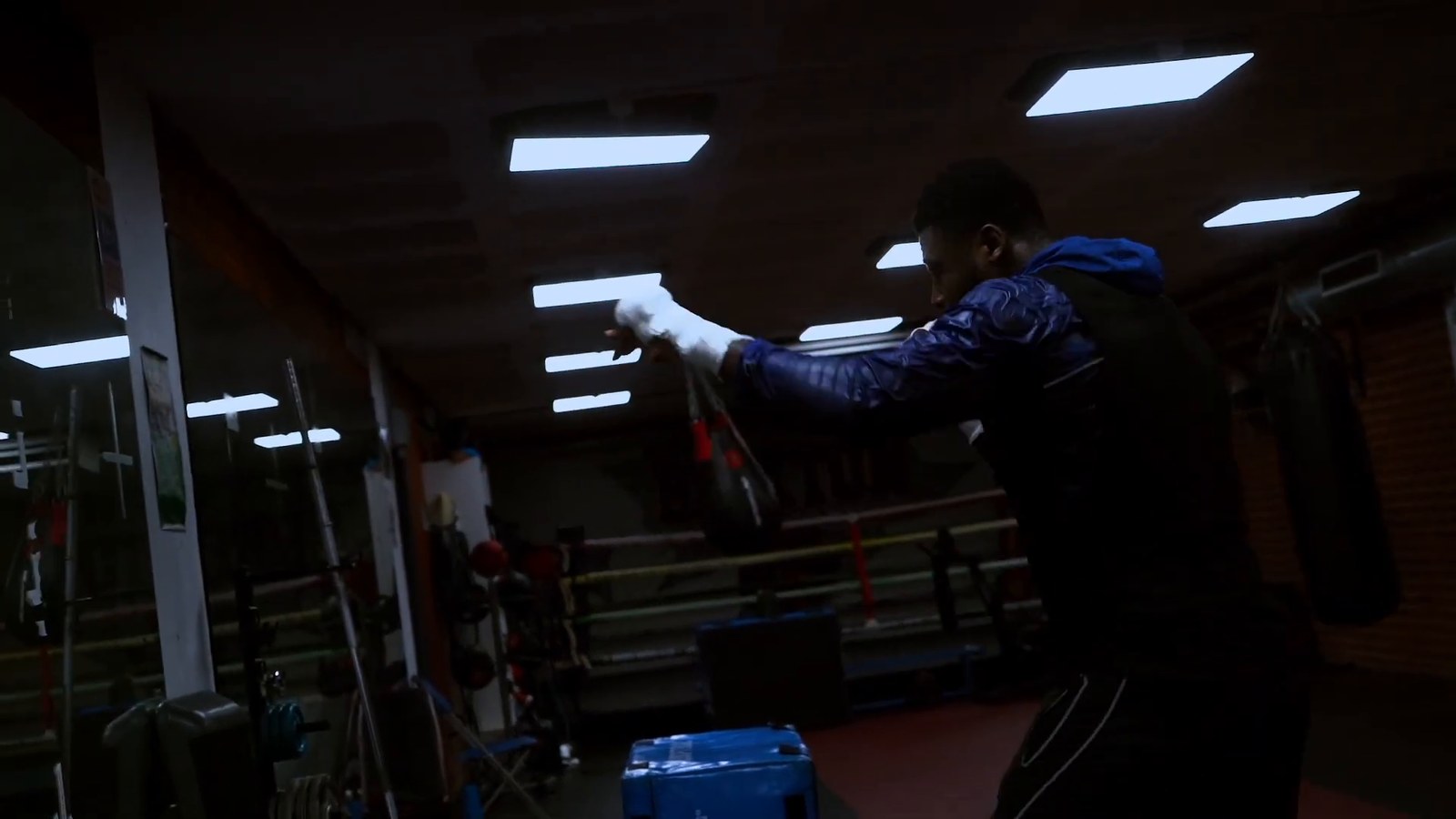
It's the same idea we use in our own work with athletes. Look at the content we made with boxer Isaac Chamberlain in the Boxraw training sessions, or the seminar film at London Fight Factory. The training and the process are the story. Nobody needs a slogan when you can see the person doing the work.
What happened with the Colin Kaepernick campaign?
In September 2018 Nike made Colin Kaepernick, the American football quarterback who'd knelt during the national anthem to protest racial injustice, the face of its thirtieth anniversary Just Do It campaign. The line was "Believe in something. Even if it means sacrificing everything." It divided people sharply, some of them burning their shoes online, and it also brought considerable attention.
I mention it for one reason: it shows a brand story being tested under pressure. A story that only works when everyone agrees isn't much of a position. Nike chose to say something, accepted that some customers would object, and stuck with it. You don't have to agree with the stance, or with Nike, to see that a story needs a point of view to carry weight.
It's also worth being honest that Nike's story hasn't gone unchallenged. The company faced serious scrutiny over factory conditions in its supply chain in the 1990s and has had to answer to that publicly since. A brand story is tested by the business behind it, and that's true at every size.
Why has Nike's story lasted so long?
Consistency, mostly, and a story that was always bigger than the product. Shoes change every season. Fashions come and go. A belief like "everyone's an athlete" doesn't date, so each new campaign, whatever the athlete or the year, adds to the same story instead of replacing it.
It's also flexible in a way most brand stories aren't. The same idea can sit behind a marathon runner, a teenager playing football on a car park or a school PE lesson. That flexibility comes from the brand story being about a feeling and a belief rather than a product category. If you can state yours in a way that stretches across everything you do, you've got something that will last.
And it has a tone. Nike is direct, confident and slightly impatient, which suits the subject. You hear it in the copy, see it in the cutting and feel it in how athletes are filmed. A brand story is as much how it's told as what it says, which is why two companies with similar histories can feel completely different. I'd encourage anyone writing their own to read it aloud. If it sounds like a person you'd want to meet, you're close.
The cost of that discipline is saying no. Any brand that holds one belief for decades has to turn down ideas that are perfectly good but don't fit it. Smaller businesses find this the hardest part, because every opportunity feels precious. A story gets stronger the more often you decline things that don't belong in it.
Does a famous brand story guarantee business results?
No, and the numbers say so. Nike's revenue for fiscal 2025 was $46.3 billion, down 10 percent from $51.4 billion the year before, according to the company's own results. One of the most recognised brand stories in the world still saw sales fall, because stories don't replace good products, pricing, distribution and timing. They make you easier to choose and harder to forget, but they don't excuse everything else.
That matters for smaller businesses, because it's tempting to treat a brand story as the answer to a sales problem. It's one part of the answer. I'd always rather say that honestly than promise a result I can't guarantee.
What can a smaller brand learn from Nike's story?
You don't have Nike's money, but you don't need it for the lessons that matter.
Start with the true beginning
Nike's early years are interesting because they're ordinary and specific: a car boot, a waffle iron, a $35 logo. Most businesses have something comparable. The founding detail you're slightly embarrassed by is often the best part. I make the same point in how to write a brand story.
Make the customer the hero
Nike doesn't say it's great. It says you could be. For a plumber, a physio or a food business, the same move applies: tell the story of the person you help and what changes for them, with your business as the guide.
Show the effort
People trust visible work. Whether it's a shoemaker's 210 steps, a signwriter's brush or a coach in a gym, the process is a story most customers never get to see. Film it. A documentary approach is built for this.
Have a line people can repeat
Not a slogan for the sake of it, but a short statement of what you believe that your team and customers can say back. If it's only on a wall, it's decoration.
Match the story to the behaviour
The strongest brand stories are ones the business can keep. Promise less and deliver it all the way down the chain, because that's where stories get tested.
For the principles behind these points, what makes a good brand story goes through them in order, and the complete guide to brand storytelling puts the whole subject in one place. If you'd like a story of your own told on film, have a look at our films and get in touch.