Brand storytelling should always begin with a person in a specific moment, usually your customer, and something that's at stake for them. It shouldn't begin with your company's history, your mission statement or your name. Open on a human being with a problem or a question, and the viewer has a reason to keep going before they've been asked to care about you.
This post is about that opening and nothing else: the first line of a written story, the first ten seconds of a film, the first thirty seconds of a pitch. I'll cover why beginnings matter so much, five openings that work, the ones to avoid, and a quick rewrite you can try on your own About page. For the whole shape of a story, see how a brand story should be structured. For the writing itself, see how to write a brand story.
Why does the beginning matter so much in brand storytelling?
Because nobody owes you their attention. A film or a page doesn't get a patient audience that sits through the warm-up. It gets someone with a thumb, a lot of tabs open and about three seconds of goodwill. The Advertising Association's 2025 trust research found only 40% of UK adults trust ads, 25% actively distrust them, and enjoyment is the number one driver of trust. Whatever you've made is being judged by people who expect to be bored or sold to, and the judging happens at the start.
The beginning also sets a contract. The first thing you show tells the viewer what kind of story this is: a sales pitch, a corporate update, or something about a real person. Once they've decided it's a sales pitch, you've lost the benefit of the doubt. Once they've decided it's about a person, they'll forgive a lot.
I've sat in edit suites watching a client's first reaction to a rough cut, and it's almost always the same. If the opening works, they lean in and stay there. If it opens on a logo and a drone shot, their attention wanders before the interview starts. The same footage can be rescued by moving one line to the front.
So how should brand storytelling always begin?
With a human moment that has tension in it. That's the rule I'd give anyone, and it comes in a few forms. Each one has a person, a place and something unresolved, and none of them requires a big budget.
1. Start in the middle of something
Open with a person already doing the thing, not introducing it. A signwriter loading a brush. A cheesemonger cutting into a wheel. A mechanic with the bonnet up and a worried customer beside him. You haven't explained anything, and that's the point. A viewer who sees action wants to know what's going on, and curiosity does the work for you. It's the documentary instinct: show the scene first, give the context after.
2. Start with the problem your customer actually has
Not "we offer a full range of services", but the sentence they'd say to a friend. "I'd been putting off sorting the website for two years." "We'd had three quotes and none of them made sense." If your opening line is something your customer has genuinely said, they'll recognise themselves in it straight away. This is the quickest way to make a stranger feel understood.
3. Start with a small, odd, true detail
The wheel of Beaufort in a garden shed. A market stall at Camden Lock. An eighty pound a week shop in Highbury. These come from the La Fromagerie story, and they're better openings than any mission statement because they're specific and slightly surprising. A true oddity makes people curious and also makes them trust you, since you couldn't have made it up.
4. Start with a question your audience is already asking
A good one is honest and narrow, such as "What does a hand-made shoe cost, and why?". It works because the viewer has probably wondered, and you're about to answer it. A weak one is a rhetorical flourish that only exists to sound like an opening. If the question isn't one a real customer has typed into Google, drop it.
5. Start with the end, then rewind
Show the result first: the finished house, the first customer through the door, the signed contract. Then go back and show how it happened. This works when the outcome is striking and the journey is what you want to talk about. It's a standard documentary move, and it keeps people watching for the how.
Open on the person, not the organisation. The company can introduce itself once someone cares.
Only four in ten trust ads and a quarter distrust them, and enjoyment is what earns trust, so the opening has to be worth watching.
Source: Advertising Association (Credos), Trust in advertising 2025
What should a brand story never open with?
A few openings are so common they've become invisible. If your first line is one of these, your story has already started on the back foot.
- "Founded in 1998..." A date is a fact, not a hook. If the date matters, put it in the third paragraph, after something has happened.
- "At [Company], we're passionate about..." Everyone's passionate. It tells the reader nothing.
- The logo sting. Five seconds of animated logo at the front of a film is five seconds in which viewers can leave.
- The drone shot with swelling music. It looks expensive and says nothing. If it doesn't serve the story, it goes.
- The list of services. That belongs on a services page, where someone is looking for it.
- "In an increasingly crowded market..." Any opening that could be stuck on the front of a hundred other businesses' pages.
The common thread is that they all put the company first. The test is simple: could this opening belong to a competitor with the name swapped? If so, it's not a beginning, it's a placeholder.
How does this change for different formats?
On a website
The top of your About page or homepage is your first line. Resist the mission statement. Open on the customer's situation or on a small true moment from your own story, and leave the credentials for later. Visitors scroll quickly, so the first screen has to give them a reason to scroll again.
In a film
The first ten seconds decide most of the drop-off. Cold open on a person speaking, or on the work happening, and bring in titles and the logo afterwards. For a documentary-style brand film, I like to start on the most human sentence in the interview, the one where the person says something unguarded, and then build the context around it. That's an edit decision, which is another reason to film more than you think you need. If you want to see how a good opening sits within a whole film, how to make a brand video people watch covers the rest of it.
In a sales conversation
Your first thirty seconds with a prospect are a story opening too. "We're a London-based agency that..." is the logo sting of speech. Try opening with a customer situation you recognise from their business, and let them say, "Yes, that's us."
On social
The opening is the first line of the caption and the first frame of the clip, and both have to earn the next second. Start mid-action, put a plain-spoken line on screen, and don't wait for the point. Social is where the principle is most ruthless.
Can you try this on your own About page?
Yes, and it takes about ten minutes. Here's a quick exercise I'd suggest.
- Read the first sentence of your About page. Does it mention a person, a place or a moment? If it names only the company, that's your problem.
- Ask the founder or the longest-serving person: "What was the moment you knew this was going to be a business?" Write down their answer exactly, without tidying it.
- Look for the line with the most surprise or specificity in it. It's usually not the first thing they said.
- Put that line at the top. Keep the company name out of the first paragraph if you can.
- Read the rest and cut anything that explains rather than shows.
The before and after is often startling. "We are a family-run heating company established in 2004" becomes "Our first van had no heating. Dad fixed everyone else's boilers while we drove round in our coats." The second is a story. It tells you more about the business than the first, and nobody could have copied it.
Who should the opening be about?
The question I get most from founders is whether the story should open on them. My answer is: only if you're the most useful way into the customer's problem. Often you aren't. Often it's the customer, or a member of your team, or a place.
The reason is simple. A viewer identifies with someone in a situation they recognise. If you're a plumber, the useful opening isn't your apprenticeship, it's a homeowner standing in a kitchen with water coming through the ceiling. If you run a care service, it's the daughter who's just realised her mother can't manage alone. They're moments the viewer has lived or dreads, and your business becomes the answer to a feeling they already have.
That said, the founder can be a brilliant opening when their moment is also the customer's. The tradesperson who started the company after a bad experience as a customer himself has a beginning that does both jobs. Ask yourself whose moment the audience will feel more, and open there.
And be careful with testimonials as openings. A customer saying "they were brilliant" is praise, not a moment. A customer describing what the house looked like the day before the work started is a moment. Ask for the second one, and expect to have to prompt it with a question or two. It's what interview technique is for, and it's why we spend more time on the questions than on the kit.
What if your story doesn't have a dramatic beginning?
Most don't, and that's fine. You're not looking for drama, you're looking for something true and particular. A craftsperson's first bad piece. The day the first customer rang. The customer who almost didn't call. Real stories usually begin small, and small is more believable than an invented epic.
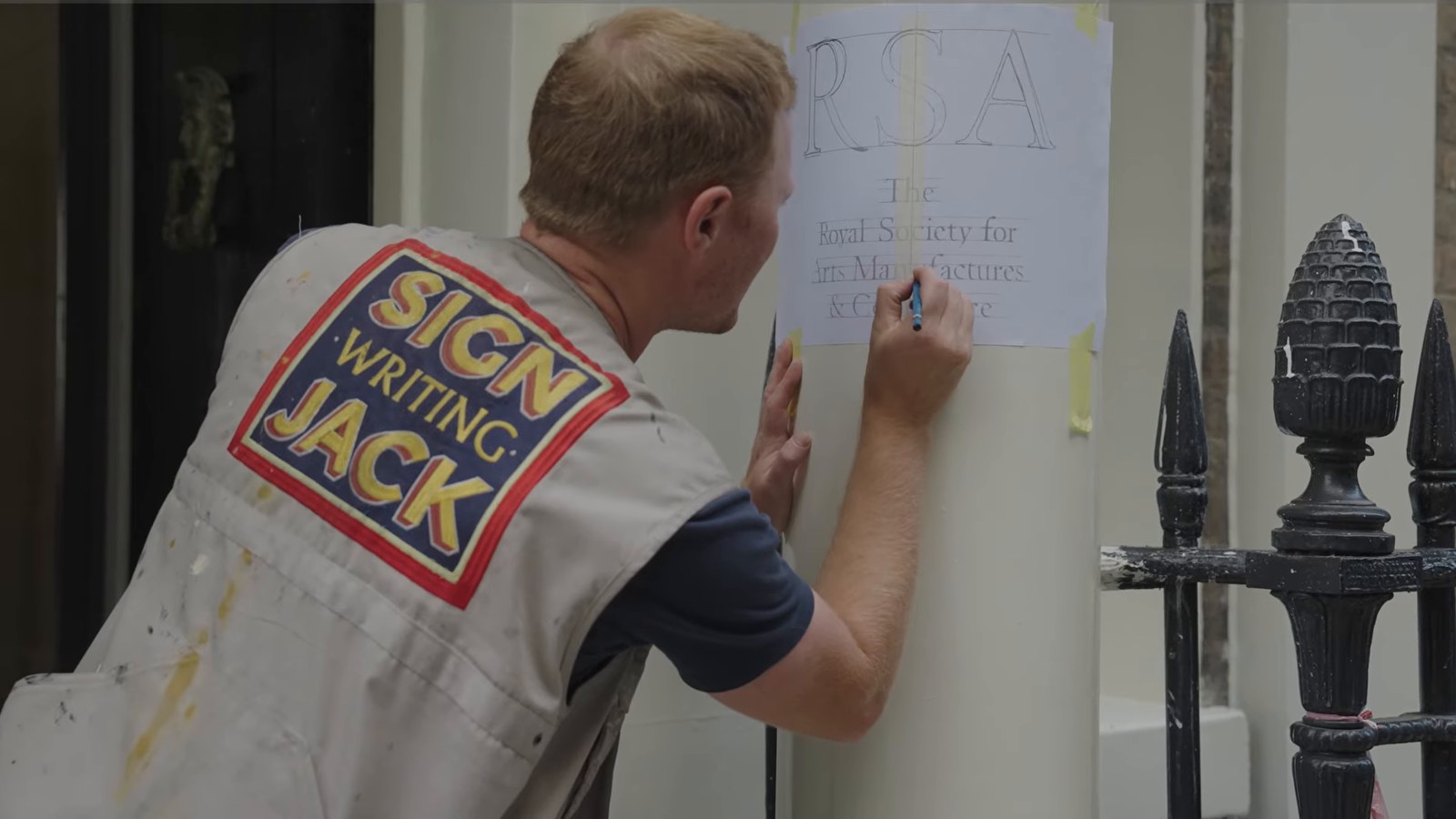
One thing worth knowing from filming: the person who thinks their story is boring usually has the best material, because they haven't polished it. We filmed a trade where the business was built on hand work, a signwriter whose entire craft is the wrist, in the Signwriting Jack film. The film works because it's built around the work, at the speed it's done, and trusts it. You can do the same with whatever your business does best.
If you want to see how an opening fits into a bigger story, how to tell a brand story takes it from first line to last, and what makes a good brand story explains why some work and others don't. The whole subject is gathered in the complete guide to brand storytelling. If you'd like help finding your own opening, and filming it, have a look at our films or get in touch.