
One post does better than the others mostly because more people watch it for longer and more of them pass it on. In our own numbers, the best 10% of Instagram posts reached about six times what a typical post did, and likes barely separated them from the rest. Format, length and posting time explained much less than people claim.
Here's what the data from the accounts we run for small businesses showed over the last 90 days, what Instagram itself says ranks content, and where the two agree. I'll also be upfront about what the numbers can't tell us, because there's a lot of confident advice online built on less data than you'd think.
 Why One Instagram Post Does Better Than Others, s4digital
What data are we looking at?
Everything here comes from the accounts we run for small businesses, between 19 August and 17 November 2026. That's 636 posts in total: 364 on Instagram (276 reels, 42 carousels and 46 single images), 141 on TikTok, 117 on Facebook and 14 on LinkedIn. The accounts cover a mix of sectors, including local service businesses and product brands, and I'm not going to be more specific than that.
Some honest limits first. It's a small sample compared with the big studies, a few accounts account for a large share of the posts, and some of the data pulled back incompletely, so a handful of posts had no reach figure and I left them out. Reach means true reach on Instagram and Facebook. TikTok only gives views and LinkedIn only gives impressions, so I've used those. Where one account was dominating a result, I've said so. I've also used medians rather than averages for reach, because a few big posts would otherwise drag the figures up and make everything look better than it is.
How much better did the top 10% do?
Much better, and that's the first thing to know: reach isn't evenly spread. On Instagram the median post reached 260 people. The top 10% reached a median of 1,646, which is about 6.3 times as many. On Facebook the gap was about 5.8 times, and on TikTok about 3.5 times. LinkedIn only had 14 posts, so I won't read anything into it.
That skew is normal, and it should change how you judge your own account. If most posts do roughly the same and a few do far better, then your job isn't to make every post a winner. It's to work out what the winners had and make more of it.
Reels tend to win on reach, but carousels won on engagement in the same study, so the format that suits the job matters more than a single best format.
Source: Buffer, Instagram reach and engagement analysis (4 million+ posts, January 2022 to October 2024)
What did the best posts have in common?
They were mostly reels, but that's not the full story
Of the top 37 Instagram posts by reach, 33 were reels. Reels were 76% of everything we posted on Instagram, though, so being a reel only tilts the odds a little. Format on its own didn't separate the winners.
People watched for longer and skipped less
This was the clearest pattern. The median average watch time in the top group was 38 seconds, against 7 seconds across all reels. The skip rate was about 29% against about 50%. That fits what Instagram says about its ranking. As Social Media Today reported on 22 January 2025, Adam Mosseri, who runs Instagram, said "the top three signals that matter most for ranking are watch time, likes and sends".
A caution, though: a lot of the long watch times came from a couple of accounts that make longer reels. It's a pattern in our sample, not proof of cause.
Likes didn't separate them. Shares and comments did, a little
Per 1,000 people reached, the top Instagram posts averaged around 57 likes and the rest around 57. Practically identical. Shares were 5.4 against 3.1, and comments 2.8 against 1.5. That's a modest lift, and the numbers involved are tiny, so treat it as a hint.
It does match something Instagram has said. In May 2024 Mosseri said that in his experience "sends per reach correlate more with overall reach than anything else", and on 26 May 2026 he repeated that "like rates matter more for your followers, and send rates matter more for those who don't follow you". Likes are what your followers do. Reaching new people takes something they'll forward.
What surprised us, or went against the usual advice?
Longer reels reached further
The common advice is to keep it short. In our sample, Instagram reels over 60 seconds had a median reach of about 1,052, with a skip rate around 33%, while reels of 15 to 30 seconds had a median of about 60 and a skip rate near 50%.
Before you start making minute-long reels, read the next bit. Those long reels came from two accounts, and mostly from one. When I compared reels within each account, the link between length and reach shrank to something weak. On TikTok there was no relationship at all. So I can't say length caused the reach. What I can say is that nothing in our data supports the idea that short always wins, and that matches Instagram, which said in February 2025 that "we don't want to penalize longer videos, which is why we look at not only the percentage of a video that was watched, but also the number of seconds."
Carousels and single images punched above their weight on shares
When I ranked posts by shares and saves per person reached, 8 of the top 21 were carousels. Carousels were only 12% of what we posted. Reels still got the biggest audiences, but carousels were the posts people kept and sent. Buffer's analysis of more than 4 million posts points the same way: reels got more reach, and carousels got more engagement.
The hour you post barely mattered
On Instagram, posts that went out between 8am and 11am did slightly better than those between 11am and 3pm, once I'd adjusted for each account's usual reach. On Facebook the afternoon looked best and on TikTok it looked worst. The correlations were weak, and the weekdays didn't agree across platforms. I wouldn't change a schedule because of this, and I wouldn't trust anybody who tells you the "perfect" time from a sample like ours either. Instagram's 2023 explainer lists the time a post was shared as one signal among many, but I can't find any official statement that a specific hour wins.
Caption length told us very little
On Instagram the relationship between caption length and reach was close to zero. On reels and TikTok it leaned slightly negative. Write as much as the post needs.
Reach and engagement rate weren't the same thing
Only 3 of the top 31 posts by reach on Instagram also ranked in the top tenth by engagement rate. A post can reach many people who scroll past, or reach few who all react. If you judge posts by engagement rate alone, you'll back the wrong ones. This is part of why Instagram moved its main number to "views" in August 2024.
How many posts get nothing at all?
A lot. On Instagram, 66% of our posts got no shares, 61% got no saves and 53% got neither. About 69% got no comments. Those are small businesses with modest audiences, so it's not shocking, but it's worth knowing. If your posts are collecting zero shares, you're in the majority, and the fix is to make something worth sending, not to post more of the same.
Most posts do very little. A few do a lot. The work is finding out what the few had.
What couldn't we tell?
This is the part most posts on this topic leave out.
- Real people versus graphics. I wanted to test whether posts with a person talking to camera beat designed graphics. Only 9 of the 636 posts were clearly tagged as real people in a way I could count, and I wasn't willing to guess at the rest. So I can't tell you from our data. Instagram's own direction, covered below, points toward original, real footage, but that's a separate argument.
- Best day or hour. Too weak and too inconsistent.
- LinkedIn. 14 posts isn't a pattern.
- Whether length causes reach. One account doing both muddies it.
- Anything about causes. This is observation. We didn't run controlled tests.
What does Instagram say ranks content?
Here's what's been said in public, with dates, and it's worth keeping apart from what marketers claim. Our longer guide, how the Instagram algorithm works in 2026, goes through each one.
- Watch time, likes and sends are the top three signals (Mosseri, January 2025), measured as average watch time, likes per reach and sends per reach.
- Instagram counts both the percentage and the seconds watched, so longer videos aren't penalised (February 2025).
- Since 30 April 2026, accounts that mostly post other people's photos and carousels aren't recommended, extending a rule Reels already had. The details are on the Instagram Creators blog.
- Hashtags don't raise reach, and from 18 December 2025 captions are capped at five.
What Instagram hasn't published is how much each signal weighs against the others. Any "sends are worth three times a like" claim is a guess.
What should you do with this?
Treat your own account as the data set that counts. Once a month, take your best five posts and your typical five, and put them side by side. Ask what's different about the content, not the settings: how it opened, who was in it, how long people stayed, who'd send it on.
- Judge posts by sends and watch time, not likes. In our numbers, likes were identical between winners and the rest.
- Make something worth forwarding. It's the lever that matches both our numbers and what Instagram says about reaching new people.
- Don't be scared of a longer video if the idea needs it. Open on the point, and give people a reason to stay.
- Use carousels for things people keep. Checklists, prices, before and afters.
- Stop agonising over the time. Pick one you can keep to.
Where do video and real people fit?
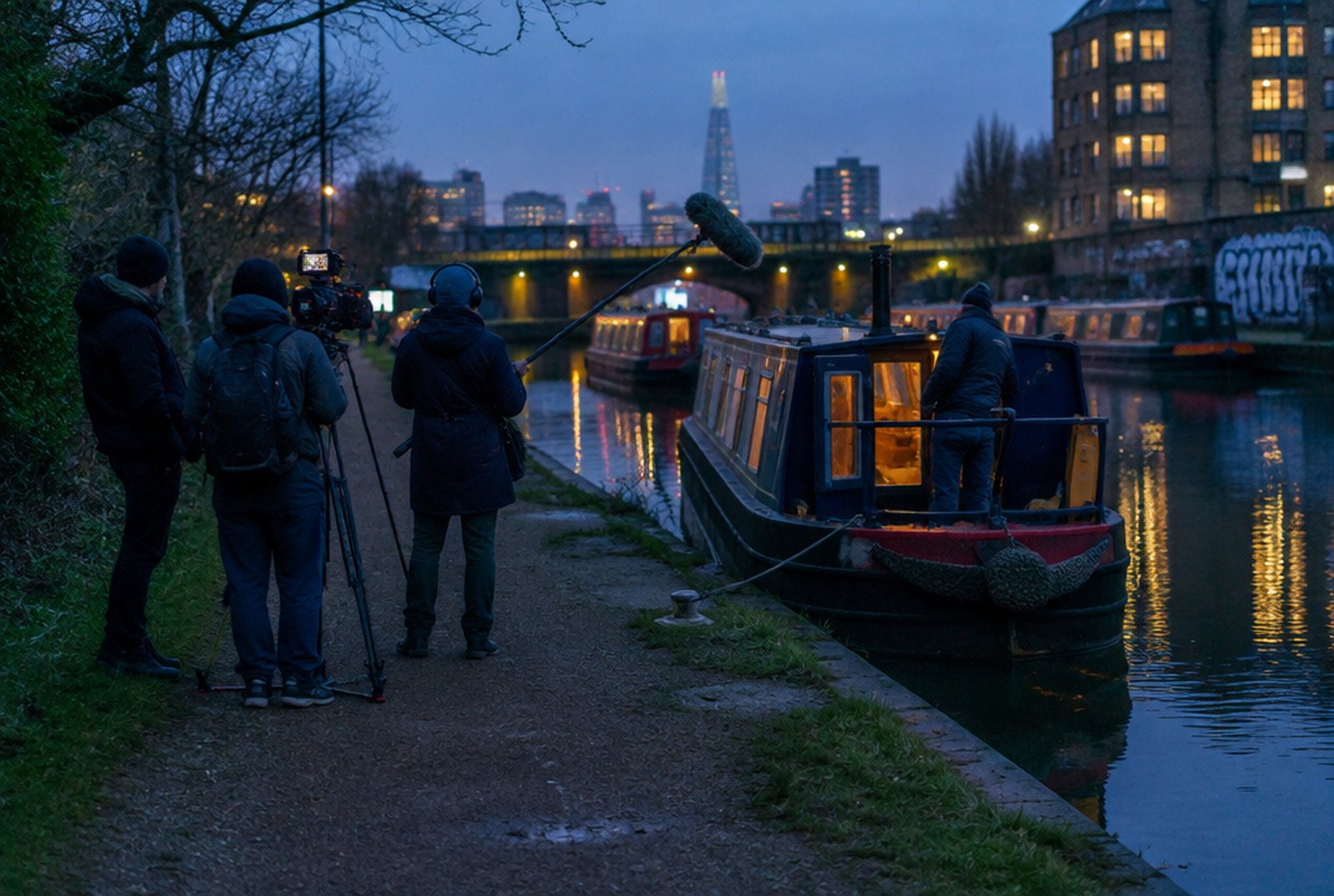
I couldn't prove it with our own tags, so I'll say it as an opinion. Watch time was the clearest difference between our best posts and the rest, and a person talking about something they know is the easiest way I've found to hold attention for 30 seconds or more. Our post on real people on camera in a time of AI content makes the case, and social media videos for business and phone video for business content cover how to start without a crew. The bigger picture, including how often to post and how long to stick at it, is in how to win on social media.
If you'd like help making video that people actually watch and send, have a look at our films and get in touch.