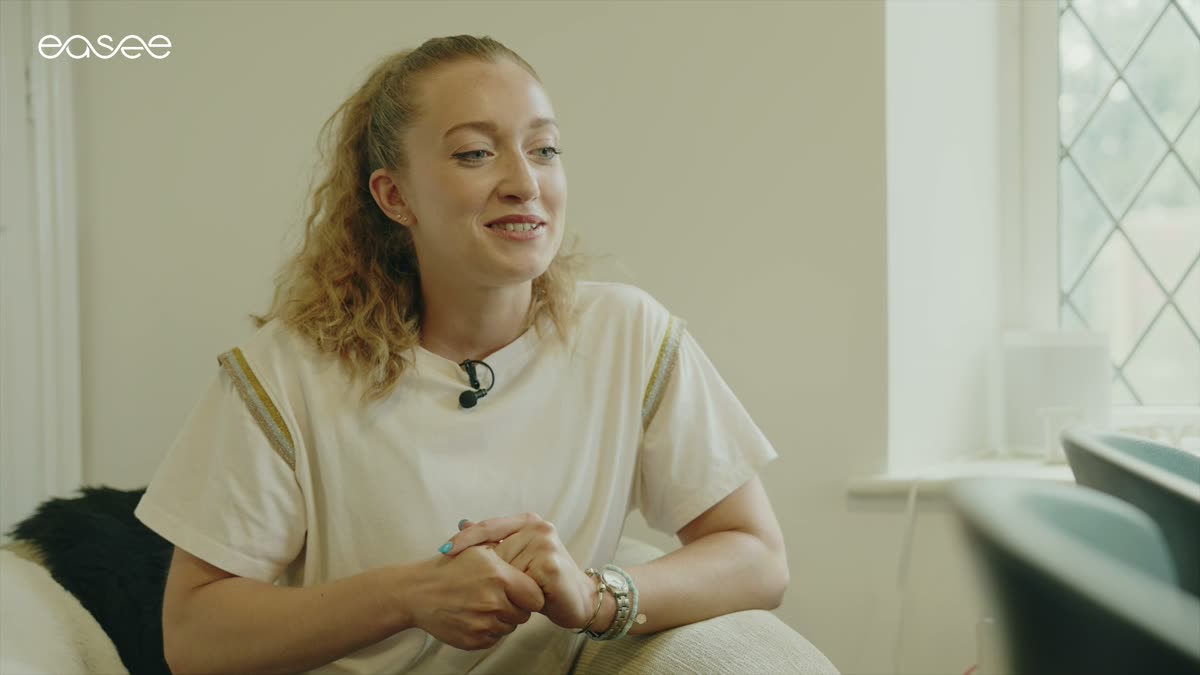
Interview lighting is usually built from three lights. A key light does most of the work on the face, a fill light softens the shadows it leaves, and a back light separates the person from the background. Practicals, the lamps you can see in the shot, and windows fill in the rest. And very often, the interviews that look best use one big, soft light source and not much else.
You don't need to know any of this to commission a film. It helps, though, when someone on a shoot spends forty minutes moving a light about a foot to the left and you're wondering what you're paying for. Here's what they're doing.
What is three-point lighting?
It's the basic setup taught on every film course, and most interview lighting is a variation on it.
Key light
The main light, and the one that decides the look. It usually sits to one side of the camera, roughly forty-five degrees off the line between camera and subject, and a little above eye height. Where it goes sets which side of the face is bright and which side falls into shadow.
A small detail that makes a big difference: most cinematographers put the key on the far side of the face, the side turned away from camera. It's called short lighting, and it gives a face more shape. Light the side nearest camera instead and the face tends to look flatter and wider.
Fill light
The fill sits on the other side and lifts the shadows the key leaves behind. How much fill you use sets the contrast. Lots of fill gives an even, bright look that suits corporate work. Very little gives more drama and a moodier feel. The fill doesn't have to be a light at all. A white board or a reflector bouncing some of the key back works fine, and sometimes the right amount of fill is none. Some crews even do the opposite, putting black fabric on the fill side to deepen the shadow, which is called negative fill.
Back light
A light behind the subject, usually high and opposite the key, that catches the edge of the hair and shoulders. It draws a thin line around the person so they don't melt into a dark background. Used gently, nobody notices it. Overdone, it looks like a halo in a shampoo advert.
What are practicals, and why do they matter?
A practical is any light source you can see in the frame: a desk lamp, a pendant over a counter, fairy lights, the glow of a fridge in a cheese room. They do two jobs. They make the background look like a real, lived-in place instead of a black void or a flat wall, and they give a reason for the light falling on the subject, so the whole image feels motivated rather than set up.
Practicals are also one of the cheapest ways to make an interview look expensive. A warm lamp glowing out of focus over the speaker's shoulder adds depth and colour for the price of a bulb. The usual trick is swapping in a dimmable bulb so the practical sits at the right brightness and doesn't blow out.
Can you light an interview with a window?
Yes, and a big window is one of the best soft light sources there is. Sit the person side-on or at an angle to it, so the window becomes the key light, and use a reflector or a white wall on the other side as fill. Overcast days are a gift, because the cloud diffuses the sun into an even, flattering light.
A few things go wrong with windows:
- Direct sun. Hard, bright patches and squinting. Hang a net curtain or a sheet of diffusion over the glass to soften it.
- Back to the window. The camera exposes for the bright sky and the person turns into a silhouette. Unless you add light to the front, turn them round.
- Changing weather. This is the big one for interviews. A cloud goes over halfway through an answer and the light on the face changes. In the edit, two parts of the same answer no longer match. Crews who rely on daylight keep an eye on the sky, and often add a light of their own to keep things steady.
Why does one big soft light often look best?
Because softness comes from the size of the light compared to the person, and soft light is kind to faces. A small, bare bulb throws hard shadows with crisp edges and shows every line and blemish. A large source, like a big window, a light fired through a large diffusion panel or bounced off a white wall, wraps around the face. The shadows fade gently instead of stopping dead.
Distance matters too. The closer a soft light is to the subject, the bigger it is relative to them and the softer it gets. It also falls off faster, so the background drops darker, which is often exactly what you want. One big source close to the face, a bit of negative fill on the other side and a practical in the background is a setup you'll see on a lot of very good interviews.
The light you choose tells the viewer how to feel about someone before they've said a word.
It's also quicker. Fewer lights means less time rigging, fewer stands in a cramped room and fewer things to go wrong, which matters when you're filming in somebody's working business rather than a studio.
What happens when light sources don't match?
Different lights have different colours. Daylight is cool and bluish. Household bulbs and old-style tungsten lamps are warm and orange. Fluorescent tubes can tip green. Cameras can balance for one colour at a time, so a face lit by a window on one side and a warm lamp on the other can look like it's half in two different rooms.
Sometimes that mix is a deliberate choice, like a cool daylight key with a warm practical in the background. Often it's just a mess. Crews deal with it by turning off the lights they don't want, matching their own lights to the main source, or putting coloured gel over a light to bring it into line.
 Catherine Marche Designs
Our film for Catherine Marche was shot in a working studio and a glass fronted shop, where reflections and mixed lighting fight you the whole way. That's normal for documentary. You don't get to pick the room, so the lighting has to work with the place as it is.
What does this mean for your film?
Lighting takes time on a shoot day, and that time is part of what you're paying for. Good crews light the space before anyone sits down, then refine it with the person in the chair, so your team isn't waiting around under hot lights. If you're filming on your own, start with the window, turn off the overheads, add a lamp in the background, and you'll be ahead of most office videos. If you want to know how lighting fits into the bigger picture of how a film looks and feels, I've written about that in what cinematography actually means.